
About This Book
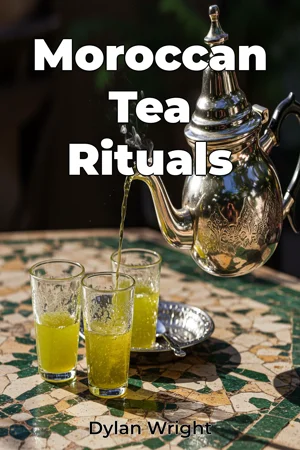
What could a simple cup of tea possibly reveal about a culture's deepest values and social structures? "Moroccan Tea Rituals" delves into the fascinating world of Moroccan mint tea, exploring not only its preparation and consumption but also its profound role in shaping hospitality, social bonding, and cultural identity. This book examines how the seemingly straightforward act of sharing tea in Morocco is imbued with intricate customs and unspoken rules that reflect the country's rich history and social fabric. At its core, this book focuses on three key interconnected themes: the art of Moroccan mint tea preparation, the social dynamics surrounding its consumption, and the historical and cultural significance it holds within Moroccan society. Understanding these elements is crucial to appreciating the multifaceted role tea plays in daily life, from cementing familial bonds to facilitating business negotiations. We provide a comprehensive understanding of the ingredients, tools, and techniques involved in crafting the perfect glass of tea, while also investigating the etiquette and symbolism that govern its consumption. Moroccan tea culture is steeped in history, influenced by trade routes, colonial encounters, and the Berber traditions that predate the arrival of tea itself. We will trace the evolution of tea ceremonies from their origins to their modern-day manifestations. The book argues that Moroccan mint tea serves as a powerful symbol of hospitality, generosity, and social cohesion, reinforcing communal values and facilitating communication across social strata. It demonstrates how the preparation and sharing of tea act as a social script, dictating roles, expectations, and power dynamics within various social contexts. The book is structured to provide a holistic understanding of Moroccan tea culture. Beginning with an introduction to the origins of tea in Morocco and the cultural context in which it thrives, it then explores the specific techniques of tea preparation, detailing the ingredients, equipment, and precise steps involved in brewing and serving. The subsequent chapters delve into the social dynamics surrounding tea consumption, examining its role in family gatherings, celebrations, business meetings, and everyday interactions. It covers the unwritten rules of etiquette, the symbolism of different serving styles, and the ways in which tea reinforces social hierarchies. The book culminates by examining the broader cultural significance of tea, exploring its connection to Moroccan identity, heritage, and the country's image on the world stage. The arguments presented are supported by a range of evidence, drawing on historical accounts, ethnographic studies, interviews with Moroccan tea experts and ordinary citizens, and analyses of Moroccan literature and popular culture. The book incorporates unique data gathered through fieldwork in various regions of Morocco, providing firsthand insights into the diversity and nuances of tea traditions. This book draws connections between cultural anthropology, culinary history, and social psychology, offering a multidisciplinary perspective on Moroccan tea culture. By examining the intersection of food, society, and identity, it provides insights relevant to scholars and enthusiasts interested in understanding the complex interplay between culture and everyday practices. "Moroccan Tea Rituals" offers a unique perspective by focusing on the micro-level interactions surrounding tea consumption to reveal broader social and cultural patterns. This approach allows for a nuanced understanding of how everyday rituals contribute to the formation and maintenance of cultural identity. Written in an accessible and engaging style, this book is aimed at anyone interested in Moroccan culture, culinary traditions, or the social significance of food and drink. It will appeal to travelers, foodies, cultural enthusiasts, and students of anthropology, sociology, and Middle Eastern studies. It aims to enlighten readers about the rich symbolism and social importance of Moroccan tea, moving beyond superficial observations to uncover the deeper meanings embedded within this cultural practice. While the book focuses primarily on Moroccan mint tea rituals, it acknowledges the diversity of tea cultures around the world and draws comparisons where relevant. However, it does not attempt to provide a comprehensive overview of global tea traditions, instead prioritizing an in-depth exploration of the Moroccan context. The insights presented have practical applications for travelers seeking to navigate Moroccan social customs, as well as for businesses operating in Morocco that need to understand the cultural nuances of hospitality. Furthermore, the book offers valuable lessons for anyone interested in using food and drink to foster social connections and build cross-cultural understanding. While not a primary focus, the book also touches upon debates surrounding the commercialization of Moroccan tea culture and its impact on traditional practices. However, the emphasis remains on documenting and interpreting the cultural significance of tea rather than advocating for specific political or economic agendas.
What could a simple cup of tea possibly reveal about a culture's deepest values and social structures? "Moroccan Tea Rituals" delves into the fascinating world of Moroccan mint tea, exploring not only its preparation and consumption but also its profound role in shaping hospitality, social bonding, and cultural identity. This book examines how the seemingly straightforward act of sharing tea in Morocco is imbued with intricate customs and unspoken rules that reflect the country's rich history and social fabric. At its core, this book focuses on three key interconnected themes: the art of Moroccan mint tea preparation, the social dynamics surrounding its consumption, and the historical and cultural significance it holds within Moroccan society. Understanding these elements is crucial to appreciating the multifaceted role tea plays in daily life, from cementing familial bonds to facilitating business negotiations. We provide a comprehensive understanding of the ingredients, tools, and techniques involved in crafting the perfect glass of tea, while also investigating the etiquette and symbolism that govern its consumption. Moroccan tea culture is steeped in history, influenced by trade routes, colonial encounters, and the Berber traditions that predate the arrival of tea itself. We will trace the evolution of tea ceremonies from their origins to their modern-day manifestations. The book argues that Moroccan mint tea serves as a powerful symbol of hospitality, generosity, and social cohesion, reinforcing communal values and facilitating communication across social strata. It demonstrates how the preparation and sharing of tea act as a social script, dictating roles, expectations, and power dynamics within various social contexts. The book is structured to provide a holistic understanding of Moroccan tea culture. Beginning with an introduction to the origins of tea in Morocco and the cultural context in which it thrives, it then explores the specific techniques of tea preparation, detailing the ingredients, equipment, and precise steps involved in brewing and serving. The subsequent chapters delve into the social dynamics surrounding tea consumption, examining its role in family gatherings, celebrations, business meetings, and everyday interactions. It covers the unwritten rules of etiquette, the symbolism of different serving styles, and the ways in which tea reinforces social hierarchies. The book culminates by examining the broader cultural significance of tea, exploring its connection to Moroccan identity, heritage, and the country's image on the world stage. The arguments presented are supported by a range of evidence, drawing on historical accounts, ethnographic studies, interviews with Moroccan tea experts and ordinary citizens, and analyses of Moroccan literature and popular culture. The book incorporates unique data gathered through fieldwork in various regions of Morocco, providing firsthand insights into the diversity and nuances of tea traditions. This book draws connections between cultural anthropology, culinary history, and social psychology, offering a multidisciplinary perspective on Moroccan tea culture. By examining the intersection of food, society, and identity, it provides insights relevant to scholars and enthusiasts interested in understanding the complex interplay between culture and everyday practices. "Moroccan Tea Rituals" offers a unique perspective by focusing on the micro-level interactions surrounding tea consumption to reveal broader social and cultural patterns. This approach allows for a nuanced understanding of how everyday rituals contribute to the formation and maintenance of cultural identity. Written in an accessible and engaging style, this book is aimed at anyone interested in Moroccan culture, culinary traditions, or the social significance of food and drink. It will appeal to travelers, foodies, cultural enthusiasts, and students of anthropology, sociology, and Middle Eastern studies. It aims to enlighten readers about the rich symbolism and social importance of Moroccan tea, moving beyond superficial observations to uncover the deeper meanings embedded within this cultural practice. While the book focuses primarily on Moroccan mint tea rituals, it acknowledges the diversity of tea cultures around the world and draws comparisons where relevant. However, it does not attempt to provide a comprehensive overview of global tea traditions, instead prioritizing an in-depth exploration of the Moroccan context. The insights presented have practical applications for travelers seeking to navigate Moroccan social customs, as well as for businesses operating in Morocco that need to understand the cultural nuances of hospitality. Furthermore, the book offers valuable lessons for anyone interested in using food and drink to foster social connections and build cross-cultural understanding. While not a primary focus, the book also touches upon debates surrounding the commercialization of Moroccan tea culture and its impact on traditional practices. However, the emphasis remains on documenting and interpreting the cultural significance of tea rather than advocating for specific political or economic agendas.
"Moroccan Tea Rituals" explores the central role of Moroccan mint tea in shaping social interactions and cultural identity. More than just a beverage, the book reveals how tea serves as a symbol of hospitality and generosity, deeply embedded in Moroccan social customs. Intriguingly, the seemingly simple act of preparing and sharing tea is governed by unspoken rules and etiquette, reflecting the country's rich history. The book highlights how tea reinforces social hierarchies and communal values. The book progresses from the origins of tea in Morocco to the techniques of preparation, social dynamics surrounding consumption, and the broader cultural significance. It examines how tea ceremonies evolved through trade routes and Berber traditions, becoming integral to family gatherings, business meetings, and everyday interactions. By focusing on the micro-level interactions of tea consumption, the book uncovers larger social patterns, providing a unique perspective on how daily rituals maintain cultural identity.
Book Details
ISBN
9788233979850
Publisher
Publifye AS
Your Licenses
You don't own any licenses for this book
Purchase a license below to unlock this book and download the EPUB.
Purchase License
Select a tier to unlock this book
Need bulk licensing?
Contact us for enterprise agreements.