
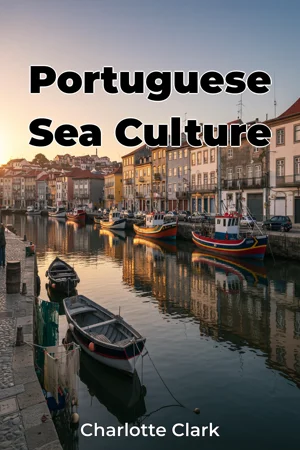
About This Book
How did Portugal, a relatively small nation on the Iberian Peninsula, manage to forge a global empire and leave an indelible mark on cultures across the world? "Portuguese Sea Culture" explores the profound influence of Portuguese maritime traditions on the nation’s cuisine, social customs, and identity. This book examines the historical context, cultural impact, and enduring legacy of Portugal's relationship with the sea. This book delves into three major areas, each fundamentally shaped by Portugal’s seafaring history: the evolution of Portuguese cuisine through maritime trade and exploration; the development of unique social customs and rituals linked to the sea; and the shaping of a national identity deeply intertwined with exploration and nautical prowess. Understanding these facets provides invaluable insight into the Portuguese character and its contributions to global history. The historical backdrop begins in the 15th century, during the Age of Discovery, when Portugal spearheaded maritime exploration. Prior knowledge of navigational techniques and shipbuilding is helpful, but the book contextualizes these advancements within the broader European landscape and the specific needs and ambitions of the Portuguese crown. The central argument posits that Portuguese sea culture is not merely a historical phenomenon but a living heritage that continues to shape contemporary Portugal. This argument is vital because it highlights the interconnectedness of history, culture, and identity, demonstrating how past events continue to influence present-day society. "Portuguese Sea Culture" is structured to provide a comprehensive overview. It begins by introducing the concept of sea culture and its importance to Portugal. Next, it develops three major points: a) The influence of maritime trade on Portuguese cuisine, exploring ingredients, dishes, and culinary techniques adopted from around the world and their lasting impact. b) The emergence of social customs and rituals associated with the sea, examining festivals, religious practices, and community traditions that reflect the importance of the ocean in Portuguese life. c) The role of seafaring in shaping Portuguese national identity, analyzing how exploration, maritime achievements, and colonial history have contributed to a sense of national pride and collective memory. The book culminates by demonstrating how these elements coalesce to form a unique and enduring Portuguese identity, with practical implications for understanding Portugal's role in global affairs and its cultural contributions to the world. Evidence presented will include historical documents, such as ship manifests, royal decrees, and travelogues; culinary records, including cookbooks and recipes; ethnographic studies of coastal communities; and analyses of Portuguese literature, art, and music. Unique data sources will include previously untranslated archival materials and oral histories collected from Portuguese fishing communities. This study connects to fields such as anthropology (through the study of cultural practices), economics (by examining trade networks), and political science (through the analysis of colonialism and national identity). These interdisciplinary connections enrich the book's argument by providing a holistic understanding of Portuguese sea culture. The book takes a unique perspective by focusing on the intangible aspects of sea culture, such as social attitudes, beliefs, and values, rather than solely on economic or political history. This approach provides a more nuanced and human-centered understanding of Portugal's relationship with the sea. Written in an accessible and engaging style, "Portuguese Sea Culture" is targeted towards students, scholars, and anyone interested in history, culture, or culinary traditions. It will be valuable to those seeking a deeper understanding of Portugal's past and its continuing influence on the modern world. Adhering to the conventions of historical and cultural studies, the book provides a rigorous analysis of primary and secondary sources while remaining accessible to a broad readership. The scope of the book is limited to the cultural and social impact of maritime traditions on Portugal itself, with less emphasis on the details of Portuguese colonial administration or naval warfare, focusing instead on everyday life and cultural exchange. The information can be practically applied by readers seeking to understand Portuguese culture, cuisine or history when traveling, studying, or engaging with Portuguese communities. It also serves as a model for understanding the influence of maritime activity on other coastal nations. While some scholars debate the positive and negative effects of Portuguese colonialism, this book seeks to provide a balanced and nuanced perspective, acknowledging both the achievements and the injustices associated with Portugal's maritime past.
How did Portugal, a relatively small nation on the Iberian Peninsula, manage to forge a global empire and leave an indelible mark on cultures across the world? "Portuguese Sea Culture" explores the profound influence of Portuguese maritime traditions on the nation’s cuisine, social customs, and identity. This book examines the historical context, cultural impact, and enduring legacy of Portugal's relationship with the sea. This book delves into three major areas, each fundamentally shaped by Portugal’s seafaring history: the evolution of Portuguese cuisine through maritime trade and exploration; the development of unique social customs and rituals linked to the sea; and the shaping of a national identity deeply intertwined with exploration and nautical prowess. Understanding these facets provides invaluable insight into the Portuguese character and its contributions to global history. The historical backdrop begins in the 15th century, during the Age of Discovery, when Portugal spearheaded maritime exploration. Prior knowledge of navigational techniques and shipbuilding is helpful, but the book contextualizes these advancements within the broader European landscape and the specific needs and ambitions of the Portuguese crown. The central argument posits that Portuguese sea culture is not merely a historical phenomenon but a living heritage that continues to shape contemporary Portugal. This argument is vital because it highlights the interconnectedness of history, culture, and identity, demonstrating how past events continue to influence present-day society. "Portuguese Sea Culture" is structured to provide a comprehensive overview. It begins by introducing the concept of sea culture and its importance to Portugal. Next, it develops three major points: a) The influence of maritime trade on Portuguese cuisine, exploring ingredients, dishes, and culinary techniques adopted from around the world and their lasting impact. b) The emergence of social customs and rituals associated with the sea, examining festivals, religious practices, and community traditions that reflect the importance of the ocean in Portuguese life. c) The role of seafaring in shaping Portuguese national identity, analyzing how exploration, maritime achievements, and colonial history have contributed to a sense of national pride and collective memory. The book culminates by demonstrating how these elements coalesce to form a unique and enduring Portuguese identity, with practical implications for understanding Portugal's role in global affairs and its cultural contributions to the world. Evidence presented will include historical documents, such as ship manifests, royal decrees, and travelogues; culinary records, including cookbooks and recipes; ethnographic studies of coastal communities; and analyses of Portuguese literature, art, and music. Unique data sources will include previously untranslated archival materials and oral histories collected from Portuguese fishing communities. This study connects to fields such as anthropology (through the study of cultural practices), economics (by examining trade networks), and political science (through the analysis of colonialism and national identity). These interdisciplinary connections enrich the book's argument by providing a holistic understanding of Portuguese sea culture. The book takes a unique perspective by focusing on the intangible aspects of sea culture, such as social attitudes, beliefs, and values, rather than solely on economic or political history. This approach provides a more nuanced and human-centered understanding of Portugal's relationship with the sea. Written in an accessible and engaging style, "Portuguese Sea Culture" is targeted towards students, scholars, and anyone interested in history, culture, or culinary traditions. It will be valuable to those seeking a deeper understanding of Portugal's past and its continuing influence on the modern world. Adhering to the conventions of historical and cultural studies, the book provides a rigorous analysis of primary and secondary sources while remaining accessible to a broad readership. The scope of the book is limited to the cultural and social impact of maritime traditions on Portugal itself, with less emphasis on the details of Portuguese colonial administration or naval warfare, focusing instead on everyday life and cultural exchange. The information can be practically applied by readers seeking to understand Portuguese culture, cuisine or history when traveling, studying, or engaging with Portuguese communities. It also serves as a model for understanding the influence of maritime activity on other coastal nations. While some scholars debate the positive and negative effects of Portuguese colonialism, this book seeks to provide a balanced and nuanced perspective, acknowledging both the achievements and the injustices associated with Portugal's maritime past.
"Portuguese Sea Culture" explores how Portugal's extensive maritime history has profoundly shaped its national identity, cuisine, and social customs. From the Age of Discovery, Portugal's seafaring prowess facilitated global trade, influencing everything from the ingredients used in Portuguese cuisine to the rituals and festivals celebrated in coastal communities. The book argues that this sea culture is not just a historical relic but a living heritage that continues to define Portugal today. The book uniquely examines intangible aspects of this culture, such as social attitudes and beliefs, rather than solely focusing on economic or political history. It progresses by first introducing the concept of sea culture, then delving into the influence of maritime trade on cuisine, the emergence of sea-related social customs, and the role of seafaring in shaping Portuguese national identity. For example, the book explores how maritime exploration shaped a sense of national pride and collective memory. Drawing on historical documents, culinary records, and ethnographic studies, "Portuguese Sea Culture" offers a comprehensive overview of Portugal's enduring connection to the sea. This approach provides readers with a nuanced understanding of Portugal's past and its ongoing impact on the world, making it valuable for anyone interested in history, culture, or culinary traditions.
Book Details
ISBN
9788233979843
Publisher
Publifye AS
Your Licenses
You don't own any licenses for this book
Purchase a license below to unlock this book and download the EPUB.
Purchase License
Select a tier to unlock this book
Need bulk licensing?
Contact us for enterprise agreements.