
About This Book
Why has the bicycle achieved near-ubiquitous status in the Netherlands, far beyond mere recreation or sport, evolving into an integral component of daily life and national identity? "Dutch Cycling Culture" delves into this phenomenon, providing a comprehensive analysis of bicycle usage patterns and their profound social implications, viewed through the lens of both urban and cultural research. This book examines how cycling has shaped Dutch society, influenced urban planning, and contributed to the nation's distinctive cultural identity. At its core, this book tackles three main themes: the historical development of cycling infrastructure and policy in the Netherlands; the social equity aspects of cycling, including accessibility and affordability; and the cultural meanings attached to cycling as a symbol of Dutch identity and sustainability. These themes are important as they reveal how a transportation choice becomes deeply interwoven with societal values, influencing everything from public health to environmental consciousness. Understanding the Dutch cycling culture requires acknowledging its historical context. The book traces the evolution of Dutch transportation policy from the post-World War II era, highlighting key decisions that prioritized cycling over car-centric development, especially in the face of rising car ownership. This historical background is essential for understanding why the Netherlands differs so significantly from other developed nations in its modal transport share. The central argument of "Dutch Cycling Culture" asserts that the widespread adoption of cycling in the Netherlands is not accidental, but rather a result of deliberate policy choices, sustained investment in infrastructure, and a cultural embrace of cycling as a norm. This argument is critical for understanding the potential for other nations to replicate the Dutch model, adapting it to their unique social and geographical contexts. The book is structured to systematically unfold this argument. It begins by introducing the core concepts of urban cycling and sustainable transport, then develops these ideas through an examination of specific case studies, policy analyses, and cultural narratives. Major sections address the design and implementation of cycling infrastructure, the impact of cycling on public health and urban environments, and the cultural representations of cycling in Dutch art, literature, and media. The analysis culminates in a discussion of practical lessons and policy recommendations for promoting cycling in other urban areas. The evidence presented in the book is drawn from a range of sources, including statistical data on cycling rates, urban planning documents, policy evaluations, and ethnographic studies of Dutch cyclists. Unique data sources include longitudinal surveys of travel behavior and in-depth interviews with urban planners and transport advocates. The book's argument connects to other fields, particularly urban planning, public health, and sociology. The urban planning perspective sheds light on how infrastructure shapes behavior; the public health perspective examines the physical and mental benefits of cycling; and the sociological perspective explores the social norms and cultural meanings associated with cycling. These connections enrich the analysis, providing a more holistic understanding of the Dutch cycling phenomenon. A unique perspective of the book is its fusion of quantitative data with qualitative insights, creating a nuanced understanding of the interplay between policy, infrastructure, and culture. This approach moves beyond simple metrics of cycling rates, engaging with the lived experiences of cyclists and the broader social context. The tone of the book is scholarly yet accessible; while grounded in empirical evidence, it aims to engage a broad audience, including students, policymakers, urban planners, and anyone interested in sustainable transportation. The writing style balances academic rigor with clear and engaging prose, avoiding technical jargon where possible. The intended audience includes students and researchers in urban studies, transportation planning, and sociology; policymakers involved in transportation and urban development; and cycling advocates seeking insights from the Dutch experience. The book offers valuable lessons and practical guidance for promoting cycling in diverse urban environments. As a work in the social sciences, "Dutch Cycling Culture" adheres to the expectations of rigorous research and evidence-based analysis. It acknowledges the complexity of the subject matter, recognizing that the Dutch model cannot be directly transplanted to other contexts but can offer valuable insights and principles. The scope of the book is limited to the Dutch context, focusing on the specific historical, social, and political factors that have shaped cycling culture in the Netherlands. It does not attempt to provide a global overview of cycling, but rather offers an in-depth exploration of a single, highly developed case. The information in the book can be applied in several practical ways. Urban planners can use the Dutch model as a source of inspiration for designing cycling infrastructure; policymakers can draw on the Dutch experience when developing transportation policies; and cycling advocates can use the book's findings to make the case for increased investment in cycling. Although the benefits of cycling are widely recognized, debates persist regarding the most effective strategies for promoting it. The book addresses some of these controversies, exploring the trade-offs between different policy approaches and the challenges of adapting the Dutch model to other contexts.
Why has the bicycle achieved near-ubiquitous status in the Netherlands, far beyond mere recreation or sport, evolving into an integral component of daily life and national identity? "Dutch Cycling Culture" delves into this phenomenon, providing a comprehensive analysis of bicycle usage patterns and their profound social implications, viewed through the lens of both urban and cultural research. This book examines how cycling has shaped Dutch society, influenced urban planning, and contributed to the nation's distinctive cultural identity. At its core, this book tackles three main themes: the historical development of cycling infrastructure and policy in the Netherlands; the social equity aspects of cycling, including accessibility and affordability; and the cultural meanings attached to cycling as a symbol of Dutch identity and sustainability. These themes are important as they reveal how a transportation choice becomes deeply interwoven with societal values, influencing everything from public health to environmental consciousness. Understanding the Dutch cycling culture requires acknowledging its historical context. The book traces the evolution of Dutch transportation policy from the post-World War II era, highlighting key decisions that prioritized cycling over car-centric development, especially in the face of rising car ownership. This historical background is essential for understanding why the Netherlands differs so significantly from other developed nations in its modal transport share. The central argument of "Dutch Cycling Culture" asserts that the widespread adoption of cycling in the Netherlands is not accidental, but rather a result of deliberate policy choices, sustained investment in infrastructure, and a cultural embrace of cycling as a norm. This argument is critical for understanding the potential for other nations to replicate the Dutch model, adapting it to their unique social and geographical contexts. The book is structured to systematically unfold this argument. It begins by introducing the core concepts of urban cycling and sustainable transport, then develops these ideas through an examination of specific case studies, policy analyses, and cultural narratives. Major sections address the design and implementation of cycling infrastructure, the impact of cycling on public health and urban environments, and the cultural representations of cycling in Dutch art, literature, and media. The analysis culminates in a discussion of practical lessons and policy recommendations for promoting cycling in other urban areas. The evidence presented in the book is drawn from a range of sources, including statistical data on cycling rates, urban planning documents, policy evaluations, and ethnographic studies of Dutch cyclists. Unique data sources include longitudinal surveys of travel behavior and in-depth interviews with urban planners and transport advocates. The book's argument connects to other fields, particularly urban planning, public health, and sociology. The urban planning perspective sheds light on how infrastructure shapes behavior; the public health perspective examines the physical and mental benefits of cycling; and the sociological perspective explores the social norms and cultural meanings associated with cycling. These connections enrich the analysis, providing a more holistic understanding of the Dutch cycling phenomenon. A unique perspective of the book is its fusion of quantitative data with qualitative insights, creating a nuanced understanding of the interplay between policy, infrastructure, and culture. This approach moves beyond simple metrics of cycling rates, engaging with the lived experiences of cyclists and the broader social context. The tone of the book is scholarly yet accessible; while grounded in empirical evidence, it aims to engage a broad audience, including students, policymakers, urban planners, and anyone interested in sustainable transportation. The writing style balances academic rigor with clear and engaging prose, avoiding technical jargon where possible. The intended audience includes students and researchers in urban studies, transportation planning, and sociology; policymakers involved in transportation and urban development; and cycling advocates seeking insights from the Dutch experience. The book offers valuable lessons and practical guidance for promoting cycling in diverse urban environments. As a work in the social sciences, "Dutch Cycling Culture" adheres to the expectations of rigorous research and evidence-based analysis. It acknowledges the complexity of the subject matter, recognizing that the Dutch model cannot be directly transplanted to other contexts but can offer valuable insights and principles. The scope of the book is limited to the Dutch context, focusing on the specific historical, social, and political factors that have shaped cycling culture in the Netherlands. It does not attempt to provide a global overview of cycling, but rather offers an in-depth exploration of a single, highly developed case. The information in the book can be applied in several practical ways. Urban planners can use the Dutch model as a source of inspiration for designing cycling infrastructure; policymakers can draw on the Dutch experience when developing transportation policies; and cycling advocates can use the book's findings to make the case for increased investment in cycling. Although the benefits of cycling are widely recognized, debates persist regarding the most effective strategies for promoting it. The book addresses some of these controversies, exploring the trade-offs between different policy approaches and the challenges of adapting the Dutch model to other contexts.
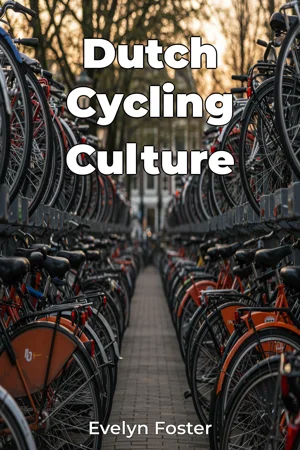
"Dutch Cycling Culture" explores why cycling is so integral to daily life and national identity in the Netherlands. It examines how the Dutch have achieved near-ubiquitous bicycle usage, far beyond just recreation, by focusing on the historical development of cycling infrastructure and its impact on social equity. The book reveals that the Dutch modal transport share differs significantly from other developed nations due to deliberate policy choices that prioritize cycling over car-centric development. The book uniquely intertwines quantitative data with qualitative insights, providing a nuanced understanding of how policy, infrastructure, and culture interact. It progresses from introducing core concepts of urban cycling and sustainable transport to examining specific case studies and cultural narratives. "Dutch Cycling Culture" demonstrates that the widespread adoption of cycling is not accidental, but rather a result of sustained investment and cultural embrace, making it a valuable resource for those seeking to understand and potentially replicate this model elsewhere.
Book Details
ISBN
9788233979782
Publisher
Publifye AS
Your Licenses
You don't own any licenses for this book
Purchase a license below to unlock this book and download the EPUB.
Purchase License
Select a tier to unlock this book
Need bulk licensing?
Contact us for enterprise agreements.