
About This Book
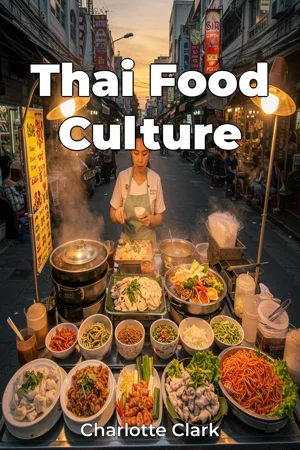
How does a nation's cuisine reflect its deepest cultural values and shape its social interactions? "Thai Food Culture" explores this question through an in-depth examination of Thai culinary traditions and social eating practices, drawing on anthropological research to reveal the intricate connections between what, how, and why Thai people eat. This book delves into the heart of Thai culture, examining the core concepts of food preparation, communal dining, and the symbolic meanings embedded within specific dishes. These topics are crucial for understanding not just Thai cuisine, but also the broader social fabric of Thai society. To fully grasp the significance of Thai food culture, it's essential to understand its historical roots, influenced by royal traditions, Buddhist principles, and regional variations. This book provides relevant social and historical context, assuming a basic understanding of Southeast Asian geography and history. It avoids complex linguistic jargon, aiming for accessibility. The central argument of "Thai Food Culture" is that Thai cuisine is far more than just a collection of recipes; it is a vital form of social communication and cultural expression that reinforces identity and fosters community. This argument challenges conventional approaches to food studies that focus primarily on nutrition or culinary techniques, instead emphasizing the social and cultural dimensions of eating. The book's structure is designed to provide a comprehensive understanding of Thai food culture. First, an introductory chapter establishes key anthropological concepts and provides an overview of Thai history and society. The subsequent chapters delve into specific aspects of Thai cuisine, such as the importance of balance (both in flavor and social harmony), the role of street food in urban life, and the significance of food offerings in religious rituals. The study also incorporates the impact of globalization on modern culinary practices. The culmination of the argument will offer insights into how these traditions are evolving and being preserved in the 21st century. Finally, the book explores the practical application of its findings, such as how an understanding of Thai food culture can enhance intercultural communication and promote responsible tourism. The evidence presented in "Thai Food Culture" comes from a range of sources, including ethnographic fieldwork, interviews with cooks and diners, analysis of Thai cookbooks and food blogs, and examination of historical documents. The book’s methodologies also include participant observation at food markets and in homes, providing unique insights into the everyday realities of Thai food culture. The book's interdisciplinary approach connects food studies with anthropology, sociology, and history, providing a holistic understanding of Thai society. These connections enhance the book's argument by demonstrating the complex interplay of social, cultural, and historical factors that shape Thai food culture. "Thai Food Culture" distinguishes itself through its anthropological lens, focusing on the social and cultural meanings of food rather than simply providing recipes or a historical overview of Thai culinary practices. This approach offers a fresh perspective on a well-known cuisine. The book is written in an accessible, engaging style that blends academic rigor with real-life anecdotes and observations, making it suitable for a broad audience. The target audience includes students and scholars of food studies, anthropology, and Southeast Asian studies, as well as food enthusiasts, travelers, and anyone interested in learning more about Thai culture. The book's value lies in its ability to provide a deeper understanding of Thai society through the lens of its cuisine. As a work in the genres of "Cooking" and "Social Science General", the book aims to meet the expectations of both academic rigor and culinary accessibility, using clear language and avoiding overly technical jargon. While the book provides a broad overview of Thai food culture, its scope is limited to mainland Thailand, with less focus on the culinary traditions of the Thai diaspora. The information in the book can be applied practically to enhance intercultural understanding, promote responsible tourism, and inform culinary professionals seeking to authentically represent Thai cuisine. "Thai Food Culture" also addresses ongoing debates within food studies, such as the impact of globalization on traditional food systems and the role of food in shaping national identity.
How does a nation's cuisine reflect its deepest cultural values and shape its social interactions? "Thai Food Culture" explores this question through an in-depth examination of Thai culinary traditions and social eating practices, drawing on anthropological research to reveal the intricate connections between what, how, and why Thai people eat. This book delves into the heart of Thai culture, examining the core concepts of food preparation, communal dining, and the symbolic meanings embedded within specific dishes. These topics are crucial for understanding not just Thai cuisine, but also the broader social fabric of Thai society. To fully grasp the significance of Thai food culture, it's essential to understand its historical roots, influenced by royal traditions, Buddhist principles, and regional variations. This book provides relevant social and historical context, assuming a basic understanding of Southeast Asian geography and history. It avoids complex linguistic jargon, aiming for accessibility. The central argument of "Thai Food Culture" is that Thai cuisine is far more than just a collection of recipes; it is a vital form of social communication and cultural expression that reinforces identity and fosters community. This argument challenges conventional approaches to food studies that focus primarily on nutrition or culinary techniques, instead emphasizing the social and cultural dimensions of eating. The book's structure is designed to provide a comprehensive understanding of Thai food culture. First, an introductory chapter establishes key anthropological concepts and provides an overview of Thai history and society. The subsequent chapters delve into specific aspects of Thai cuisine, such as the importance of balance (both in flavor and social harmony), the role of street food in urban life, and the significance of food offerings in religious rituals. The study also incorporates the impact of globalization on modern culinary practices. The culmination of the argument will offer insights into how these traditions are evolving and being preserved in the 21st century. Finally, the book explores the practical application of its findings, such as how an understanding of Thai food culture can enhance intercultural communication and promote responsible tourism. The evidence presented in "Thai Food Culture" comes from a range of sources, including ethnographic fieldwork, interviews with cooks and diners, analysis of Thai cookbooks and food blogs, and examination of historical documents. The book’s methodologies also include participant observation at food markets and in homes, providing unique insights into the everyday realities of Thai food culture. The book's interdisciplinary approach connects food studies with anthropology, sociology, and history, providing a holistic understanding of Thai society. These connections enhance the book's argument by demonstrating the complex interplay of social, cultural, and historical factors that shape Thai food culture. "Thai Food Culture" distinguishes itself through its anthropological lens, focusing on the social and cultural meanings of food rather than simply providing recipes or a historical overview of Thai culinary practices. This approach offers a fresh perspective on a well-known cuisine. The book is written in an accessible, engaging style that blends academic rigor with real-life anecdotes and observations, making it suitable for a broad audience. The target audience includes students and scholars of food studies, anthropology, and Southeast Asian studies, as well as food enthusiasts, travelers, and anyone interested in learning more about Thai culture. The book's value lies in its ability to provide a deeper understanding of Thai society through the lens of its cuisine. As a work in the genres of "Cooking" and "Social Science General", the book aims to meet the expectations of both academic rigor and culinary accessibility, using clear language and avoiding overly technical jargon. While the book provides a broad overview of Thai food culture, its scope is limited to mainland Thailand, with less focus on the culinary traditions of the Thai diaspora. The information in the book can be applied practically to enhance intercultural understanding, promote responsible tourism, and inform culinary professionals seeking to authentically represent Thai cuisine. "Thai Food Culture" also addresses ongoing debates within food studies, such as the impact of globalization on traditional food systems and the role of food in shaping national identity.
"Thai Food Culture" explores how Thai cuisine reflects cultural values and shapes social interactions. Going beyond mere recipes, the book reveals that Thai food is a vital form of social communication, reinforcing identity and fostering community. For example, the emphasis on balance in flavors mirrors the importance of social harmony. Also examined is the role of street food in urban life, and the significance of food offerings in religious rituals. The book uses an anthropological lens, focusing on the social and cultural meanings embedded within Thai food. This approach offers a fresh perspective on a well-known cuisine, providing insight into social eating practices and culinary traditions. Drawing on ethnographic fieldwork, interviews, and historical documents, the study progresses from an overview of Thai history and society to specific aspects of Thai cuisine. The book culminates by examining the impact of globalization and how traditions are evolving in the 21st century.
Book Details
ISBN
9788233979775
Publisher
Publifye AS
Your Licenses
You don't own any licenses for this book
Purchase a license below to unlock this book and download the EPUB.
Purchase License
Select a tier to unlock this book
Need bulk licensing?
Contact us for enterprise agreements.