
About This Book
Have you ever wondered how deeply ingrained cultural traditions shape a nation's identity? "Polish Holiday Customs" delves into the rich tapestry of Polish celebratory practices, offering an insightful exploration of how history, religion, and social life intertwine to create unique holiday experiences. This book provides a comprehensive overview of Polish holiday traditions from a cultural studies perspective, examining how these customs have evolved over time and continue to influence contemporary Polish society. Two key topics explored are the religious underpinnings of many Polish holidays, tracing their origins back to pre-Christian Slavic beliefs and their subsequent integration with Catholic traditions, and the social functions of these celebrations, examining how they reinforce community bonds and transmit cultural values across generations. Understanding these elements is crucial for appreciating the multifaceted nature of Polish cultural heritage and its ongoing relevance in a globalized world. This study of Polish holiday customs is grounded in a historical context that spans centuries, from the medieval period to the present day. It requires an understanding of Polish history, particularly the country's complex relationship with its neighbors and the profound impact of major historical events on its cultural landscape. The central argument of "Polish Holiday Customs" is that Polish celebratory practices serve as powerful expressions of national identity. The book contends that these traditions are not static relics of the past but rather dynamic, evolving entities that reflect and shape the Polish experience. The book's argument highlights the resilience of Polish culture in the face of historical adversity and its ability to adapt to changing social conditions. The book begins by introducing the fundamental concepts of cultural studies and their application to the study of holiday traditions. It then proceeds to examine specific holidays, such as Christmas (Boże Narodzenie), Easter (Wielkanoc), All Saints' Day (Wszystkich Świętych), and May Day (Święto Pracy), analyzing their historical roots, ritual practices, and symbolic meanings. The analysis of these holidays focuses on changes in the rituals and practices over time, offering a view of how Polish culture has adapted to political and societal shifts. The book culminates with a discussion of the implications of these findings for understanding Polish identity and the role of cultural traditions in the modern world. The evidence presented in "Polish Holiday Customs" draws from a wide range of sources, including ethnographic research, historical documents, folklore studies, and analyses of contemporary media representations. The book uses primary source materials, such as personal accounts and archival records, to illuminate the lived experiences of those who participate in these traditions. The book connects to other fields of study, such as sociology, anthropology, and religious studies, by examining the social, cultural, and spiritual dimensions of Polish holiday customs. This interdisciplinary approach enriches the book's argument and provides a more nuanced understanding of the subject matter. Furthermore, the book engages with debates surrounding cultural heritage, national identity, and the impact of globalization on local traditions. "Polish Holiday Customs" is written in an accessible style that will appeal to a broad audience, including students, researchers, and anyone interested in Polish culture or cultural studies. The book's blend of scholarly depth and engaging prose makes it a valuable resource for both academic and general readers. The book's scope is limited to an in-depth exploration of Polish holiday traditions, with a focus on the cultural meanings and social functions of these celebrations. While the book acknowledges the diversity of Polish society, it does not attempt to provide a comprehensive account of all regional variations or minority perspectives. Instead, it focuses on identifying common themes and patterns that characterize Polish holiday customs as a whole. The information in "Polish Holiday Customs" can be applied to a variety of real-world contexts, such as education, tourism, and cultural exchange. By providing a deeper understanding of Polish culture, the book can help to promote cross-cultural understanding, challenge stereotypes, and foster appreciation for the richness and diversity of human experience. The book contributes to a more informed perspective on Polish society and its ongoing negotiation of tradition and modernity.
Have you ever wondered how deeply ingrained cultural traditions shape a nation's identity? "Polish Holiday Customs" delves into the rich tapestry of Polish celebratory practices, offering an insightful exploration of how history, religion, and social life intertwine to create unique holiday experiences. This book provides a comprehensive overview of Polish holiday traditions from a cultural studies perspective, examining how these customs have evolved over time and continue to influence contemporary Polish society. Two key topics explored are the religious underpinnings of many Polish holidays, tracing their origins back to pre-Christian Slavic beliefs and their subsequent integration with Catholic traditions, and the social functions of these celebrations, examining how they reinforce community bonds and transmit cultural values across generations. Understanding these elements is crucial for appreciating the multifaceted nature of Polish cultural heritage and its ongoing relevance in a globalized world. This study of Polish holiday customs is grounded in a historical context that spans centuries, from the medieval period to the present day. It requires an understanding of Polish history, particularly the country's complex relationship with its neighbors and the profound impact of major historical events on its cultural landscape. The central argument of "Polish Holiday Customs" is that Polish celebratory practices serve as powerful expressions of national identity. The book contends that these traditions are not static relics of the past but rather dynamic, evolving entities that reflect and shape the Polish experience. The book's argument highlights the resilience of Polish culture in the face of historical adversity and its ability to adapt to changing social conditions. The book begins by introducing the fundamental concepts of cultural studies and their application to the study of holiday traditions. It then proceeds to examine specific holidays, such as Christmas (Boże Narodzenie), Easter (Wielkanoc), All Saints' Day (Wszystkich Świętych), and May Day (Święto Pracy), analyzing their historical roots, ritual practices, and symbolic meanings. The analysis of these holidays focuses on changes in the rituals and practices over time, offering a view of how Polish culture has adapted to political and societal shifts. The book culminates with a discussion of the implications of these findings for understanding Polish identity and the role of cultural traditions in the modern world. The evidence presented in "Polish Holiday Customs" draws from a wide range of sources, including ethnographic research, historical documents, folklore studies, and analyses of contemporary media representations. The book uses primary source materials, such as personal accounts and archival records, to illuminate the lived experiences of those who participate in these traditions. The book connects to other fields of study, such as sociology, anthropology, and religious studies, by examining the social, cultural, and spiritual dimensions of Polish holiday customs. This interdisciplinary approach enriches the book's argument and provides a more nuanced understanding of the subject matter. Furthermore, the book engages with debates surrounding cultural heritage, national identity, and the impact of globalization on local traditions. "Polish Holiday Customs" is written in an accessible style that will appeal to a broad audience, including students, researchers, and anyone interested in Polish culture or cultural studies. The book's blend of scholarly depth and engaging prose makes it a valuable resource for both academic and general readers. The book's scope is limited to an in-depth exploration of Polish holiday traditions, with a focus on the cultural meanings and social functions of these celebrations. While the book acknowledges the diversity of Polish society, it does not attempt to provide a comprehensive account of all regional variations or minority perspectives. Instead, it focuses on identifying common themes and patterns that characterize Polish holiday customs as a whole. The information in "Polish Holiday Customs" can be applied to a variety of real-world contexts, such as education, tourism, and cultural exchange. By providing a deeper understanding of Polish culture, the book can help to promote cross-cultural understanding, challenge stereotypes, and foster appreciation for the richness and diversity of human experience. The book contributes to a more informed perspective on Polish society and its ongoing negotiation of tradition and modernity.
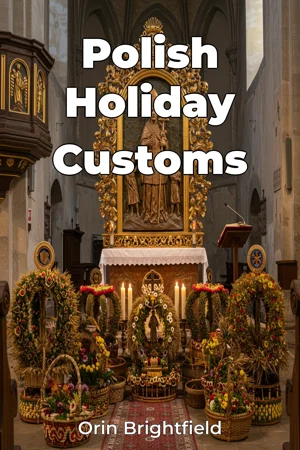
"Polish Holiday Customs" explores the vibrant traditions that shape Poland's national identity. It delves into how history, religion, and social life intertwine, creating unique celebrations. From tracing the roots of Christmas (Boże Narodzenie) and Easter (Wielkanoc) to examining All Saints' Day (Wszystkich Świętych) and May Day (Święto Pracy), the book reveals how pre-Christian Slavic beliefs melded with Catholic traditions. These customs reinforce community bonds and transmit cultural values, highlighting the resilience of Polish culture through centuries of change. The book uniquely presents a cultural studies perspective, examining how Polish holiday customs have evolved over time. By drawing on ethnographic research, historical documents, and folklore, it illuminates the lived experiences of those who participate in these traditions. Beginning with fundamental concepts, the book progresses through specific holidays, analyzing their historical roots and symbolic meanings, culminating in a discussion of Polish identity in the modern world.
Book Details
ISBN
9788233979768
Publisher
Publifye AS
Your Licenses
You don't own any licenses for this book
Purchase a license below to unlock this book and download the EPUB.
Purchase License
Select a tier to unlock this book
Need bulk licensing?
Contact us for enterprise agreements.