
About This Book
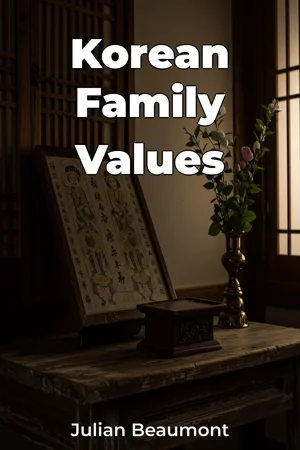
How do deeply ingrained cultural values shape the very fabric of family life and social interaction? "Korean Family Values" delves into the intricate world of Korean familial relationships and social hierarchies, offering a comprehensive analysis rooted in anthropological studies. This book explores the enduring influence of Confucianism, the dynamics of intergenerational relationships, and the evolving role of family in modern Korean society. Understanding these elements is crucial for anyone seeking insight into Korean culture, whether for academic pursuits, personal enrichment, or professional engagement. This work examines two main concepts: the pervasive influence of Confucianism on Korean social structure and the complexities of filial piety (hyo) within the family unit. Confucian principles, emphasizing hierarchical relationships and social harmony, have historically dictated family roles, responsibilities, and interactions. Filial piety, the cornerstone of these relationships, demands respect, obedience, and care for elders, shaping both individual behavior and familial expectations. We also analyze the development of family life due to, and in response to, rapid industrialization. To fully appreciate these concepts, the book provides essential historical and social context, tracing the evolution of Korean family structures from the Joseon Dynasty to the present day. It examines how historical events, such as Japanese colonization and the Korean War, have impacted family dynamics. We explore how traditional values have adapted to urbanization, globalization, and changing gender roles. The central argument of "Korean Family Values" is that while modern Korean society is undergoing significant transformation, traditional familial values continue to exert a powerful force, shaping individual identity, social behavior, and cultural norms. Understanding this interplay between tradition and modernity is essential for comprehending contemporary Korean society. The book is structured to provide a clear and comprehensive exploration of these matters. It begins by introducing the core concepts of Confucianism and filial piety, outlining their historical roots and philosophical underpinnings. Subsequent chapters delve into specific aspects of family life, for example, lineage and ancestor veneration, marriage practices, and the role of women within the family. We then closely consider how rapid industrialization and urbanization have impacted family structures, leading to a decline in traditional family size and an increase in nuclear families. The book culminates in an analysis of the challenges and opportunities facing Korean families in the 21st century, including the aging population, the low birth rate, and the changing expectations of younger generations. The analysis is grounded in a wealth of anthropological research, including ethnographic studies, surveys, and interviews with Korean families. We draw on both classical texts on Confucianism and contemporary social science research to provide a nuanced and evidence-based account of Korean family values. This book also connects to other fields of study, such as sociology, history, and gender studies, providing a multidisciplinary perspective on Korean culture. It also draws on the field of developmental psychology to better explain the impact of these values on individual and family development. "Korean Family Values" adopts a balanced and nuanced approach, avoiding stereotypes and generalizations. While acknowledging the positive aspects of traditional values, it also critically examines their limitations and potential for conflict in modern society. The tone is academic yet accessible, aimed at a broad audience with an interest in Korean culture. The target audience includes students and scholars of Korean studies, anthropology, sociology, and Asian studies. It will also appeal to anyone with a personal or professional interest in Korean culture, including businesspeople, educators, and those planning to live or work in Korea. Recognizing the complexities inherent in studying culture, the book acknowledges the limitations of its scope. While focusing on the major trends and dominant values, it acknowledges the diversity of experiences within Korean society. The insights offered in this book have practical applications for cross-cultural communication, business negotiations, and relationship building. By understanding the underlying values that shape Korean behavior, readers can navigate intercultural interactions with greater sensitivity and effectiveness. Finally, the book engages with ongoing debates about the future of the Korean family, addressing concerns about the erosion of traditional values and the challenges of adapting to a rapidly changing world.
How do deeply ingrained cultural values shape the very fabric of family life and social interaction? "Korean Family Values" delves into the intricate world of Korean familial relationships and social hierarchies, offering a comprehensive analysis rooted in anthropological studies. This book explores the enduring influence of Confucianism, the dynamics of intergenerational relationships, and the evolving role of family in modern Korean society. Understanding these elements is crucial for anyone seeking insight into Korean culture, whether for academic pursuits, personal enrichment, or professional engagement. This work examines two main concepts: the pervasive influence of Confucianism on Korean social structure and the complexities of filial piety (hyo) within the family unit. Confucian principles, emphasizing hierarchical relationships and social harmony, have historically dictated family roles, responsibilities, and interactions. Filial piety, the cornerstone of these relationships, demands respect, obedience, and care for elders, shaping both individual behavior and familial expectations. We also analyze the development of family life due to, and in response to, rapid industrialization. To fully appreciate these concepts, the book provides essential historical and social context, tracing the evolution of Korean family structures from the Joseon Dynasty to the present day. It examines how historical events, such as Japanese colonization and the Korean War, have impacted family dynamics. We explore how traditional values have adapted to urbanization, globalization, and changing gender roles. The central argument of "Korean Family Values" is that while modern Korean society is undergoing significant transformation, traditional familial values continue to exert a powerful force, shaping individual identity, social behavior, and cultural norms. Understanding this interplay between tradition and modernity is essential for comprehending contemporary Korean society. The book is structured to provide a clear and comprehensive exploration of these matters. It begins by introducing the core concepts of Confucianism and filial piety, outlining their historical roots and philosophical underpinnings. Subsequent chapters delve into specific aspects of family life, for example, lineage and ancestor veneration, marriage practices, and the role of women within the family. We then closely consider how rapid industrialization and urbanization have impacted family structures, leading to a decline in traditional family size and an increase in nuclear families. The book culminates in an analysis of the challenges and opportunities facing Korean families in the 21st century, including the aging population, the low birth rate, and the changing expectations of younger generations. The analysis is grounded in a wealth of anthropological research, including ethnographic studies, surveys, and interviews with Korean families. We draw on both classical texts on Confucianism and contemporary social science research to provide a nuanced and evidence-based account of Korean family values. This book also connects to other fields of study, such as sociology, history, and gender studies, providing a multidisciplinary perspective on Korean culture. It also draws on the field of developmental psychology to better explain the impact of these values on individual and family development. "Korean Family Values" adopts a balanced and nuanced approach, avoiding stereotypes and generalizations. While acknowledging the positive aspects of traditional values, it also critically examines their limitations and potential for conflict in modern society. The tone is academic yet accessible, aimed at a broad audience with an interest in Korean culture. The target audience includes students and scholars of Korean studies, anthropology, sociology, and Asian studies. It will also appeal to anyone with a personal or professional interest in Korean culture, including businesspeople, educators, and those planning to live or work in Korea. Recognizing the complexities inherent in studying culture, the book acknowledges the limitations of its scope. While focusing on the major trends and dominant values, it acknowledges the diversity of experiences within Korean society. The insights offered in this book have practical applications for cross-cultural communication, business negotiations, and relationship building. By understanding the underlying values that shape Korean behavior, readers can navigate intercultural interactions with greater sensitivity and effectiveness. Finally, the book engages with ongoing debates about the future of the Korean family, addressing concerns about the erosion of traditional values and the challenges of adapting to a rapidly changing world.
"Korean Family Values" explores the deep influence of cultural values on family life and social interactions in Korea. Rooted in anthropological studies, the book examines enduring Confucianism, the complexities of filial piety, and the evolving family role in modern Korean society. Confucian principles emphasizing social harmony have historically shaped family roles, while filial piety demands respect and care for elders. These values impact everything from social hierarchy to intergenerational relationships. The book traces the evolution of Korean family structures from the Joseon Dynasty to today, considering historical events like Japanese colonization and the Korean War. It explores how traditions have adapted to urbanization, globalization, and changing gender roles. Each chapter builds upon core concepts, delving into family life aspects such as lineage, marriage, and the role of women, before analyzing the impacts of industrialization and urbanization. Ultimately, "Korean Family Values" argues that traditional familial values still powerfully shape individual identity, social behavior, and cultural norms in Korea. Understanding this interplay between tradition and modernity is crucial for understanding contemporary Korean society, making the book valuable for cross-cultural communication and relationship building.
Book Details
ISBN
9788233979683
Publisher
Publifye AS
Your Licenses
You don't own any licenses for this book
Purchase a license below to unlock this book and download the EPUB.
Purchase License
Select a tier to unlock this book
Need bulk licensing?
Contact us for enterprise agreements.