
About This Book
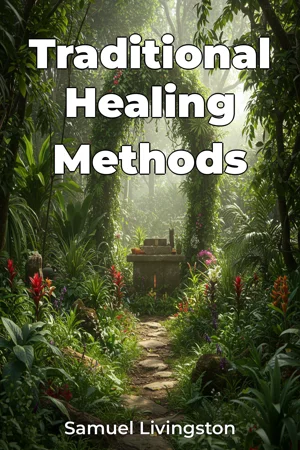
How can we bridge the gap between modern medicine and the time-tested healing practices passed down through generations of indigenous cultures? "Traditional Healing Methods" delves into the rich tapestry of indigenous medicinal practices, exploring their cultural roots and the scientific basis that underpins their efficacy. This book examines the intersection of ethnobotany, cultural anthropology, and medical science to illuminate the intricate relationship between people, plants, and healing. This exploration is significant because, in an era of increasing globalization and environmental change, the knowledge held by indigenous communities is rapidly disappearing. Preserving and understanding these traditions is not only a matter of cultural heritage but also a potential source of novel therapeutic compounds and sustainable healthcare models. Furthermore, a deeper understanding of these practices fosters respect for diverse cultural perspectives on health and well-being, contributing to more inclusive and equitable healthcare systems. To fully appreciate these healing methods, it is essential to understand the historical context in which they developed, often shaped by unique environmental conditions, spiritual beliefs, and social structures. The reader should have a general understanding of basic biological principles and an open-minded approach to cultural diversity. The central argument of this book is that indigenous medicinal practices represent a valuable and often underappreciated resource for healthcare innovation and cultural understanding. By critically examining these practices through both scientific and anthropological lenses, we can unlock new insights into disease prevention, treatment, and the holistic nature of health. This book unfolds in a structured manner. Initially, it introduces the core concepts of ethnobotany, cultural anthropology, and traditional medicine, establishing a foundation for understanding the complex interplay between culture and healing. Subsequently, the book explores several key themes. First, it examines specific examples of indigenous medicinal practices from around the world, analyzing their historical origins, cultural significance, and therapeutic applications. Second, it investigates the ethnobotanical basis of these practices, identifying the plant species used, their chemical constituents, and their pharmacological effects. Third, it delves into the cultural dimensions of healing, exploring the role of ritual, spirituality, and community in the healing process. These ideas converge to demonstrate the potential for integrating traditional knowledge with modern medicine, highlighting the benefits of a transdisciplinary approach to healthcare. The evidence presented in this book draws from a wide range of sources, including ethnobotanical surveys, field studies, phytochemical analyses, and anthropological research. Original data collected from interviews with traditional healers, observations of healing ceremonies, and laboratory analyses of medicinal plants are presented. "Traditional Healing Methods" connects to several other fields of study. Firstly, it aligns with pharmacology through the study of the active compounds in medicinal plants and their mechanisms of action. Secondly, it connects with conservation biology by highlighting the importance of preserving biodiversity and protecting the habitats of medicinal plants. Thirdly, it relates to public health by exploring the potential for incorporating traditional medicine into healthcare systems to improve access and outcomes. This book takes a distinctive approach by combining rigorous scientific analysis with a deep respect for cultural knowledge. It avoids romanticizing or appropriating indigenous practices, instead focusing on fostering a genuine dialogue between traditional healers and modern scientists. The tone is academic yet accessible, aiming to engage both scholars and general readers interested in the intersection of culture, health, and the natural world. The primary target audience includes students and researchers in ethnobotany, anthropology, medicine, and public health, as well as healthcare professionals and policymakers interested in exploring alternative approaches to healthcare. As a non-fiction work in the life sciences and medical general, this book adheres to the principles of evidence-based research and ethical engagement with indigenous communities. The scope of this book is global, showcasing examples of indigenous medicinal practices from diverse regions around the world. However, it acknowledges the limitations of any single study and emphasizes the need for further research and collaboration with indigenous communities. The knowledge presented in this book can be applied in various practical ways, from informing drug discovery efforts to developing culturally sensitive healthcare programs and promoting the conservation of medicinal plants. The book addresses current debates surrounding intellectual property rights, access to traditional knowledge, and the ethical implications of bioprospecting. It encourages readers to critically examine these issues and to advocate for policies that protect the rights of indigenous communities and promote the responsible use of traditional knowledge.
How can we bridge the gap between modern medicine and the time-tested healing practices passed down through generations of indigenous cultures? "Traditional Healing Methods" delves into the rich tapestry of indigenous medicinal practices, exploring their cultural roots and the scientific basis that underpins their efficacy. This book examines the intersection of ethnobotany, cultural anthropology, and medical science to illuminate the intricate relationship between people, plants, and healing. This exploration is significant because, in an era of increasing globalization and environmental change, the knowledge held by indigenous communities is rapidly disappearing. Preserving and understanding these traditions is not only a matter of cultural heritage but also a potential source of novel therapeutic compounds and sustainable healthcare models. Furthermore, a deeper understanding of these practices fosters respect for diverse cultural perspectives on health and well-being, contributing to more inclusive and equitable healthcare systems. To fully appreciate these healing methods, it is essential to understand the historical context in which they developed, often shaped by unique environmental conditions, spiritual beliefs, and social structures. The reader should have a general understanding of basic biological principles and an open-minded approach to cultural diversity. The central argument of this book is that indigenous medicinal practices represent a valuable and often underappreciated resource for healthcare innovation and cultural understanding. By critically examining these practices through both scientific and anthropological lenses, we can unlock new insights into disease prevention, treatment, and the holistic nature of health. This book unfolds in a structured manner. Initially, it introduces the core concepts of ethnobotany, cultural anthropology, and traditional medicine, establishing a foundation for understanding the complex interplay between culture and healing. Subsequently, the book explores several key themes. First, it examines specific examples of indigenous medicinal practices from around the world, analyzing their historical origins, cultural significance, and therapeutic applications. Second, it investigates the ethnobotanical basis of these practices, identifying the plant species used, their chemical constituents, and their pharmacological effects. Third, it delves into the cultural dimensions of healing, exploring the role of ritual, spirituality, and community in the healing process. These ideas converge to demonstrate the potential for integrating traditional knowledge with modern medicine, highlighting the benefits of a transdisciplinary approach to healthcare. The evidence presented in this book draws from a wide range of sources, including ethnobotanical surveys, field studies, phytochemical analyses, and anthropological research. Original data collected from interviews with traditional healers, observations of healing ceremonies, and laboratory analyses of medicinal plants are presented. "Traditional Healing Methods" connects to several other fields of study. Firstly, it aligns with pharmacology through the study of the active compounds in medicinal plants and their mechanisms of action. Secondly, it connects with conservation biology by highlighting the importance of preserving biodiversity and protecting the habitats of medicinal plants. Thirdly, it relates to public health by exploring the potential for incorporating traditional medicine into healthcare systems to improve access and outcomes. This book takes a distinctive approach by combining rigorous scientific analysis with a deep respect for cultural knowledge. It avoids romanticizing or appropriating indigenous practices, instead focusing on fostering a genuine dialogue between traditional healers and modern scientists. The tone is academic yet accessible, aiming to engage both scholars and general readers interested in the intersection of culture, health, and the natural world. The primary target audience includes students and researchers in ethnobotany, anthropology, medicine, and public health, as well as healthcare professionals and policymakers interested in exploring alternative approaches to healthcare. As a non-fiction work in the life sciences and medical general, this book adheres to the principles of evidence-based research and ethical engagement with indigenous communities. The scope of this book is global, showcasing examples of indigenous medicinal practices from diverse regions around the world. However, it acknowledges the limitations of any single study and emphasizes the need for further research and collaboration with indigenous communities. The knowledge presented in this book can be applied in various practical ways, from informing drug discovery efforts to developing culturally sensitive healthcare programs and promoting the conservation of medicinal plants. The book addresses current debates surrounding intellectual property rights, access to traditional knowledge, and the ethical implications of bioprospecting. It encourages readers to critically examine these issues and to advocate for policies that protect the rights of indigenous communities and promote the responsible use of traditional knowledge.
"Traditional Healing Methods" explores the intersection of indigenous medicinal practices and modern medical science, revealing how age-old remedies hold potential for healthcare innovation. The book emphasizes the importance of ethnobotany, cultural anthropology, and medical science in understanding the intricate relationships between people, plants, and healing. It examines how indigenous knowledge, often shaped by unique environmental and spiritual contexts, can contribute to novel therapeutic compounds. This book uniquely combines rigorous scientific analysis with deep respect for cultural knowledge, avoiding romanticization while fostering dialogue between traditional healers and modern scientists. It progresses by first introducing ethnobotany, cultural anthropology, and traditional medicine and then explores specific examples of indigenous practices, their ethnobotanical basis, and cultural dimensions. The book provides a valuable resource for students, researchers, and healthcare professionals interested in exploring alternative, holistic approaches to healthcare and drug discovery.
Book Details
ISBN
9788233979584
Publisher
Publifye AS
Your Licenses
You don't own any licenses for this book
Purchase a license below to unlock this book and download the EPUB.
Purchase License
Select a tier to unlock this book
Need bulk licensing?
Contact us for enterprise agreements.