
About This Book
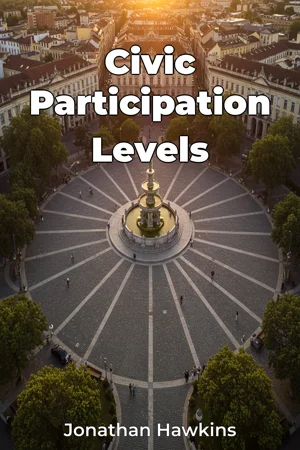
Why do some nations exhibit robust civic engagement while others struggle with apathy? "Civic Participation Levels" delves into this crucial question, examining the multifaceted landscape of civic engagement and volunteerism across the globe. This book is essential for understanding how citizens interact with their governments and communities, and how these interactions shape societies. Our analysis centers on three primary concepts: rates of participation in formal civic organizations, levels of informal volunteerism, and engagement in political processes, such as voting and advocacy. These metrics offer vital insights into the health and vitality of democratic societies and the strength of social capital within nations. Understanding these dimensions of civic action reveals not only the current state of affairs, but also the potential for future social and political development. The book situates these concepts within the context of globalization, technological advancements, and shifting social norms. We explore how historical events, economic structures, and cultural values influence the ways citizens engage with their communities and governments. Readers should have a basic understanding of political systems, social structures, and statistical concepts, although we clearly define key terms and methodologies. The central argument of "Civic Participation Levels" asserts that variations in civic participation are not random occurrences. Instead, they are the products of complex interactions involving institutional frameworks, socio-economic factors, and cultural attitudes. By understanding these influential factors, we can develop strategies to foster more inclusive and vibrant civic spheres. The book begins by introducing fundamental concepts and establishing a theoretical framework for analyzing civic engagement. We then examine specific case studies from diverse nations, highlighting the factors that contribute to varying levels of participation. Major points include: a comparative analysis of civic participation rates across different regions; an examination of the impact of government policies on volunteerism; and an investigation into the role of digital technologies in shaping contemporary civic action. The culmination of our analysis proposes actionable policies and interventions that can promote broader and more meaningful civic engagement. We consider implications for policymakers, community organizers, and citizens seeking to strengthen their societies. Our evidence draws from a range of sources, including large-scale international surveys, ethnographic studies, and statistical data from global community studies. We analyze data from organizations like the World Values Survey and the United Nations Development Programme, alongside governmental and non-governmental reports, providing both quantitative and qualitative insights. The book connects to a variety of disciplines, including political science, sociology, and economics. By integrating perspectives from these fields, we offer a holistic understanding of the factors driving civic behavior. Furthermore, it intersects with studies of media and communication, given the prominent role of technology in shaping public discourse and political mobilization. What sets this book apart is its integrated approach, which combines quantitative analysis of global datasets with qualitative case studies. This allows us to move beyond simple correlations and uncover the complex causal mechanisms that underpin civic participation. We offer original analyses, highlighting the significance of trust in government, social cohesion, and access to resources as critical determinants of civic engagement. The tone is scholarly yet accessible, blending rigorous research with clear and engaging prose. While academically grounded, it avoids jargon to ensure readability for a broad audience. "Civic Participation Levels" targets students and scholars in the social sciences, policymakers, and anyone interested in understanding and strengthening civil society. It provides valuable insights for those seeking to develop strategies for increasing civic participation, promoting democratic values, and building stronger communities. As a work in the genre of social science and politics, the book adheres to standards of empirical rigor and balanced analysis. We acknowledge potential biases in data collection and interpretation, striving to present a fair and objective assessment of the evidence. The scope of the book encompasses a wide range of nations, but it does not delve into the specific political histories of each country in exhaustive detail. While acknowledging the importance of local context, we prioritize identifying broader patterns and trends that transcend national boundaries. The information can be applied practically by policymakers seeking to design effective civic education programs, community organizers aiming to mobilize volunteers, and citizens who want to participate more actively in their communities. The book will address the ongoing debate surrounding the decline of traditional forms of civic engagement and the rise of online activism. We examine whether digital technologies are truly democratizing civic life or simply creating new forms of political polarization and disengagement.
Why do some nations exhibit robust civic engagement while others struggle with apathy? "Civic Participation Levels" delves into this crucial question, examining the multifaceted landscape of civic engagement and volunteerism across the globe. This book is essential for understanding how citizens interact with their governments and communities, and how these interactions shape societies. Our analysis centers on three primary concepts: rates of participation in formal civic organizations, levels of informal volunteerism, and engagement in political processes, such as voting and advocacy. These metrics offer vital insights into the health and vitality of democratic societies and the strength of social capital within nations. Understanding these dimensions of civic action reveals not only the current state of affairs, but also the potential for future social and political development. The book situates these concepts within the context of globalization, technological advancements, and shifting social norms. We explore how historical events, economic structures, and cultural values influence the ways citizens engage with their communities and governments. Readers should have a basic understanding of political systems, social structures, and statistical concepts, although we clearly define key terms and methodologies. The central argument of "Civic Participation Levels" asserts that variations in civic participation are not random occurrences. Instead, they are the products of complex interactions involving institutional frameworks, socio-economic factors, and cultural attitudes. By understanding these influential factors, we can develop strategies to foster more inclusive and vibrant civic spheres. The book begins by introducing fundamental concepts and establishing a theoretical framework for analyzing civic engagement. We then examine specific case studies from diverse nations, highlighting the factors that contribute to varying levels of participation. Major points include: a comparative analysis of civic participation rates across different regions; an examination of the impact of government policies on volunteerism; and an investigation into the role of digital technologies in shaping contemporary civic action. The culmination of our analysis proposes actionable policies and interventions that can promote broader and more meaningful civic engagement. We consider implications for policymakers, community organizers, and citizens seeking to strengthen their societies. Our evidence draws from a range of sources, including large-scale international surveys, ethnographic studies, and statistical data from global community studies. We analyze data from organizations like the World Values Survey and the United Nations Development Programme, alongside governmental and non-governmental reports, providing both quantitative and qualitative insights. The book connects to a variety of disciplines, including political science, sociology, and economics. By integrating perspectives from these fields, we offer a holistic understanding of the factors driving civic behavior. Furthermore, it intersects with studies of media and communication, given the prominent role of technology in shaping public discourse and political mobilization. What sets this book apart is its integrated approach, which combines quantitative analysis of global datasets with qualitative case studies. This allows us to move beyond simple correlations and uncover the complex causal mechanisms that underpin civic participation. We offer original analyses, highlighting the significance of trust in government, social cohesion, and access to resources as critical determinants of civic engagement. The tone is scholarly yet accessible, blending rigorous research with clear and engaging prose. While academically grounded, it avoids jargon to ensure readability for a broad audience. "Civic Participation Levels" targets students and scholars in the social sciences, policymakers, and anyone interested in understanding and strengthening civil society. It provides valuable insights for those seeking to develop strategies for increasing civic participation, promoting democratic values, and building stronger communities. As a work in the genre of social science and politics, the book adheres to standards of empirical rigor and balanced analysis. We acknowledge potential biases in data collection and interpretation, striving to present a fair and objective assessment of the evidence. The scope of the book encompasses a wide range of nations, but it does not delve into the specific political histories of each country in exhaustive detail. While acknowledging the importance of local context, we prioritize identifying broader patterns and trends that transcend national boundaries. The information can be applied practically by policymakers seeking to design effective civic education programs, community organizers aiming to mobilize volunteers, and citizens who want to participate more actively in their communities. The book will address the ongoing debate surrounding the decline of traditional forms of civic engagement and the rise of online activism. We examine whether digital technologies are truly democratizing civic life or simply creating new forms of political polarization and disengagement.
"Civic Participation Levels" explores the varying degrees of civic engagement and volunteerism across different nations, seeking to understand why some societies thrive while others struggle with apathy. It examines how citizens interact with their governments and communities, focusing on participation in civic organizations, volunteerism, and political processes. The book highlights that variations in civic participation are not random but are influenced by institutional frameworks, socio-economic factors, and cultural attitudes. One intriguing insight is the significant impact of trust in government on promoting civic participation, demonstrating that higher trust levels correlate with increased engagement. This book analyzes large-scale international surveys and case studies to provide both quantitative and qualitative insights. It examines the impact of government policies on volunteerism and investigates the role of digital technologies in shaping contemporary civic action. By integrating perspectives from political science, sociology, and economics, the book offers a holistic understanding of civic behavior. The book progresses from establishing a theoretical framework to examining case studies and proposing actionable policies to promote broader civic engagement. "Civic Participation Levels" stands out due to its integrated approach, combining quantitative analysis of global datasets with qualitative case studies. This allows for uncovering the complex mechanisms underlying civic participation. For example, the book notes the critical role of social cohesion and access to resources as determinants of civic engagement. The book is valuable for students, scholars, policymakers, and anyone interested in strengthening civil society.
Book Details
ISBN
9788233979546
Publisher
Publifye AS
Your Licenses
You don't own any licenses for this book
Purchase a license below to unlock this book and download the EPUB.
Purchase License
Select a tier to unlock this book
Need bulk licensing?
Contact us for enterprise agreements.