
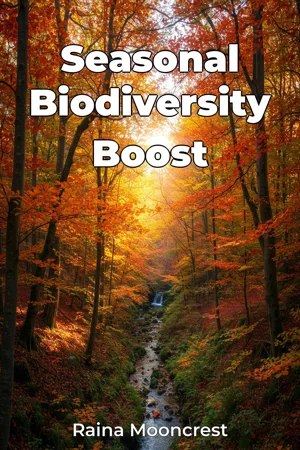
About This Book
Why are some ecosystems vibrantly diverse, while others struggle to sustain life? The answer, in part, lies in the rhythm of the seasons. "Seasonal Biodiversity Boost" explores the crucial role of seasonal changes in fostering biodiversity and bolstering ecosystem resilience. This book delves into the intricate relationships between seasonal shifts, ecological processes, and the overall health of our planet. We examine the profound ways in which seasonal variations – from temperature fluctuations and changes in precipitation to shifts in daylight hours – act as ecological drivers. The analysis will cover topics such as how seasonal cues trigger critical life-cycle events, including plant flowering, animal migration, and insect emergence. Understanding these underlying mechanisms is important for predicting how ecosystems will respond to ongoing environmental changes. This book builds upon decades of ecological research, synthesizing findings from field studies, laboratory experiments, and theoretical models. We don't assume prior expertise in ecology, but we provide necessary background information on fundamental ecological principles, such as niche partitioning, competitive exclusion, and trophic interactions. The central argument is that seasonal dynamics are not merely background noise but are, in fact, fundamental drivers of biodiversity and ecosystem stability. By understanding and appreciating the ways in which seasonal changes affect ecological processes, we can better predict and manage the impacts of climate change and other anthropogenic disturbances. The book's structure is designed to progressively build the reader's understanding of this vital connection. It begins by introducing core ecological concepts and then moves to explore how seasonal changes influence key ecosystem processes like primary productivity, nutrient cycling, and species interactions. Major sections cover the specific impacts of seasonal change on plant communities, animal populations, and the interactions between them. A concluding section synthesizes the evidence presented and explores practical applications for conservation and resource management. The evidence presented in the book draws from a wide range of sources, including long-term ecological monitoring studies, experimental manipulations of seasonal cues, and comparative analyses of ecosystems with differing seasonal regimes. The book will feature data from diverse ecosystems, ranging from temperate forests to tropical savannas, to illustrate the generality of the principles discussed. "Seasonal Biodiversity Boost" bridges the gap between ecology and other disciplines, such as climatology, geography, and conservation biology. The integration of these perspectives provides a more comprehensive understanding of the complex interactions between seasonal changes, biodiversity, and ecosystem function. This book stands out by integrating field surveys with fundamental ecological principles to provide a detailed analysis of how seasonal changes drive biodiversity and ecosystem resilience. The tone is informative and accessible, aiming to engage a broad audience of students, researchers, conservation practitioners, and environmentally conscious citizens. The writing style is clear and concise, avoiding jargon where possible and providing definitions for technical terms. The target audience includes advanced undergraduate and graduate students in ecology, environmental science, and related fields, as well as professionals working in conservation, natural resource management, and environmental policy. This book's value lies in its synthesis of current research and its practical implications for addressing pressing environmental challenges. The scope encompasses a broad range of ecosystems and taxonomic groups, but it focuses primarily on terrestrial and freshwater environments. While marine ecosystems are acknowledged, they are not the primary focus due to the distinct nature of seasonal dynamics in those environments. The information presented has direct real-world applications in conservation planning, restoration ecology, and climate change adaptation. By understanding the seasonal sensitivities of different species and ecosystems, we can develop more effective strategies for protecting biodiversity and promoting ecosystem resilience in a changing world. Furthermore, the book addresses the ongoing debates surrounding the role of phenological mismatches (timing of life cycle events) in driving population declines and ecosystem disruptions.
Why are some ecosystems vibrantly diverse, while others struggle to sustain life? The answer, in part, lies in the rhythm of the seasons. "Seasonal Biodiversity Boost" explores the crucial role of seasonal changes in fostering biodiversity and bolstering ecosystem resilience. This book delves into the intricate relationships between seasonal shifts, ecological processes, and the overall health of our planet. We examine the profound ways in which seasonal variations – from temperature fluctuations and changes in precipitation to shifts in daylight hours – act as ecological drivers. The analysis will cover topics such as how seasonal cues trigger critical life-cycle events, including plant flowering, animal migration, and insect emergence. Understanding these underlying mechanisms is important for predicting how ecosystems will respond to ongoing environmental changes. This book builds upon decades of ecological research, synthesizing findings from field studies, laboratory experiments, and theoretical models. We don't assume prior expertise in ecology, but we provide necessary background information on fundamental ecological principles, such as niche partitioning, competitive exclusion, and trophic interactions. The central argument is that seasonal dynamics are not merely background noise but are, in fact, fundamental drivers of biodiversity and ecosystem stability. By understanding and appreciating the ways in which seasonal changes affect ecological processes, we can better predict and manage the impacts of climate change and other anthropogenic disturbances. The book's structure is designed to progressively build the reader's understanding of this vital connection. It begins by introducing core ecological concepts and then moves to explore how seasonal changes influence key ecosystem processes like primary productivity, nutrient cycling, and species interactions. Major sections cover the specific impacts of seasonal change on plant communities, animal populations, and the interactions between them. A concluding section synthesizes the evidence presented and explores practical applications for conservation and resource management. The evidence presented in the book draws from a wide range of sources, including long-term ecological monitoring studies, experimental manipulations of seasonal cues, and comparative analyses of ecosystems with differing seasonal regimes. The book will feature data from diverse ecosystems, ranging from temperate forests to tropical savannas, to illustrate the generality of the principles discussed. "Seasonal Biodiversity Boost" bridges the gap between ecology and other disciplines, such as climatology, geography, and conservation biology. The integration of these perspectives provides a more comprehensive understanding of the complex interactions between seasonal changes, biodiversity, and ecosystem function. This book stands out by integrating field surveys with fundamental ecological principles to provide a detailed analysis of how seasonal changes drive biodiversity and ecosystem resilience. The tone is informative and accessible, aiming to engage a broad audience of students, researchers, conservation practitioners, and environmentally conscious citizens. The writing style is clear and concise, avoiding jargon where possible and providing definitions for technical terms. The target audience includes advanced undergraduate and graduate students in ecology, environmental science, and related fields, as well as professionals working in conservation, natural resource management, and environmental policy. This book's value lies in its synthesis of current research and its practical implications for addressing pressing environmental challenges. The scope encompasses a broad range of ecosystems and taxonomic groups, but it focuses primarily on terrestrial and freshwater environments. While marine ecosystems are acknowledged, they are not the primary focus due to the distinct nature of seasonal dynamics in those environments. The information presented has direct real-world applications in conservation planning, restoration ecology, and climate change adaptation. By understanding the seasonal sensitivities of different species and ecosystems, we can develop more effective strategies for protecting biodiversity and promoting ecosystem resilience in a changing world. Furthermore, the book addresses the ongoing debates surrounding the role of phenological mismatches (timing of life cycle events) in driving population declines and ecosystem disruptions.
"Seasonal Biodiversity Boost" investigates how seasonal changes drive biodiversity and ecosystem resilience. It reveals that seasonal variations, such as temperature and precipitation, act as key ecological drivers, triggering life-cycle events like plant flowering and animal migration. Understanding these mechanisms is vital for predicting ecosystem responses to environmental changes. The book synthesizes decades of ecological research, blending field studies with fundamental ecological principles. The book emphasizes the importance of seasonal dynamics, demonstrating they are not just background noise but fundamental to ecosystem stability. For example, seasonal cues influence primary productivity and nutrient cycling. Examining plant communities, animal populations, and their interactions, the book highlights the practical applications of understanding seasonal sensitivities for conservation and resource management. Progressing from core ecological concepts to specific impacts on ecosystems, the book offers insights valuable for students, researchers, and conservation practitioners. It bridges ecology with climatology, geography, and conservation biology, providing a comprehensive view of how seasonal changes, biodiversity, and ecosystem functions interact. This approach is crucial for addressing climate change and anthropogenic disturbances effectively.
Book Details
ISBN
9788233979379
Publisher
Publifye AS
Your Licenses
You don't own any licenses for this book
Purchase a license below to unlock this book and download the EPUB.
Purchase License
Select a tier to unlock this book
Need bulk licensing?
Contact us for enterprise agreements.