
About This Book
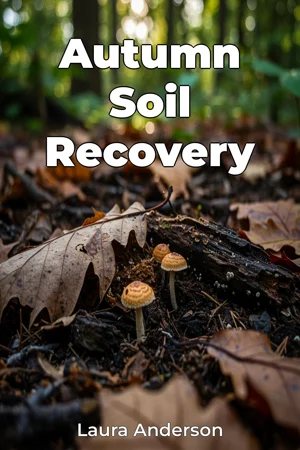
Have you ever considered the hidden engine of renewal operating beneath the vibrant colors of autumn? "Autumn Soil Recovery" delves into the largely unseen yet crucial processes by which falling leaves and decaying organic matter contribute to the regeneration and revitalization of soil ecosystems. This book explores the intricate relationship between autumnal decay and soil health, focusing on the biological, chemical, and physical transformations that drive this annual resurgence. This book tackles three key topics: the decomposition process, the role of soil microorganisms, and the consequential impact on nutrient cycling and soil structure. These elements are vital because soil health is fundamental to the health of entire ecosystems, influencing everything from plant growth and biodiversity to carbon sequestration and water filtration. A deep understanding of these processes is critical for sustainable land management and conservation efforts. Historically, agriculture and land management practices have often overlooked the importance of natural decay cycles, focusing instead on synthetic fertilizers and soil amendments. However, a growing body of ecosystem studies is highlighting the long-term benefits of mimicking natural processes to enhance soil fertility and resilience. This book contextualizes these newer findings within the existing framework of soil science, providing a balanced perspective on both traditional and innovative approaches to soil management. The central argument of "Autumn Soil Recovery" is that autumn's organic decay is not merely an ending but rather a crucial stage in a continuous cycle of regeneration, significantly influencing soil health and ecosystem function. This argument challenges conventional views that often prioritize immediate gains in plant growth over long-term soil sustainability. Understanding and harnessing this autumnal process is essential for developing more sustainable and ecologically sound agricultural and land management practices. The book begins with an introduction to the basic concepts of soil ecology and the importance of organic matter. It then progresses through the stages of decomposition, detailing the roles of various organisms, from bacteria and fungi to earthworms and insects. Major sections of the book will focus specifically on: (1) The biochemical breakdown of leaf litter, exploring the enzymatic processes and the release of nutrients; (2) The impact of different tree species and leaf types on soil composition and microbial communities; and (3) The role of soil structure in facilitating water infiltration, aeration, and root growth. The final section culminates in a discussion of practical applications, including composting strategies, no-till farming practices, and the use of cover crops to enhance soil health. The evidence presented is drawn from a wide range of scientific research, including field studies, laboratory experiments, and long-term ecosystem monitoring projects. Particular emphasis is placed on data from controlled experiments that isolate the effects of specific variables, such as leaf litter composition and soil moisture content. Furthermore, the book examines novel data sources from real-world applications, such as sustainable farming initiatives of varied scales. "Autumn Soil Recovery" connects to several other fields, including microbiology (through the study of soil microorganisms), forestry (through the analysis of leaf litter inputs from different tree species), and environmental science (through the assessment of carbon sequestration and nutrient cycling). These interdisciplinary connections underscore the complex and interconnected nature of soil ecosystems and enhance the book's holistic approach. What sets this book apart is its integrated perspective, combining fundamental scientific principles with practical applications and specific ecosystem studies. It offers a nuanced understanding of the autumnal decay process, moving beyond simple descriptions to explore the underlying mechanisms and ecological implications. Written in a clear and accessible style, "Autumn Soil Recovery" is aimed at a broad audience, including students, researchers, land managers, gardeners, and anyone interested in learning more about the hidden world beneath our feet. The book provides valuable insights and practical guidance for promoting soil health and sustainability in a variety of settings. As a work of science and nature, "Autumn Soil Recovery" adheres to the conventions of non-fiction, including accurate reporting, thorough documentation, and objective analysis. While covering a broad range of topics related to autumnal decay and soil regeneration, the book intentionally limits its scope to temperate forest ecosystems and agricultural lands. The goal is to provide a focused and in-depth analysis of these specific environments, rather than attempting to cover the entire planet. Readers will learn how to assess soil health, implement composting techniques, select appropriate cover crops, and promote beneficial microbial communities. By applying these strategies, they can enhance soil fertility, reduce reliance on synthetic inputs, and contribute to a more sustainable and resilient ecosystem. While there is broad scientific consensus on the fundamental principles of soil ecology, some debates remain regarding the specific management practices that are most effective in different contexts. "Autumn Soil Recovery" acknowledges these debates and presents different perspectives, encouraging readers to critically evaluate the evidence and draw their own conclusions.
Have you ever considered the hidden engine of renewal operating beneath the vibrant colors of autumn? "Autumn Soil Recovery" delves into the largely unseen yet crucial processes by which falling leaves and decaying organic matter contribute to the regeneration and revitalization of soil ecosystems. This book explores the intricate relationship between autumnal decay and soil health, focusing on the biological, chemical, and physical transformations that drive this annual resurgence. This book tackles three key topics: the decomposition process, the role of soil microorganisms, and the consequential impact on nutrient cycling and soil structure. These elements are vital because soil health is fundamental to the health of entire ecosystems, influencing everything from plant growth and biodiversity to carbon sequestration and water filtration. A deep understanding of these processes is critical for sustainable land management and conservation efforts. Historically, agriculture and land management practices have often overlooked the importance of natural decay cycles, focusing instead on synthetic fertilizers and soil amendments. However, a growing body of ecosystem studies is highlighting the long-term benefits of mimicking natural processes to enhance soil fertility and resilience. This book contextualizes these newer findings within the existing framework of soil science, providing a balanced perspective on both traditional and innovative approaches to soil management. The central argument of "Autumn Soil Recovery" is that autumn's organic decay is not merely an ending but rather a crucial stage in a continuous cycle of regeneration, significantly influencing soil health and ecosystem function. This argument challenges conventional views that often prioritize immediate gains in plant growth over long-term soil sustainability. Understanding and harnessing this autumnal process is essential for developing more sustainable and ecologically sound agricultural and land management practices. The book begins with an introduction to the basic concepts of soil ecology and the importance of organic matter. It then progresses through the stages of decomposition, detailing the roles of various organisms, from bacteria and fungi to earthworms and insects. Major sections of the book will focus specifically on: (1) The biochemical breakdown of leaf litter, exploring the enzymatic processes and the release of nutrients; (2) The impact of different tree species and leaf types on soil composition and microbial communities; and (3) The role of soil structure in facilitating water infiltration, aeration, and root growth. The final section culminates in a discussion of practical applications, including composting strategies, no-till farming practices, and the use of cover crops to enhance soil health. The evidence presented is drawn from a wide range of scientific research, including field studies, laboratory experiments, and long-term ecosystem monitoring projects. Particular emphasis is placed on data from controlled experiments that isolate the effects of specific variables, such as leaf litter composition and soil moisture content. Furthermore, the book examines novel data sources from real-world applications, such as sustainable farming initiatives of varied scales. "Autumn Soil Recovery" connects to several other fields, including microbiology (through the study of soil microorganisms), forestry (through the analysis of leaf litter inputs from different tree species), and environmental science (through the assessment of carbon sequestration and nutrient cycling). These interdisciplinary connections underscore the complex and interconnected nature of soil ecosystems and enhance the book's holistic approach. What sets this book apart is its integrated perspective, combining fundamental scientific principles with practical applications and specific ecosystem studies. It offers a nuanced understanding of the autumnal decay process, moving beyond simple descriptions to explore the underlying mechanisms and ecological implications. Written in a clear and accessible style, "Autumn Soil Recovery" is aimed at a broad audience, including students, researchers, land managers, gardeners, and anyone interested in learning more about the hidden world beneath our feet. The book provides valuable insights and practical guidance for promoting soil health and sustainability in a variety of settings. As a work of science and nature, "Autumn Soil Recovery" adheres to the conventions of non-fiction, including accurate reporting, thorough documentation, and objective analysis. While covering a broad range of topics related to autumnal decay and soil regeneration, the book intentionally limits its scope to temperate forest ecosystems and agricultural lands. The goal is to provide a focused and in-depth analysis of these specific environments, rather than attempting to cover the entire planet. Readers will learn how to assess soil health, implement composting techniques, select appropriate cover crops, and promote beneficial microbial communities. By applying these strategies, they can enhance soil fertility, reduce reliance on synthetic inputs, and contribute to a more sustainable and resilient ecosystem. While there is broad scientific consensus on the fundamental principles of soil ecology, some debates remain regarding the specific management practices that are most effective in different contexts. "Autumn Soil Recovery" acknowledges these debates and presents different perspectives, encouraging readers to critically evaluate the evidence and draw their own conclusions.
"Autumn Soil Recovery" explores the often-overlooked process of how decaying organic matter in autumn revitalizes soil ecosystems. The book highlights the critical role of decomposition in soil health, detailing how fallen leaves and organic debris contribute to nutrient cycling and improved soil structure. Did you know that different tree species can significantly impact soil composition based on their leaf litter? Or that soil microorganisms, like bacteria and fungi, are essential for breaking down this organic matter and releasing vital nutrients? The book progresses from basic soil ecology concepts to the stages of decomposition, emphasizing the roles of various organisms. It delves into the biochemical breakdown of leaf litter, the impact of different tree species, and the importance of soil structure for water infiltration and root growth. Ultimately, "Autumn Soil Recovery" connects fundamental scientific principles with practical applications, such as composting and cover crops, making it a valuable resource for anyone interested in sustainable land management.
Book Details
ISBN
9788233979362
Publisher
Publifye AS
Your Licenses
You don't own any licenses for this book
Purchase a license below to unlock this book and download the EPUB.
Purchase License
Select a tier to unlock this book
Need bulk licensing?
Contact us for enterprise agreements.