
About This Book
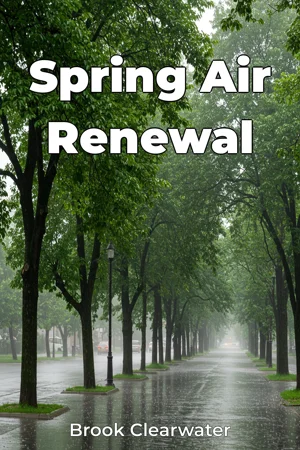
Have you ever noticed how the air seems cleaner and fresher after a bout of heavy rain or a spell of windy weather? "Spring Air Renewal" delves into the science behind this phenomenon, exploring the crucial role seasonal winds and rainfall play in cleansing our urban environments. This book examines the interplay between atmospheric dynamics, precipitation patterns, and the removal of pollutants from our cities, offering a comprehensive look at how nature helps to mitigate the impact of human activity on air quality. We will unpack two core components of urban air quality improvement: the mechanics of wind-driven pollutant dispersion and the efficacy of rainfall as a natural scrubber. Why should we care? Because understanding these processes is fundamental to developing effective strategies for managing air pollution, safeguarding public health, and building more sustainable urban environments. The book places these meteorological processes within the broader context of climate change and urbanization, examining how increasing population density and shifting weather patterns are influencing air quality around the globe. A basic understanding of meteorological concepts, such as air pressure gradients and humidity, will prove beneficial but is not essential. Our central argument is that seasonal wind and rainfall patterns are indispensable, yet often overlooked, natural mechanisms for improving urban air quality, and their effectiveness is being challenged by accelerating urbanization and climate change. We will demonstrate how a deeper understanding of these processes can inform better urban planning and environmental policies. The book unfolds in a structured manner, starting with an introduction to the primary pollutants affecting urban air quality and their sources. It then progresses to detailed analyses of wind patterns, focusing on how seasonal variations influence pollutant dispersion. Similarly, we dedicate a significant portion to understanding the processes by which rainfall scavenges pollutants from the air. These concepts are developed employing case studies of different cities around the world, highlighting the impact of local geography and climate on air quality. The book culminates in a discussion of practical strategies for leveraging these natural cleansing processes to improve urban air quality, including recommendations for urban design, transportation planning, and emissions control policies. The evidence presented is drawn from a wide range of sources, including meteorological data from global weather monitoring networks, air quality measurements from government environmental agencies, and scientific research published in peer-reviewed journals. The book also incorporates computational fluid dynamics models to visualize and analyze the movement of pollutants in urban environments. This will offer a unique perspective on how airflow interacts with buildings and infrastructure, affecting pollutant concentrations at street level. "Spring Air Renewal" bridges several interconnected fields: environmental science, meteorology, and urban planning. By examining the physical processes of atmospheric cleansing, we inform the development of urban planning strategies that maximize natural ventilation and minimize pollutant accumulation. The book also touches upon public health, highlighting the link between air quality and respiratory illnesses. This book offers a unique perspective by integrating detailed meteorological analysis with practical urban planning considerations. It moves beyond simply describing the problem of air pollution to offering concrete, actionable solutions based on a deep understanding of the underlying natural processes. The tone is informative and accessible, designed to appeal to a broad audience including students, researchers, policymakers, and concerned citizens. While grounded in scientific rigor, the writing style avoids technical jargon and complicated equations, opting for clear explanations and compelling visuals. The target audience includes undergraduate and graduate students in environmental science, geography, and urban planning; environmental professionals working in government agencies and consulting firms; and anyone interested in learning more about air quality and sustainable urban development. The book will be valuable for professionals seeking to implement practical strategies for improving air quality in urban areas. As a work of environmental non-fiction, the book adheres to the genre's emphasis on factual accuracy, objective analysis, and clear communication of complex scientific concepts. While the book offers a broad overview of air quality issues, its scope is intentionally limited to the role of seasonal winds and rainfall in urban environments. It does not delve into the chemistry of specific pollutants or the details of air pollution control technologies, focusing instead on the natural processes of atmospheric cleansing. The information presented can be applied to real-world situations by urban planners designing new developments, policymakers implementing air quality regulations, and individuals making informed choices about their transportation and lifestyle. For example, the book's findings can inform the design of green spaces and building layouts that promote natural ventilation and minimize pollutant concentrations. The book addresses ongoing debates surrounding the effectiveness of different air pollution control strategies, particularly the role of natural processes in mitigating the impact of human activities. By providing a comprehensive analysis of the science behind these processes, "Spring Air Renewal" aims to contribute to a more informed and nuanced discussion of air quality management.
Have you ever noticed how the air seems cleaner and fresher after a bout of heavy rain or a spell of windy weather? "Spring Air Renewal" delves into the science behind this phenomenon, exploring the crucial role seasonal winds and rainfall play in cleansing our urban environments. This book examines the interplay between atmospheric dynamics, precipitation patterns, and the removal of pollutants from our cities, offering a comprehensive look at how nature helps to mitigate the impact of human activity on air quality. We will unpack two core components of urban air quality improvement: the mechanics of wind-driven pollutant dispersion and the efficacy of rainfall as a natural scrubber. Why should we care? Because understanding these processes is fundamental to developing effective strategies for managing air pollution, safeguarding public health, and building more sustainable urban environments. The book places these meteorological processes within the broader context of climate change and urbanization, examining how increasing population density and shifting weather patterns are influencing air quality around the globe. A basic understanding of meteorological concepts, such as air pressure gradients and humidity, will prove beneficial but is not essential. Our central argument is that seasonal wind and rainfall patterns are indispensable, yet often overlooked, natural mechanisms for improving urban air quality, and their effectiveness is being challenged by accelerating urbanization and climate change. We will demonstrate how a deeper understanding of these processes can inform better urban planning and environmental policies. The book unfolds in a structured manner, starting with an introduction to the primary pollutants affecting urban air quality and their sources. It then progresses to detailed analyses of wind patterns, focusing on how seasonal variations influence pollutant dispersion. Similarly, we dedicate a significant portion to understanding the processes by which rainfall scavenges pollutants from the air. These concepts are developed employing case studies of different cities around the world, highlighting the impact of local geography and climate on air quality. The book culminates in a discussion of practical strategies for leveraging these natural cleansing processes to improve urban air quality, including recommendations for urban design, transportation planning, and emissions control policies. The evidence presented is drawn from a wide range of sources, including meteorological data from global weather monitoring networks, air quality measurements from government environmental agencies, and scientific research published in peer-reviewed journals. The book also incorporates computational fluid dynamics models to visualize and analyze the movement of pollutants in urban environments. This will offer a unique perspective on how airflow interacts with buildings and infrastructure, affecting pollutant concentrations at street level. "Spring Air Renewal" bridges several interconnected fields: environmental science, meteorology, and urban planning. By examining the physical processes of atmospheric cleansing, we inform the development of urban planning strategies that maximize natural ventilation and minimize pollutant accumulation. The book also touches upon public health, highlighting the link between air quality and respiratory illnesses. This book offers a unique perspective by integrating detailed meteorological analysis with practical urban planning considerations. It moves beyond simply describing the problem of air pollution to offering concrete, actionable solutions based on a deep understanding of the underlying natural processes. The tone is informative and accessible, designed to appeal to a broad audience including students, researchers, policymakers, and concerned citizens. While grounded in scientific rigor, the writing style avoids technical jargon and complicated equations, opting for clear explanations and compelling visuals. The target audience includes undergraduate and graduate students in environmental science, geography, and urban planning; environmental professionals working in government agencies and consulting firms; and anyone interested in learning more about air quality and sustainable urban development. The book will be valuable for professionals seeking to implement practical strategies for improving air quality in urban areas. As a work of environmental non-fiction, the book adheres to the genre's emphasis on factual accuracy, objective analysis, and clear communication of complex scientific concepts. While the book offers a broad overview of air quality issues, its scope is intentionally limited to the role of seasonal winds and rainfall in urban environments. It does not delve into the chemistry of specific pollutants or the details of air pollution control technologies, focusing instead on the natural processes of atmospheric cleansing. The information presented can be applied to real-world situations by urban planners designing new developments, policymakers implementing air quality regulations, and individuals making informed choices about their transportation and lifestyle. For example, the book's findings can inform the design of green spaces and building layouts that promote natural ventilation and minimize pollutant concentrations. The book addresses ongoing debates surrounding the effectiveness of different air pollution control strategies, particularly the role of natural processes in mitigating the impact of human activities. By providing a comprehensive analysis of the science behind these processes, "Spring Air Renewal" aims to contribute to a more informed and nuanced discussion of air quality management.
"Spring Air Renewal" explores how seasonal winds and rainfall naturally cleanse urban environments, offering insights into improving air quality. The book highlights the often-overlooked role of meteorology in mitigating air pollution. One intriguing fact is how wind patterns, influenced by urban landscapes, drastically affect pollutant dispersion. Another is the efficiency of rainfall in scrubbing pollutants, showcasing nature’s ability to combat human-caused pollution. The book progresses from identifying primary pollutants to analyzing wind and rainfall patterns, using global case studies to illustrate local impacts. It uniquely integrates environmental science, meteorology, and urban planning, bridging the gap between understanding atmospheric cleansing and implementing practical urban design. This approach informs actionable strategies for sustainable urban development, emphasizing natural ventilation and minimizing pollutant accumulation.
Book Details
ISBN
9788233979348
Publisher
Publifye AS
Your Licenses
You don't own any licenses for this book
Purchase a license below to unlock this book and download the EPUB.
Purchase License
Select a tier to unlock this book
Need bulk licensing?
Contact us for enterprise agreements.