
About This Book
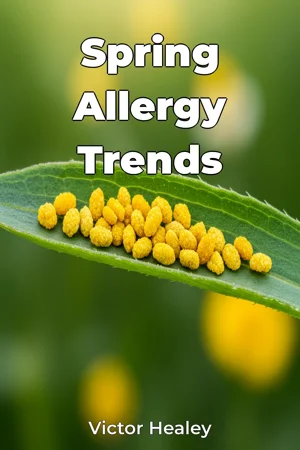
Is that familiar spring breeze truly as innocent as it feels, or does it carry an invisible burden that affects millions? "Spring Allergy Trends" delves into the escalating phenomenon of springtime allergies, examining their increasing prevalence and significant public health consequences in a world facing rapid environmental change. This book provides a comprehensive analysis of the environmental factors driving these allergy trends, the biological mechanisms involved, and the resulting impact on human health. The core of our exploration centers on three key themes: the changing nature of pollen seasons, the environmental factors exacerbating allergic reactions, and the public health implications of these trends. We investigate how climate change, urbanization, and altered land use practices are reshaping pollen production, distribution, and allergenicity. Understanding these factors is crucial for predicting future allergy patterns and implementing effective mitigation strategies. Current understanding suggests that rising global temperatures, increased CO2 levels, and altered rainfall patterns are contributing to longer and more intense pollen seasons. Industrial pollution and urbanization further compound these issues, creating environments where allergens thrive and human sensitivity is heightened. A basic foundation in environmental science and immunology will be helpful for readers, though concepts will be clearly explained as they are introduced. The central argument of "Spring Allergy Trends" is that the increase in springtime allergies is not merely a seasonal nuisance but a significant public health challenge driven by complex environmental interactions. By understanding these interactions, we can develop more effective strategies for prevention, diagnosis, and treatment. The book highlights the importance of proactive, environmentally conscious policies to mitigate the impacts of these trends. The book unfolds in a logical sequence. First, we introduce the fundamental concepts of pollen biology, allergic responses, and the environmental factors influencing pollen production. Next, we present detailed analyses of pollen data from diverse geographic regions, correlated with environmental and climate change indicators. Then, we explore the public health consequences, including the economic burden of allergy-related illnesses, the impact on respiratory health, and the effects on quality of life. Finally, we present a culmination of these arguments with proposed interventions and policies, offering a practical guide for mitigating these harmful environmental exposures. The book draws on a range of evidence, including peer-reviewed environmental health studies, detailed pollen count data from monitoring networks, epidemiological surveys, and climate modeling projections. A unique aspect is our integrated analysis of pollen data with environmental datasets, allowing us to correlate pollen counts with specific environmental factors with greater precision. We also employ predictive modeling to forecast future allergy trends under different climate scenarios. "Spring Allergy Trends" connects to fields beyond just environmental science and public health. It ties into climatology through the study of climate change impacts, economics through the evaluation of healthcare costs associated with allergies, and urban planning through discussions on how urban design can mitigate allergen exposure. These interdisciplinary connections enrich the discussion by providing a holistic view of the problem. A distinctive feature of this book is its emphasis on translating scientific findings into practical recommendations for individuals, healthcare professionals, and policymakers. We advocate for proactive environmental management and public health strategies that can reduce the burden of springtime allergies. Our tone throughout will be informative and analytical, designed for a broad audience while maintaining scientific rigor. This book is intended for environmental scientists, public health professionals, healthcare providers, policymakers, and anyone interested in understanding the interplay between environmental change and human health. It provides valuable insights into identifying risks, implementing preventative measures, and advocating for policies that promote respiratory and environmental well-being. As a work of non-fiction in the environmental and public health genres, "Spring Allergy Trends" embraces evidence-based analysis and clear communication. It offers readers a detailed yet accessible exploration of a complex issue. While the book focuses primarily on North American and European pollen trends due to data availability, it acknowledges the global nature of the problem and the need for further research in other regions. It does not delve deeply into the complexities of food allergies, focusing instead on airborne allergens. Readers will gain the knowledge to apply informed practices to minimize their allergy exposures, such as monitoring pollen forecasts, using air purifiers, and advocating for green spaces in urban environments. Healthcare providers will benefit from the latest research on diagnostic tools and treatment strategies. The book also acknowledges the complexity of addressing pollen counts considering it is an open public space.
Is that familiar spring breeze truly as innocent as it feels, or does it carry an invisible burden that affects millions? "Spring Allergy Trends" delves into the escalating phenomenon of springtime allergies, examining their increasing prevalence and significant public health consequences in a world facing rapid environmental change. This book provides a comprehensive analysis of the environmental factors driving these allergy trends, the biological mechanisms involved, and the resulting impact on human health. The core of our exploration centers on three key themes: the changing nature of pollen seasons, the environmental factors exacerbating allergic reactions, and the public health implications of these trends. We investigate how climate change, urbanization, and altered land use practices are reshaping pollen production, distribution, and allergenicity. Understanding these factors is crucial for predicting future allergy patterns and implementing effective mitigation strategies. Current understanding suggests that rising global temperatures, increased CO2 levels, and altered rainfall patterns are contributing to longer and more intense pollen seasons. Industrial pollution and urbanization further compound these issues, creating environments where allergens thrive and human sensitivity is heightened. A basic foundation in environmental science and immunology will be helpful for readers, though concepts will be clearly explained as they are introduced. The central argument of "Spring Allergy Trends" is that the increase in springtime allergies is not merely a seasonal nuisance but a significant public health challenge driven by complex environmental interactions. By understanding these interactions, we can develop more effective strategies for prevention, diagnosis, and treatment. The book highlights the importance of proactive, environmentally conscious policies to mitigate the impacts of these trends. The book unfolds in a logical sequence. First, we introduce the fundamental concepts of pollen biology, allergic responses, and the environmental factors influencing pollen production. Next, we present detailed analyses of pollen data from diverse geographic regions, correlated with environmental and climate change indicators. Then, we explore the public health consequences, including the economic burden of allergy-related illnesses, the impact on respiratory health, and the effects on quality of life. Finally, we present a culmination of these arguments with proposed interventions and policies, offering a practical guide for mitigating these harmful environmental exposures. The book draws on a range of evidence, including peer-reviewed environmental health studies, detailed pollen count data from monitoring networks, epidemiological surveys, and climate modeling projections. A unique aspect is our integrated analysis of pollen data with environmental datasets, allowing us to correlate pollen counts with specific environmental factors with greater precision. We also employ predictive modeling to forecast future allergy trends under different climate scenarios. "Spring Allergy Trends" connects to fields beyond just environmental science and public health. It ties into climatology through the study of climate change impacts, economics through the evaluation of healthcare costs associated with allergies, and urban planning through discussions on how urban design can mitigate allergen exposure. These interdisciplinary connections enrich the discussion by providing a holistic view of the problem. A distinctive feature of this book is its emphasis on translating scientific findings into practical recommendations for individuals, healthcare professionals, and policymakers. We advocate for proactive environmental management and public health strategies that can reduce the burden of springtime allergies. Our tone throughout will be informative and analytical, designed for a broad audience while maintaining scientific rigor. This book is intended for environmental scientists, public health professionals, healthcare providers, policymakers, and anyone interested in understanding the interplay between environmental change and human health. It provides valuable insights into identifying risks, implementing preventative measures, and advocating for policies that promote respiratory and environmental well-being. As a work of non-fiction in the environmental and public health genres, "Spring Allergy Trends" embraces evidence-based analysis and clear communication. It offers readers a detailed yet accessible exploration of a complex issue. While the book focuses primarily on North American and European pollen trends due to data availability, it acknowledges the global nature of the problem and the need for further research in other regions. It does not delve deeply into the complexities of food allergies, focusing instead on airborne allergens. Readers will gain the knowledge to apply informed practices to minimize their allergy exposures, such as monitoring pollen forecasts, using air purifiers, and advocating for green spaces in urban environments. Healthcare providers will benefit from the latest research on diagnostic tools and treatment strategies. The book also acknowledges the complexity of addressing pollen counts considering it is an open public space.
"Spring Allergy Trends" explores the growing issue of spring allergies as a significant public health concern influenced by environmental changes. It examines how factors like climate change and urbanization are altering pollen seasons. For example, rising temperatures can lead to longer pollen seasons, affecting respiratory health. The book uniquely correlates pollen data with environmental datasets to understand the drivers behind increasing allergy prevalence. The book investigates the impact of environmental factors on allergic reactions and the public health implications of these trends. It highlights how urbanization can worsen allergen exposure, impacting quality of life. "Spring Allergy Trends" progresses logically, starting with pollen biology and allergic responses, then analyzes data, explores health consequences, and finally proposes interventions and policies. The book provides an integrated analysis of pollen data with environmental datasets, offering predictive modeling for future allergy trends. By translating scientific findings into practical recommendations, it aims to equip individuals, healthcare professionals, and policymakers with the knowledge to mitigate harmful environmental exposures and promote environmental well-being.
Book Details
ISBN
9788233979331
Publisher
Publifye AS
Your Licenses
You don't own any licenses for this book
Purchase a license below to unlock this book and download the EPUB.
Purchase License
Select a tier to unlock this book
Need bulk licensing?
Contact us for enterprise agreements.