
About This Book
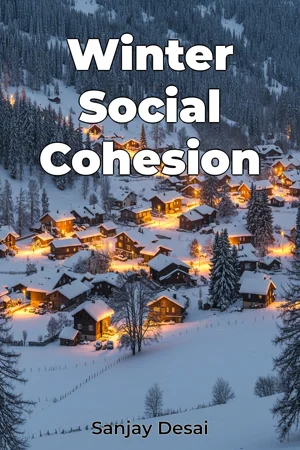
How do societies maintain cohesion during the challenging winter months? "Winter Social Cohesion" explores the multifaceted ways in which winter traditions and community activities serve as critical mechanisms for strengthening social bonds. This book delves into the heart of how shared experiences during the coldest season contribute to overall societal well-being, drawing upon historical analysis and sociological research. The principal topics examined are the origins and evolution of winter festivals, the role of communal labor in preparing for winter, and the impact of indoor social activities on maintaining interpersonal relationships. These elements are not merely seasonal pastimes; they represent vital strategies for human survival and social continuity. Understanding these dynamics is vital for comprehending how culture shapes human behavior and reinforces community resilience. Historically, winter has been a period of scarcity, isolation, and heightened vulnerability. Early societies developed sophisticated rituals and collaborative practices to mitigate these challenges. The necessity of shared labor, such as gathering firewood or building shelters, fostered interdependence. As societies evolved, these practical activities morphed into cultural traditions that continue to bind people together. Basic sociological principles, such as Durkheim’s concept of collective effervescence and Tönnies’ distinction between Gemeinschaft and Gesellschaft, provide theoretical frameworks for understanding these phenomena. The central argument of "Winter Social Cohesion" asserts that winter traditions and community activities are not simply pleasant distractions but are essential components of social infrastructure. These practices actively counteract the isolating effects of winter, reinforce social norms, and provide emotional support during a potentially difficult time. This argument is crucial because it highlights the often-overlooked role of seasonal cultural practices in sustaining social stability and psychological health. This book is structured to systematically explore this thesis. It begins by introducing the fundamental concepts of social cohesion and cultural adaptation. The second section examines the historical roots of various winter traditions, from ancient harvest festivals to modern-day celebrations, detailing their sociological significance. A third section analyzes the impact of specific community activities, such as communal cooking, storytelling, and games, using case studies from diverse cultures. The final section discusses the practical implications of these findings for contemporary social policy and community development. The evidence presented includes historical records, ethnographic studies, and sociological surveys. Unique data sourced from archival materials detailing historical winter festivals and community gatherings will support the analysis. Methodologically, the book employs a combination of qualitative analysis of historical texts and quantitative analysis of survey data on contemporary winter activities. "Winter Social Cohesion" connects to fields such as anthropology through its examination of cultural rituals, psychology through its assessment of emotional well-being, and economics through its analysis of resource sharing. These interdisciplinary connections enrich the explanation of winter activities' role in fostering social bonds. A distinctive aspect of this book is its emphasis on the proactive role of culture in shaping human behavior during challenging times. Rather than viewing winter simply as a period of hardship, the book explores how societies actively create and maintain social connections through deliberate cultural practices. Written in an accessible yet scholarly style, "Winter Social Cohesion" targets readers interested in history, sociology, and cultural studies. It will appeal to students, academics, and anyone seeking a deeper understanding of the social forces that shape human communities. It is written as a broad overview of winter related social behaviors. The scope of the book encompasses a global perspective, examining winter traditions from various cultures. However, it acknowledges limitations in fully addressing every regional variation due to the vastness of the topic. The insights from "Winter Social Cohesion" can be applied to contemporary community development initiatives, particularly in regions experiencing long or severe winters. By understanding the sociological functions of winter traditions, policymakers and community organizers can design programs that promote social inclusion and strengthen community bonds. While the positive functions of winter traditions are emphasized, the book also addresses potential controversies, such as the exclusion of certain groups from celebrations or the appropriation of cultural practices. By acknowledging these debates, the book aims to provide a balanced and nuanced examination of winter social cohesion.
How do societies maintain cohesion during the challenging winter months? "Winter Social Cohesion" explores the multifaceted ways in which winter traditions and community activities serve as critical mechanisms for strengthening social bonds. This book delves into the heart of how shared experiences during the coldest season contribute to overall societal well-being, drawing upon historical analysis and sociological research. The principal topics examined are the origins and evolution of winter festivals, the role of communal labor in preparing for winter, and the impact of indoor social activities on maintaining interpersonal relationships. These elements are not merely seasonal pastimes; they represent vital strategies for human survival and social continuity. Understanding these dynamics is vital for comprehending how culture shapes human behavior and reinforces community resilience. Historically, winter has been a period of scarcity, isolation, and heightened vulnerability. Early societies developed sophisticated rituals and collaborative practices to mitigate these challenges. The necessity of shared labor, such as gathering firewood or building shelters, fostered interdependence. As societies evolved, these practical activities morphed into cultural traditions that continue to bind people together. Basic sociological principles, such as Durkheim’s concept of collective effervescence and Tönnies’ distinction between Gemeinschaft and Gesellschaft, provide theoretical frameworks for understanding these phenomena. The central argument of "Winter Social Cohesion" asserts that winter traditions and community activities are not simply pleasant distractions but are essential components of social infrastructure. These practices actively counteract the isolating effects of winter, reinforce social norms, and provide emotional support during a potentially difficult time. This argument is crucial because it highlights the often-overlooked role of seasonal cultural practices in sustaining social stability and psychological health. This book is structured to systematically explore this thesis. It begins by introducing the fundamental concepts of social cohesion and cultural adaptation. The second section examines the historical roots of various winter traditions, from ancient harvest festivals to modern-day celebrations, detailing their sociological significance. A third section analyzes the impact of specific community activities, such as communal cooking, storytelling, and games, using case studies from diverse cultures. The final section discusses the practical implications of these findings for contemporary social policy and community development. The evidence presented includes historical records, ethnographic studies, and sociological surveys. Unique data sourced from archival materials detailing historical winter festivals and community gatherings will support the analysis. Methodologically, the book employs a combination of qualitative analysis of historical texts and quantitative analysis of survey data on contemporary winter activities. "Winter Social Cohesion" connects to fields such as anthropology through its examination of cultural rituals, psychology through its assessment of emotional well-being, and economics through its analysis of resource sharing. These interdisciplinary connections enrich the explanation of winter activities' role in fostering social bonds. A distinctive aspect of this book is its emphasis on the proactive role of culture in shaping human behavior during challenging times. Rather than viewing winter simply as a period of hardship, the book explores how societies actively create and maintain social connections through deliberate cultural practices. Written in an accessible yet scholarly style, "Winter Social Cohesion" targets readers interested in history, sociology, and cultural studies. It will appeal to students, academics, and anyone seeking a deeper understanding of the social forces that shape human communities. It is written as a broad overview of winter related social behaviors. The scope of the book encompasses a global perspective, examining winter traditions from various cultures. However, it acknowledges limitations in fully addressing every regional variation due to the vastness of the topic. The insights from "Winter Social Cohesion" can be applied to contemporary community development initiatives, particularly in regions experiencing long or severe winters. By understanding the sociological functions of winter traditions, policymakers and community organizers can design programs that promote social inclusion and strengthen community bonds. While the positive functions of winter traditions are emphasized, the book also addresses potential controversies, such as the exclusion of certain groups from celebrations or the appropriation of cultural practices. By acknowledging these debates, the book aims to provide a balanced and nuanced examination of winter social cohesion.
"Winter Social Cohesion" examines how societies maintain unity during the challenging winter months through various traditions and community activities. It highlights that these are not mere pastimes, but essential components of social infrastructure. For example, shared labor in early societies, like gathering firewood, fostered interdependence, evolving into cultural traditions that bind people together today. The book explores how winter festivals and communal labor contribute to societal well-being, using historical and sociological research to understand culture shapes human behavior. The book argues that these seasonal cultural practices actively counteract the isolating effects of winter, reinforcing social norms and providing emotional support. Did you know these traditions have evolved from ancient harvest festivals to modern-day celebrations, each holding sociological significance? Case studies from diverse cultures, examining communal cooking, storytelling, and games, are used. The book systematically progresses across chapters, beginning with an introduction to social cohesion, then exploring historical roots and impacts of specific community activities, and concluding with practical implications for contemporary social policy.
Book Details
ISBN
9788233979287
Publisher
Publifye AS
Your Licenses
You don't own any licenses for this book
Purchase a license below to unlock this book and download the EPUB.
Purchase License
Select a tier to unlock this book
Need bulk licensing?
Contact us for enterprise agreements.