
About This Book
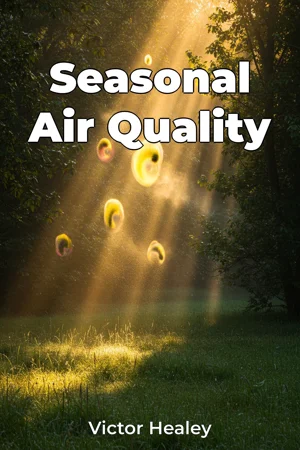
Can the very air we breathe, a constant necessity for life, vary so significantly with the seasons that it poses a tangible threat to our health? "Seasonal Air Quality" delves into this crucial question, offering a comprehensive exploration of the dynamic shifts in air quality throughout the year and their far-reaching consequences for public health. This book addresses the fundamental need for a deeper understanding of the intricate relationship between environmental factors and human well-being. This book is structured to provide a thorough examination of seasonal air quality variations, focusing on two primary areas: the environmental science behind these changes and the corresponding public health impacts. We begin by establishing a robust foundation of key concepts in atmospheric science and environmental monitoring. Readers will gain insight into common air pollutants, their sources, and the meteorological factors that influence their concentration and distribution. This includes an analysis of how temperature inversions, wind patterns, and precipitation events contribute to seasonal fluctuations in air quality. The central argument of "Seasonal Air Quality" asserts that understanding these seasonal air quality variations is not merely an academic exercise, but a critical imperative for informed public health strategies and preventative measures. We present a nuanced perspective, demonstrating how certain populations are disproportionately affected by seasonal air pollution and how targeted interventions can mitigate these risks. The book is methodically organized. Following the introduction of fundamental concepts, subsequent chapters delve into specific seasonal patterns. Spring, for example, witnesses increased pollen counts and agricultural emissions. Summer brings heightened ozone formation due to increased sunlight and heat. Autumn introduces smoke from wildfires and decaying vegetation. Winter sees elevated levels of particulate matter from residential heating and stagnant air masses. For each season, we rigorously examine the primary pollutants, the meteorological drivers, and the associated health outcomes, ranging from respiratory illnesses like asthma and bronchitis to cardiovascular problems and increased mortality rates. Supporting our arguments is a comprehensive analysis of data obtained from environmental monitoring networks across the globe. We utilize publicly available datasets from governmental agencies and research institutions. Furthermore, the book incorporates epidemiological studies, clinical research, and statistical analyses to establish cause-and-effect relationships between seasonal air quality and public health indicators. "Seasonal Air Quality" bridges the gap between environmental science and public health, drawing connections to fields like climatology, epidemiology, and urban planning. By examining the intersection of these diverse disciplines, we offer a holistic perspective on the complex challenges posed by seasonal air pollution. What sets this book apart is its dedicated focus on the seasonality aspect of air quality, an area often overlooked in broader discussions of air pollution. This specialized lens allows for a more in-depth investigation of the unique challenges and opportunities associated with each season. Written in a clear and accessible style, "Seasonal Air Quality" aims to inform a diverse audience, including environmental scientists, public health professionals, policymakers, and concerned citizens. The book's goal is to empower readers with the knowledge needed to advocate for cleaner air and healthier communities. The scope of "Seasonal Air Quality" is deliberately broad, encompassing a global perspective on air quality variations. However, it recognizes that localized factors, such as urbanization and industrialization, can significantly influence air quality patterns. While the book provides a comprehensive overview of the key issues, it acknowledges the need for further research and analysis to address specific regional challenges. The information presented in this book has numerous real-world applications. Public health agencies can utilize the findings to develop targeted interventions, such as air quality alerts and educational campaigns, to protect vulnerable populations. Urban planners can incorporate seasonal air quality considerations into city design and transportation planning. Individuals can make informed decisions to minimize their exposure to air pollution and protect their health. While the scientific community generally agrees on the detrimental health effects of air pollution; debates persist regarding the most effective strategies for mitigation and regulation. "Seasonal Air Quality" presents a balanced overview of these ongoing discussions, exploring the various perspectives and advocating for evidence-based solutions.
Can the very air we breathe, a constant necessity for life, vary so significantly with the seasons that it poses a tangible threat to our health? "Seasonal Air Quality" delves into this crucial question, offering a comprehensive exploration of the dynamic shifts in air quality throughout the year and their far-reaching consequences for public health. This book addresses the fundamental need for a deeper understanding of the intricate relationship between environmental factors and human well-being. This book is structured to provide a thorough examination of seasonal air quality variations, focusing on two primary areas: the environmental science behind these changes and the corresponding public health impacts. We begin by establishing a robust foundation of key concepts in atmospheric science and environmental monitoring. Readers will gain insight into common air pollutants, their sources, and the meteorological factors that influence their concentration and distribution. This includes an analysis of how temperature inversions, wind patterns, and precipitation events contribute to seasonal fluctuations in air quality. The central argument of "Seasonal Air Quality" asserts that understanding these seasonal air quality variations is not merely an academic exercise, but a critical imperative for informed public health strategies and preventative measures. We present a nuanced perspective, demonstrating how certain populations are disproportionately affected by seasonal air pollution and how targeted interventions can mitigate these risks. The book is methodically organized. Following the introduction of fundamental concepts, subsequent chapters delve into specific seasonal patterns. Spring, for example, witnesses increased pollen counts and agricultural emissions. Summer brings heightened ozone formation due to increased sunlight and heat. Autumn introduces smoke from wildfires and decaying vegetation. Winter sees elevated levels of particulate matter from residential heating and stagnant air masses. For each season, we rigorously examine the primary pollutants, the meteorological drivers, and the associated health outcomes, ranging from respiratory illnesses like asthma and bronchitis to cardiovascular problems and increased mortality rates. Supporting our arguments is a comprehensive analysis of data obtained from environmental monitoring networks across the globe. We utilize publicly available datasets from governmental agencies and research institutions. Furthermore, the book incorporates epidemiological studies, clinical research, and statistical analyses to establish cause-and-effect relationships between seasonal air quality and public health indicators. "Seasonal Air Quality" bridges the gap between environmental science and public health, drawing connections to fields like climatology, epidemiology, and urban planning. By examining the intersection of these diverse disciplines, we offer a holistic perspective on the complex challenges posed by seasonal air pollution. What sets this book apart is its dedicated focus on the seasonality aspect of air quality, an area often overlooked in broader discussions of air pollution. This specialized lens allows for a more in-depth investigation of the unique challenges and opportunities associated with each season. Written in a clear and accessible style, "Seasonal Air Quality" aims to inform a diverse audience, including environmental scientists, public health professionals, policymakers, and concerned citizens. The book's goal is to empower readers with the knowledge needed to advocate for cleaner air and healthier communities. The scope of "Seasonal Air Quality" is deliberately broad, encompassing a global perspective on air quality variations. However, it recognizes that localized factors, such as urbanization and industrialization, can significantly influence air quality patterns. While the book provides a comprehensive overview of the key issues, it acknowledges the need for further research and analysis to address specific regional challenges. The information presented in this book has numerous real-world applications. Public health agencies can utilize the findings to develop targeted interventions, such as air quality alerts and educational campaigns, to protect vulnerable populations. Urban planners can incorporate seasonal air quality considerations into city design and transportation planning. Individuals can make informed decisions to minimize their exposure to air pollution and protect their health. While the scientific community generally agrees on the detrimental health effects of air pollution; debates persist regarding the most effective strategies for mitigation and regulation. "Seasonal Air Quality" presents a balanced overview of these ongoing discussions, exploring the various perspectives and advocating for evidence-based solutions.
"Seasonal Air Quality" explores how the air we breathe changes throughout the year, significantly impacting public health. The book examines seasonal variations in air pollution, revealing that factors like temperature inversions and wind patterns greatly influence air quality. For example, summer's increased sunlight can lead to higher ozone levels, while winter sees a rise in particulate matter from heating. Understanding these seasonal shifts is crucial, as certain populations are more vulnerable to these changes, leading to respiratory issues and other health problems. The book adopts a comprehensive approach, bridging environmental science and public health. It delves into specific seasonal patterns, such as increased pollen in spring and wildfire smoke in autumn, analyzing the primary pollutants and their health outcomes. By using data from environmental monitoring networks and various research studies, "Seasonal Air Quality" illustrates the connection between air quality and conditions like asthma and cardiovascular diseases. This specialized focus on seasonality sets it apart, providing a valuable resource for scientists, public health professionals, and anyone interested in environmental health. The book progresses methodically, with an introduction to atmospheric science concepts followed by in-depth analyses of each season. It highlights real-world applications, suggesting how public health agencies can use the findings to develop targeted interventions and urban planners can incorporate air quality considerations into their designs. It also touches on the ongoing debates regarding effective mitigation strategies, advocating for evidence-based solutions to improve environmental health.
Book Details
ISBN
9788233979263
Publisher
Publifye AS
Your Licenses
You don't own any licenses for this book
Purchase a license below to unlock this book and download the EPUB.
Purchase License
Select a tier to unlock this book
Need bulk licensing?
Contact us for enterprise agreements.