
About This Book
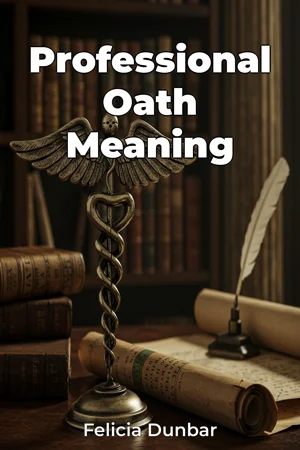
In a world increasingly marked by ethical ambiguity, can we truly rely on the oaths taken by professionals entrusted with our well-being and the administration of justice? "Professional Oath Meaning" delves into the critical role of oaths in upholding public trust within two fundamental pillars of society: law and medicine. This book examines the historical significance, contemporary relevance, and evolving interpretations of professional oaths, offering a comprehensive analysis of their impact on ethical conduct and societal welfare. The study of professional oaths is paramount because these pledges represent a formal commitment to ethical principles, accountability, and service. Their significance extends beyond mere formality, shaping professional identity, influencing decision-making, and fostering public confidence. The erosion of trust in these professions necessitates a rigorous assessment of the meaning and efficacy of these pledges. This book situates the discussion of professional oaths within a historical and societal context, tracing the evolution of oath-taking from ancient traditions to modern practice. It explores the philosophical underpinnings of oaths, examining their connection to concepts of duty, responsibility, and moral obligation. It considers the social contracts these oaths establish between professionals and the communities they serve. Central to the book’s argument is the assertion that professional oaths, while facing challenges in a rapidly changing world, remain vital instruments for promoting ethical behavior and safeguarding public trust. The book contends that a renewed understanding of the meaning, purpose, and implications of these oaths is essential for maintaining the integrity of the legal and medical professions. The book begins by introducing the core concepts of oath-taking, exploring their historical roots and philosophical foundations. It then develops its central argument through several key sections. First, it examines the specific oaths used in the legal profession, analyzing their historical context, contemporary interpretations, and practical implications for lawyers and judges. Second, it conducts a similar exploration of medical oaths, with a focus on the Hippocratic Oath and its modern variations. Third, it analyzes case studies and real-world examples to demonstrate the impact of oath-taking on professional conduct and public perception. The culmination of the argumentative arc involves a discussion of practical strategies for reinforcing the value of oaths in professional education and practice. The book draws upon a wide range of evidence, including historical documents, legal statutes, ethical codes, empirical studies, and interviews with legal and medical professionals. It incorporates unique data sources such as analyses of disciplinary proceedings and surveys of public attitudes towards professional ethics. "Professional Oath Meaning" connects to other fields such as political science by examining the role of oaths in maintaining a functional and just society; philosophy by exploring the ethical frameworks that underpin professional obligations; and sociology by analyzing the social norms and expectations that shape professional conduct. These interdisciplinary connections enrich the book’s analysis and provide a broader perspective on the challenges and opportunities facing the legal and medical professions. This book offers a novel perspective by examining how professional oaths can be revitalized to meet the ethical demands of the 21st century. This includes the implementation of oath-taking to encompass the growing influence of technology and globalization. The book adopts a professional yet accessible tone, presenting complex information clearly and concisely. Written for an audience that includes legal and medical professionals, students in these fields, policymakers, and anyone interested in ethics and public trust, this book provides valuable insights into the role of oaths in shaping professional conduct and societal well-being. As a non-fiction work, "Professional Oath Meaning" adheres to the genre's conventions of accuracy, objectivity, and evidence-based analysis. The book’s scope is intentionally limited to the legal and medical professions, allowing for a focused and in-depth exploration of the issues. While recognizing the importance of oaths in other fields, it prioritizes a detailed examination of these two critical areas. The information presented in this book can be applied in various practical ways. Legal and medical professionals can use it to reflect on their own ethical obligations and improve their decision-making. Educators can use it to enhance ethics training in professional schools. Policymakers can use it to develop more effective regulations and oversight mechanisms. The book addresses ongoing debates about the relevance and effectiveness of professional oaths in an era of increasing commercialization, specialization, and technological change. It acknowledges the challenges of enforcing ethical standards and explores potential solutions for strengthening the role of oaths in promoting accountability and integrity.
In a world increasingly marked by ethical ambiguity, can we truly rely on the oaths taken by professionals entrusted with our well-being and the administration of justice? "Professional Oath Meaning" delves into the critical role of oaths in upholding public trust within two fundamental pillars of society: law and medicine. This book examines the historical significance, contemporary relevance, and evolving interpretations of professional oaths, offering a comprehensive analysis of their impact on ethical conduct and societal welfare. The study of professional oaths is paramount because these pledges represent a formal commitment to ethical principles, accountability, and service. Their significance extends beyond mere formality, shaping professional identity, influencing decision-making, and fostering public confidence. The erosion of trust in these professions necessitates a rigorous assessment of the meaning and efficacy of these pledges. This book situates the discussion of professional oaths within a historical and societal context, tracing the evolution of oath-taking from ancient traditions to modern practice. It explores the philosophical underpinnings of oaths, examining their connection to concepts of duty, responsibility, and moral obligation. It considers the social contracts these oaths establish between professionals and the communities they serve. Central to the book’s argument is the assertion that professional oaths, while facing challenges in a rapidly changing world, remain vital instruments for promoting ethical behavior and safeguarding public trust. The book contends that a renewed understanding of the meaning, purpose, and implications of these oaths is essential for maintaining the integrity of the legal and medical professions. The book begins by introducing the core concepts of oath-taking, exploring their historical roots and philosophical foundations. It then develops its central argument through several key sections. First, it examines the specific oaths used in the legal profession, analyzing their historical context, contemporary interpretations, and practical implications for lawyers and judges. Second, it conducts a similar exploration of medical oaths, with a focus on the Hippocratic Oath and its modern variations. Third, it analyzes case studies and real-world examples to demonstrate the impact of oath-taking on professional conduct and public perception. The culmination of the argumentative arc involves a discussion of practical strategies for reinforcing the value of oaths in professional education and practice. The book draws upon a wide range of evidence, including historical documents, legal statutes, ethical codes, empirical studies, and interviews with legal and medical professionals. It incorporates unique data sources such as analyses of disciplinary proceedings and surveys of public attitudes towards professional ethics. "Professional Oath Meaning" connects to other fields such as political science by examining the role of oaths in maintaining a functional and just society; philosophy by exploring the ethical frameworks that underpin professional obligations; and sociology by analyzing the social norms and expectations that shape professional conduct. These interdisciplinary connections enrich the book’s analysis and provide a broader perspective on the challenges and opportunities facing the legal and medical professions. This book offers a novel perspective by examining how professional oaths can be revitalized to meet the ethical demands of the 21st century. This includes the implementation of oath-taking to encompass the growing influence of technology and globalization. The book adopts a professional yet accessible tone, presenting complex information clearly and concisely. Written for an audience that includes legal and medical professionals, students in these fields, policymakers, and anyone interested in ethics and public trust, this book provides valuable insights into the role of oaths in shaping professional conduct and societal well-being. As a non-fiction work, "Professional Oath Meaning" adheres to the genre's conventions of accuracy, objectivity, and evidence-based analysis. The book’s scope is intentionally limited to the legal and medical professions, allowing for a focused and in-depth exploration of the issues. While recognizing the importance of oaths in other fields, it prioritizes a detailed examination of these two critical areas. The information presented in this book can be applied in various practical ways. Legal and medical professionals can use it to reflect on their own ethical obligations and improve their decision-making. Educators can use it to enhance ethics training in professional schools. Policymakers can use it to develop more effective regulations and oversight mechanisms. The book addresses ongoing debates about the relevance and effectiveness of professional oaths in an era of increasing commercialization, specialization, and technological change. It acknowledges the challenges of enforcing ethical standards and explores potential solutions for strengthening the role of oaths in promoting accountability and integrity.
"Professional Oath Meaning" explores the crucial role of professional oaths in upholding public trust within the legal and medical fields. It examines how these oaths, formal commitments to ethical principles, shape professional identity, influence decision-making, and foster public confidence. The book highlights the historical significance and contemporary relevance of oaths, tracing their evolution from ancient traditions to modern practices, emphasizing their connection to duty, responsibility, and moral obligation. The book navigates through the specific oaths used in the legal profession, analyzing their historical context and practical implications for lawyers and judges. Similarly, it explores medical oaths, focusing on the Hippocratic Oath and its modern variations, illustrating how these oaths contribute to societal welfare. Through case studies and real-world examples, the book demonstrates the impact of oath-taking on professional conduct and public perception. The book's approach involves introducing core concepts, exploring historical roots, and analyzing contemporary interpretations. It progresses by examining oaths in the legal and medical professions, providing case studies, and discussing strategies for reinforcing the value of oaths in professional education and practice. This comprehensive analysis offers a renewed understanding of the meaning, purpose, and implications of professional oaths for maintaining integrity in law and medicine.
Book Details
ISBN
9788233979133
Publisher
Publifye AS
Your Licenses
You don't own any licenses for this book
Purchase a license below to unlock this book and download the EPUB.
Purchase License
Select a tier to unlock this book
Need bulk licensing?
Contact us for enterprise agreements.