
About This Book
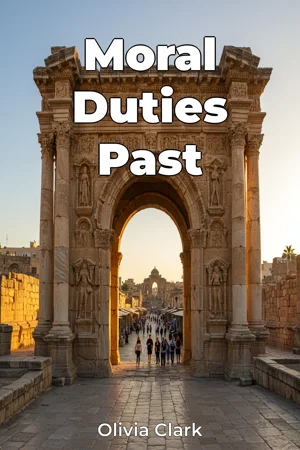
Did societies of the past truly operate on a higher moral plane, or are our modern anxieties simply projecting a false nostalgia onto history? "Moral Duties Past" delves into this question, offering a comprehensive exploration of how honor and ethics shaped trade and personal conduct in older societies. This book examines the critical role of honor in shaping social and economic interactions across diverse historical periods, providing insights relevant to understanding contemporary ethical challenges. We will explore three key themes: the codification of moral principles, the role of social structures in enforcing ethical behavior, and the long-term consequences of prioritizing (or neglecting) honor in societal dealings. These topics are important because understanding how past societies managed ethical challenges can offer valuable lessons for improving our own systems of governance, commerce, and interpersonal relationships. The book draws on historical codes from Mesopotamia, Ancient Greece, Rome, and medieval Europe to illustrate its arguments. These legal and philosophical texts provide concrete examples of how societies attempted to define and enforce ethical standards. We consider the social hierarchies and cultural norms through which these obligations were implemented. The central argument of "Moral Duties Past" is that the emphasis on honor in pre-modern societies, while not without its flaws, fostered a sense of trust and stability that facilitated trade and social cohesion. This argument is important because it challenges the modern assumption that ethical behavior is solely a matter of individual conscience or legal compliance, suggesting that a stronger emphasis on collective reputation and social accountability can lead to more ethical outcomes. The book is structured as follows: Part One introduces the concept of honor as a social and economic force, exploring its various definitions and manifestations across different cultures. Part Two analyzes specific historical codes, such as the Code of Hammurabi and Roman civil law, to identify the ethical principles that governed trade and personal dealings. Part Three examines the social structures, such as guilds and aristocratic networks, that enforced these principles. Part Four investigates the decline of honor-based systems and the rise of modern, more formalized ethical frameworks. The conclusion draws parallels between historical and contemporary ethical challenges, offering insights for promoting ethical behavior in the 21st century. The evidence presented in "Moral Duties Past" includes textual analysis of historical codes, comparative studies of different legal systems, and case studies of specific historical events that illustrate the consequences of ethical behavior (or its absence). We also draw on archaeological findings and anthropological research to provide a more complete picture of social and economic life in past societies. This book connects to several other fields of study, including economics, sociology, and political science. By examining the economic consequences of ethical behavior, we contribute to a better understanding of the relationship between ethics and economic growth. By analyzing the social structures that enforce ethical norms, we offer insights into the dynamics of social control. By exploring the political implications of ethical behavior, we shed light on the relationship between ethics and governance. "Moral Duties Past" offers a novel perspective by combining historical analysis with philosophical reflection. Rather than simply describing the ethical norms of past societies, we critically examine their strengths and weaknesses, offering a nuanced assessment of their relevance to contemporary ethical debates. Written in a clear and accessible style, "Moral Duties Past" is aimed at a broad audience, including students, scholars, policymakers, and anyone interested in the history of ethics. The book will be valuable to readers seeking a deeper understanding of the ethical challenges facing our society and the lessons that can be learned from the past. As a work of history and philosophy, this book adheres to scholarly standards of evidence and argumentation. While the book covers a broad historical period, it is intentionally limited in scope to the analysis of ethical principles related to trade and personal dealings. This focus allows for a more in-depth examination of the specific mechanisms through which honor shaped social and economic life. The lessons learned from "Moral Duties Past" can be applied to a variety of real-world situations, from improving corporate governance to fostering trust in online marketplaces. By understanding the principles that governed ethical behavior in past societies, we can develop more effective strategies for promoting ethical behavior in our own time. "Moral Duties Past" addresses the ongoing debate about the role of ethics in modern society. Some argue that ethical behavior is solely a matter of individual conscience, while others believe that stronger regulations are needed. This book offers a third perspective, suggesting that a renewed emphasis on collective reputation and social accountability can complement both individual responsibility and legal compliance.
Did societies of the past truly operate on a higher moral plane, or are our modern anxieties simply projecting a false nostalgia onto history? "Moral Duties Past" delves into this question, offering a comprehensive exploration of how honor and ethics shaped trade and personal conduct in older societies. This book examines the critical role of honor in shaping social and economic interactions across diverse historical periods, providing insights relevant to understanding contemporary ethical challenges. We will explore three key themes: the codification of moral principles, the role of social structures in enforcing ethical behavior, and the long-term consequences of prioritizing (or neglecting) honor in societal dealings. These topics are important because understanding how past societies managed ethical challenges can offer valuable lessons for improving our own systems of governance, commerce, and interpersonal relationships. The book draws on historical codes from Mesopotamia, Ancient Greece, Rome, and medieval Europe to illustrate its arguments. These legal and philosophical texts provide concrete examples of how societies attempted to define and enforce ethical standards. We consider the social hierarchies and cultural norms through which these obligations were implemented. The central argument of "Moral Duties Past" is that the emphasis on honor in pre-modern societies, while not without its flaws, fostered a sense of trust and stability that facilitated trade and social cohesion. This argument is important because it challenges the modern assumption that ethical behavior is solely a matter of individual conscience or legal compliance, suggesting that a stronger emphasis on collective reputation and social accountability can lead to more ethical outcomes. The book is structured as follows: Part One introduces the concept of honor as a social and economic force, exploring its various definitions and manifestations across different cultures. Part Two analyzes specific historical codes, such as the Code of Hammurabi and Roman civil law, to identify the ethical principles that governed trade and personal dealings. Part Three examines the social structures, such as guilds and aristocratic networks, that enforced these principles. Part Four investigates the decline of honor-based systems and the rise of modern, more formalized ethical frameworks. The conclusion draws parallels between historical and contemporary ethical challenges, offering insights for promoting ethical behavior in the 21st century. The evidence presented in "Moral Duties Past" includes textual analysis of historical codes, comparative studies of different legal systems, and case studies of specific historical events that illustrate the consequences of ethical behavior (or its absence). We also draw on archaeological findings and anthropological research to provide a more complete picture of social and economic life in past societies. This book connects to several other fields of study, including economics, sociology, and political science. By examining the economic consequences of ethical behavior, we contribute to a better understanding of the relationship between ethics and economic growth. By analyzing the social structures that enforce ethical norms, we offer insights into the dynamics of social control. By exploring the political implications of ethical behavior, we shed light on the relationship between ethics and governance. "Moral Duties Past" offers a novel perspective by combining historical analysis with philosophical reflection. Rather than simply describing the ethical norms of past societies, we critically examine their strengths and weaknesses, offering a nuanced assessment of their relevance to contemporary ethical debates. Written in a clear and accessible style, "Moral Duties Past" is aimed at a broad audience, including students, scholars, policymakers, and anyone interested in the history of ethics. The book will be valuable to readers seeking a deeper understanding of the ethical challenges facing our society and the lessons that can be learned from the past. As a work of history and philosophy, this book adheres to scholarly standards of evidence and argumentation. While the book covers a broad historical period, it is intentionally limited in scope to the analysis of ethical principles related to trade and personal dealings. This focus allows for a more in-depth examination of the specific mechanisms through which honor shaped social and economic life. The lessons learned from "Moral Duties Past" can be applied to a variety of real-world situations, from improving corporate governance to fostering trust in online marketplaces. By understanding the principles that governed ethical behavior in past societies, we can develop more effective strategies for promoting ethical behavior in our own time. "Moral Duties Past" addresses the ongoing debate about the role of ethics in modern society. Some argue that ethical behavior is solely a matter of individual conscience, while others believe that stronger regulations are needed. This book offers a third perspective, suggesting that a renewed emphasis on collective reputation and social accountability can complement both individual responsibility and legal compliance.
"Moral Duties Past" explores the role of honor and ethics in shaping societies before modern times, examining whether these societies operated on a higher moral plane than our own. The book delves into historical codes and social structures, from Mesopotamia to medieval Europe, to understand how societies defined and enforced ethical standards. It argues that an emphasis on honor, though flawed, fostered trust and stability, facilitating societal cohesion. The book progresses by first introducing honor as a social and economic force, then analyzing historical codes like the Code of Hammurabi and Roman civil law to identify governing ethical principles. It further examines social structures that enforced these principles, such as guilds, before investigating the decline of honor-based systems. This approach provides a nuanced assessment of the strengths and weaknesses of past ethical norms. Unique in its approach, the book combines historical analysis with philosophical reflection, challenging the modern assumption that ethical behavior is solely a matter of individual conscience or legal compliance. By drawing parallels between historical and contemporary ethical challenges, "Moral Duties Past" offers insights into promoting ethical behavior in the 21st century, emphasizing the importance of social accountability and collective reputation as complements to individual responsibility and legal frameworks.
Book Details
ISBN
9788233979034
Publisher
Publifye AS
Your Licenses
You don't own any licenses for this book
Purchase a license below to unlock this book and download the EPUB.
Purchase License
Select a tier to unlock this book
Need bulk licensing?
Contact us for enterprise agreements.