
About This Book
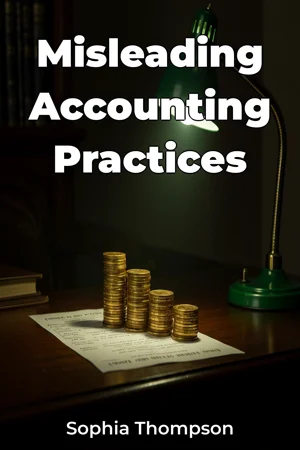
Can a company truly thrive if its foundation is built on fabricated numbers? "Misleading Accounting Practices" delves into the pervasive and often devastating impact of false entries on a company's financial health and its stakeholders. This book exposes the deceptive techniques used to manipulate financial statements, the motivations behind these actions, and the severe consequences that follow, often culminating in enforcement actions, reputational damage, and financial ruin. This book focuses on three key areas: the diverse methods used to create misleading financial entries, the motivations driving individuals to engage in such practices, and the repercussions of these actions, particularly concerning regulatory scrutiny and legal penalties. Understanding these elements is crucial for investors, regulators, and anyone involved in corporate governance. We will explore the historical context of accounting fraud, examining landmark cases that have shaped accounting regulations and enforcement. No prior knowledge of advanced accounting is required, as the book explains fundamental concepts in accessible language, providing a solid basis for understanding more complex scenarios. The central argument of "Misleading Accounting Practices" is that deceptive accounting practices not only undermine the integrity of financial markets but also inflict significant harm on employees, investors, and the public. By meticulously examining real-world cases and analyzing the underlying motivations, this book aims to equip readers with the knowledge to identify, understand, and prevent accounting fraud. The book is structured in three parts. The first section introduces core accounting principles and dissects common methods of manipulation, such as revenue recognition fraud, expense manipulation, and asset overvaluation. This section establishes a theoretical framework for understanding deceptive practices. The second part delves into the psychological and organizational factors that drive accounting fraud. It analyzes the pressure, opportunity, and rationalization that contribute to unethical behavior, drawing upon case studies and behavioral economics. The third section examines the legal and regulatory landscape, focusing on enforcement actions by agencies like the Securities and Exchange Commission (SEC). This section will cover penalties, legal recourse, and the ongoing efforts to strengthen corporate governance and prevent future misconduct. The evidence presented in this book is drawn from a variety of sources, including SEC filings, court documents, investigative reports, and academic research. The book integrates qualitative analysis of case studies with quantitative analysis of financial data, providing a comprehensive picture of the anatomy of accounting fraud. "Misleading Accounting Practices" connects to several other fields, including law, ethics, and organizational behavior. The legal ramifications of accounting fraud are explored, highlighting the role of regulatory bodies and the pursuit of justice. Ethical considerations are central to the discussion, examining the moral implications of deceptive practices and the importance of ethical leadership. The book also draws on organizational behavior to understand how corporate culture and governance structures can either encourage or deter fraudulent behavior. This book stands out by providing a holistic perspective on accounting fraud. Rather than focusing solely on the technical aspects of manipulation, it examines the human element, delving into the motivations and organizational dynamics that contribute to these practices. This approach provides a more nuanced and comprehensive understanding of the problem. The book adopts a fact-based, analytical tone, presenting information objectively and avoiding sensationalism. It aims to be informative and accessible, making complex concepts understandable to a broad audience. The target audience includes investors, accountants, auditors, regulators, legal professionals, and students of business and finance. Anyone seeking a deeper understanding of the risks and realities of accounting fraud will find this book valuable. As a work of true crime within the finance genre, the book adheres to the conventions of presenting factual information in a compelling and engaging manner. It uses real-world examples and case studies to illustrate the human impact of financial crime. The scope of the book is limited to accounting practices within publicly traded companies and large private organizations. While it touches upon international accounting standards, the primary focus is on the US regulatory environment. The information presented in this book can be applied practically by readers in several ways. Investors can use the knowledge to better assess the financial health of companies and identify red flags. Accountants and auditors can use the insights to strengthen their internal controls and detect fraudulent activity. Regulators and legal professionals can use the information to better understand the motivations behind accounting fraud and develop more effective enforcement strategies. The book addresses ongoing debates surrounding the effectiveness of current accounting regulations and the adequacy of penalties for fraudulent behavior. It highlights the need for continuous improvement in corporate governance and ethical leadership to prevent future scandals.
Can a company truly thrive if its foundation is built on fabricated numbers? "Misleading Accounting Practices" delves into the pervasive and often devastating impact of false entries on a company's financial health and its stakeholders. This book exposes the deceptive techniques used to manipulate financial statements, the motivations behind these actions, and the severe consequences that follow, often culminating in enforcement actions, reputational damage, and financial ruin. This book focuses on three key areas: the diverse methods used to create misleading financial entries, the motivations driving individuals to engage in such practices, and the repercussions of these actions, particularly concerning regulatory scrutiny and legal penalties. Understanding these elements is crucial for investors, regulators, and anyone involved in corporate governance. We will explore the historical context of accounting fraud, examining landmark cases that have shaped accounting regulations and enforcement. No prior knowledge of advanced accounting is required, as the book explains fundamental concepts in accessible language, providing a solid basis for understanding more complex scenarios. The central argument of "Misleading Accounting Practices" is that deceptive accounting practices not only undermine the integrity of financial markets but also inflict significant harm on employees, investors, and the public. By meticulously examining real-world cases and analyzing the underlying motivations, this book aims to equip readers with the knowledge to identify, understand, and prevent accounting fraud. The book is structured in three parts. The first section introduces core accounting principles and dissects common methods of manipulation, such as revenue recognition fraud, expense manipulation, and asset overvaluation. This section establishes a theoretical framework for understanding deceptive practices. The second part delves into the psychological and organizational factors that drive accounting fraud. It analyzes the pressure, opportunity, and rationalization that contribute to unethical behavior, drawing upon case studies and behavioral economics. The third section examines the legal and regulatory landscape, focusing on enforcement actions by agencies like the Securities and Exchange Commission (SEC). This section will cover penalties, legal recourse, and the ongoing efforts to strengthen corporate governance and prevent future misconduct. The evidence presented in this book is drawn from a variety of sources, including SEC filings, court documents, investigative reports, and academic research. The book integrates qualitative analysis of case studies with quantitative analysis of financial data, providing a comprehensive picture of the anatomy of accounting fraud. "Misleading Accounting Practices" connects to several other fields, including law, ethics, and organizational behavior. The legal ramifications of accounting fraud are explored, highlighting the role of regulatory bodies and the pursuit of justice. Ethical considerations are central to the discussion, examining the moral implications of deceptive practices and the importance of ethical leadership. The book also draws on organizational behavior to understand how corporate culture and governance structures can either encourage or deter fraudulent behavior. This book stands out by providing a holistic perspective on accounting fraud. Rather than focusing solely on the technical aspects of manipulation, it examines the human element, delving into the motivations and organizational dynamics that contribute to these practices. This approach provides a more nuanced and comprehensive understanding of the problem. The book adopts a fact-based, analytical tone, presenting information objectively and avoiding sensationalism. It aims to be informative and accessible, making complex concepts understandable to a broad audience. The target audience includes investors, accountants, auditors, regulators, legal professionals, and students of business and finance. Anyone seeking a deeper understanding of the risks and realities of accounting fraud will find this book valuable. As a work of true crime within the finance genre, the book adheres to the conventions of presenting factual information in a compelling and engaging manner. It uses real-world examples and case studies to illustrate the human impact of financial crime. The scope of the book is limited to accounting practices within publicly traded companies and large private organizations. While it touches upon international accounting standards, the primary focus is on the US regulatory environment. The information presented in this book can be applied practically by readers in several ways. Investors can use the knowledge to better assess the financial health of companies and identify red flags. Accountants and auditors can use the insights to strengthen their internal controls and detect fraudulent activity. Regulators and legal professionals can use the information to better understand the motivations behind accounting fraud and develop more effective enforcement strategies. The book addresses ongoing debates surrounding the effectiveness of current accounting regulations and the adequacy of penalties for fraudulent behavior. It highlights the need for continuous improvement in corporate governance and ethical leadership to prevent future scandals.
"Misleading Accounting Practices" unveils the deceptive world of accounting fraud, where manipulated financial statements can devastate a company's financial health and mislead investors. This true crime exploration in the finance world highlights how seemingly minor false entries can snowball into major scandals, leading to SEC enforcement, reputational damage, and even financial ruin. The book emphasizes the critical understanding of deceptive techniques, motivations behind fraudulent behavior, and the serious repercussions for those involved. The book uniquely approaches this topic by not only dissecting methods like revenue recognition fraud, expense manipulation and asset overvaluation, but also examining the psychological and organizational factors that drive individuals to commit these financial crimes. By integrating real-world cases with financial data, the book highlights landmark cases that have shaped accounting regulations. Its comprehensive style progresses from fundamental accounting principles to the legal landscape, providing a holistic view of accounting fraud and its impact. Structured in three parts, the book first introduces core accounting principles and manipulation methods. It then delves into psychological and organizational factors, before finally examining the legal and regulatory landscape, including SEC enforcement. This journey equips readers with the knowledge to identify, understand, and prevent accounting fraud, making it a valuable resource for investors, regulators, and anyone involved in corporate governance.
Book Details
ISBN
9788233978013
Publisher
Publifye AS
Your Licenses
You don't own any licenses for this book
Purchase a license below to unlock this book and download the EPUB.
Purchase License
Select a tier to unlock this book
Need bulk licensing?
Contact us for enterprise agreements.