
About This Book
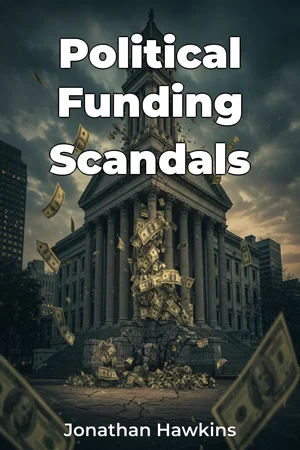
How much does money really influence political outcomes? "Political Funding Scandals” delves into the murky world of campaign finance, exposing hidden streams of money and their corrosive effects on democratic processes. This book examines the pervasive issue of undisclosed funding in political campaigns, otherwise known as "slush funds," and their impact on policy, elections, and public trust. Given the increasing complexity of campaign finance regulations and the rise of shadow political groups, understanding these hidden financial flows is more critical than ever. This book tackles two key topics. First, it uncovers the mechanics of hidden campaign financing, revealing how individuals, corporations, and other entities channel vast sums of money into political campaigns without proper disclosure. Second, it investigates the consequences of these practices, including compromised policy decisions, unfair electoral advantages, and the erosion of public confidence in governmental institutions. The issue of secret political money has a long and complex history, evolving alongside campaign finance laws. Understanding the historical context, from early attempts at regulation to more recent Supreme Court decisions, is vital for grasping the scale of the problem. This book provides this necessary context, and requires the reader to have a basic understanding of governmental structure and the election process. At its core, "Political Funding Scandals" argues that the proliferation of hidden money in politics constitutes a fundamental threat to democracy. It contends that without transparency and accountability, the voices of ordinary citizens are drowned out by the financial power of special interests, leading to policies that primarily benefit the wealthy and well-connected. The book's structure unfolds systematically. It begins by introducing the concept of hidden campaign financing, tracing its historical roots, and outlining the legal frameworks designed to regulate it. The book then examines specific case studies of political funding scandals, detailing the strategies used to conceal financial contributions and the repercussions for those involved. This section forms the core of the book, presenting detailed analyses of notable instances where undisclosed funds played a pivotal role in shaping political outcomes. The examination of case studies are divided into sections focusing on domestic and international examples. Finally, the book explores potential reforms and solutions aimed at increasing transparency and accountability in campaign finance. It culminates by offering suggestions for practical steps that citizens, policymakers, and journalists can take to address this critical issue. To support its argument, the book draws upon a wide range of evidence, including investigative journalism reports, legal documents, academic studies, and government records. It utilizes unique data sources, such as campaign finance disclosures, lobbying reports, and corporate filings, to trace the flow of money into political campaigns. Methodologically, the book employs a comparative approach, analyzing different countries and jurisdictions to identify effective strategies for regulating campaign finance. "Political Funding Scandals" transcends narrow disciplinary boundaries, connecting to fields such as economics, law, and sociology. Its analysis of market manipulation and policy capture by powerful actors connects directly to economic theories of rent-seeking. Its examination of campaign finance laws and their enforcement draws upon legal scholarship and constitutional law. Its exploration of the social consequences of political corruption relates to sociological studies of inequality and social trust. This book differentiates itself by providing a comprehensive and interdisciplinary analysis of hidden campaign financing, combining rigorous research with compelling storytelling. It eschews sensationalism, presenting objective evidence and balanced perspectives on a complex and often controversial issue. Written in a clear and accessible style, "Political Funding Scandals" is aimed at a broad audience, including students, journalists, policymakers, and concerned citizens. It will appeal to anyone interested in understanding the inner workings of political campaigns and the role of money in shaping public policy. As a work of investigative journalism and political analysis, the book adheres to the highest standards of accuracy and objectivity. It seeks to inform, not to persuade, presenting evidence-based conclusions and acknowledging the limitations of available data. The scope of "Political Funding Scandals" is intentionally broad, encompassing both domestic and international examples of hidden campaign financing. However, it limits its focus to the funding of electoral campaigns, omitting other forms of political influence, such as lobbying and issue advocacy. The information contained within this book can be applied directly by readers seeking to become more informed and engaged citizens. By understanding the mechanics of hidden campaign financing, readers can better evaluate the claims of political candidates, hold elected officials accountable, and advocate for reforms that promote transparency and fairness in the political process. The debate over campaign finance regulations is often contentious, pitting those who advocate for greater restrictions on political spending against those who defend the rights of free speech and association. "Political Funding Scandals" acknowledges these competing viewpoints, exploring the arguments on both sides of the issue and offering nuanced perspectives on the challenges of regulating campaign finance in a democratic society.
How much does money really influence political outcomes? "Political Funding Scandals” delves into the murky world of campaign finance, exposing hidden streams of money and their corrosive effects on democratic processes. This book examines the pervasive issue of undisclosed funding in political campaigns, otherwise known as "slush funds," and their impact on policy, elections, and public trust. Given the increasing complexity of campaign finance regulations and the rise of shadow political groups, understanding these hidden financial flows is more critical than ever. This book tackles two key topics. First, it uncovers the mechanics of hidden campaign financing, revealing how individuals, corporations, and other entities channel vast sums of money into political campaigns without proper disclosure. Second, it investigates the consequences of these practices, including compromised policy decisions, unfair electoral advantages, and the erosion of public confidence in governmental institutions. The issue of secret political money has a long and complex history, evolving alongside campaign finance laws. Understanding the historical context, from early attempts at regulation to more recent Supreme Court decisions, is vital for grasping the scale of the problem. This book provides this necessary context, and requires the reader to have a basic understanding of governmental structure and the election process. At its core, "Political Funding Scandals" argues that the proliferation of hidden money in politics constitutes a fundamental threat to democracy. It contends that without transparency and accountability, the voices of ordinary citizens are drowned out by the financial power of special interests, leading to policies that primarily benefit the wealthy and well-connected. The book's structure unfolds systematically. It begins by introducing the concept of hidden campaign financing, tracing its historical roots, and outlining the legal frameworks designed to regulate it. The book then examines specific case studies of political funding scandals, detailing the strategies used to conceal financial contributions and the repercussions for those involved. This section forms the core of the book, presenting detailed analyses of notable instances where undisclosed funds played a pivotal role in shaping political outcomes. The examination of case studies are divided into sections focusing on domestic and international examples. Finally, the book explores potential reforms and solutions aimed at increasing transparency and accountability in campaign finance. It culminates by offering suggestions for practical steps that citizens, policymakers, and journalists can take to address this critical issue. To support its argument, the book draws upon a wide range of evidence, including investigative journalism reports, legal documents, academic studies, and government records. It utilizes unique data sources, such as campaign finance disclosures, lobbying reports, and corporate filings, to trace the flow of money into political campaigns. Methodologically, the book employs a comparative approach, analyzing different countries and jurisdictions to identify effective strategies for regulating campaign finance. "Political Funding Scandals" transcends narrow disciplinary boundaries, connecting to fields such as economics, law, and sociology. Its analysis of market manipulation and policy capture by powerful actors connects directly to economic theories of rent-seeking. Its examination of campaign finance laws and their enforcement draws upon legal scholarship and constitutional law. Its exploration of the social consequences of political corruption relates to sociological studies of inequality and social trust. This book differentiates itself by providing a comprehensive and interdisciplinary analysis of hidden campaign financing, combining rigorous research with compelling storytelling. It eschews sensationalism, presenting objective evidence and balanced perspectives on a complex and often controversial issue. Written in a clear and accessible style, "Political Funding Scandals" is aimed at a broad audience, including students, journalists, policymakers, and concerned citizens. It will appeal to anyone interested in understanding the inner workings of political campaigns and the role of money in shaping public policy. As a work of investigative journalism and political analysis, the book adheres to the highest standards of accuracy and objectivity. It seeks to inform, not to persuade, presenting evidence-based conclusions and acknowledging the limitations of available data. The scope of "Political Funding Scandals" is intentionally broad, encompassing both domestic and international examples of hidden campaign financing. However, it limits its focus to the funding of electoral campaigns, omitting other forms of political influence, such as lobbying and issue advocacy. The information contained within this book can be applied directly by readers seeking to become more informed and engaged citizens. By understanding the mechanics of hidden campaign financing, readers can better evaluate the claims of political candidates, hold elected officials accountable, and advocate for reforms that promote transparency and fairness in the political process. The debate over campaign finance regulations is often contentious, pitting those who advocate for greater restrictions on political spending against those who defend the rights of free speech and association. "Political Funding Scandals" acknowledges these competing viewpoints, exploring the arguments on both sides of the issue and offering nuanced perspectives on the challenges of regulating campaign finance in a democratic society.
"Political Funding Scandals" investigates the troubling impact of hidden money, or "slush funds," on elections and democratic institutions. The book reveals how undisclosed funding, often channeled through complex networks, distorts policy decisions and erodes public trust. It highlights that the rise of shadow political groups and the increasing complexity of campaign finance regulations demand a greater understanding of these hidden financial flows. The book begins by tracing the historical roots of campaign finance regulations and revealing the legal frameworks designed to regulate it. It then presents compelling case studies, both domestic and international, detailing how undisclosed funds have shaped political outcomes, further emphasizing that without transparency, the voices of ordinary citizens are drowned out by special interests. It draws upon investigative journalism, legal documents, and government records to support its arguments. Finally, the book explores potential reforms and solutions aimed at increasing transparency and accountability in campaign finance. It offers practical steps for citizens, policymakers, and journalists to address this critical issue, making it a valuable resource for anyone seeking to understand and engage with the complexities of political funding.
Book Details
ISBN
9788233977993
Publisher
Publifye AS
Your Licenses
You don't own any licenses for this book
Purchase a license below to unlock this book and download the EPUB.
Purchase License
Select a tier to unlock this book
Need bulk licensing?
Contact us for enterprise agreements.