
About This Book
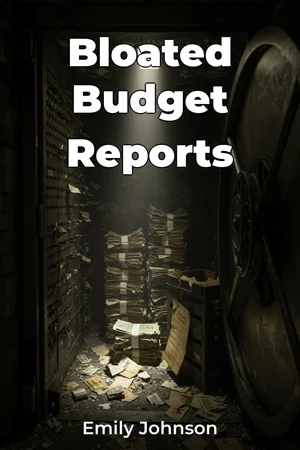
Are taxpayer dollars being strategically invested, or carelessly squandered? "Bloated Budget Reports" delves into the labyrinthine world of government and organizational finance to expose the hidden realities behind inflated spending lines and dubious allocations. This book is not just an analysis of numbers; it is an investigation into the very mechanisms that govern how public and private funds are managed and, often, mismanaged. Two critical topics underpin the book’s analysis: the systemic inflation of budgetary needs and the lack of transparent allocation processes. Understanding these issues is paramount because they directly impact the efficiency of public services, the profitability of businesses, and the overall economic health of society. Opacity in financial reporting breeds inefficiency, creating opportunities for waste and potential malfeasance that erode public trust. Before examining contemporary budgetary practices, context is crucial. A historical overview of budget development, tracing its evolution from simple accounting to complex forecasting, is essential. Readers will need a basic understanding of accounting principles, budgetary terminology, and the legislative frameworks that govern financial oversight to fully appreciate the book's arguments. The central argument of "Bloated Budget Reports" is that systemic pressures within organizations, both public and private, create a climate conducive to inflated budgets and opaque allocations. These pressures, ranging from bureaucratic self-preservation to political maneuvering, undermine responsible financial stewardship. Uncovering this dynamic is vital because it reveals the structural issues that permit wasteful spending, paving the way for more effective oversight and reform. The book unfolds in a structured manner. First, it introduces core concepts such as budgetary inflation, zero-based budgeting, variance analysis, and cost-benefit analysis. Next, it explores the causes and consequences of inflated spending through case studies of different sectors, including government defense spending, healthcare administration, and corporate research and development. A detailed section dedicated to the misallocation of funds follows, explaining the effects of lobbying, political influence, and administrative inefficiencies on the disbursement of resources. The book culminates by providing practical strategies for enhancing budgetary transparency and accountability. These include implementing stricter auditing protocols, strengthening whistleblower protections, and promoting data-driven decision-making. Evidence is drawn from a range of sources, including government administrative overviews, financial audits, investigative reports, and academic research. Unique data sets, such as analyses of federal spending databases and proprietary corporate financial statements, provide an empirical foundation for the book's assertions. The analysis employs methods that are both qualitative and quantitative, blending statistical analysis with in-depth case studies. "Bloated Budget Reports" has clear interdisciplinary connections. It intersects with political science by examining the impact of political power and lobbying on budgetary decisions. It links with sociology by exploring the organizational cultures that enable or discourage financial accountability. It connects with economics through the analysis of how budgetary practices affect resource allocation and economic efficiency. These interdisciplinary perspectives enrich the book's analysis, offering a more nuanced understanding of the factors contributing to budgetary bloat. A key strength is its innovative approach to analyzing budgetary documents. It introduces a novel framework for identifying patterns of overestimation and misallocation, enabling readers to critically evaluate financial reports. This framework empowers citizens, policymakers, and business leaders to identify and address budgetary irregularities. The book adopts a formal, analytical tone, presenting complex financial information in a clear and accessible manner. While data-driven, the writing maintains a level of engagement suitable for a broad audience. The target audience includes policymakers, government officials, business leaders, financial analysts, and concerned citizens interested in promoting greater accountability in financial management. It will be valuable to students studying public administration, finance, and political science. As a non-fiction work in the genres of politics and finance, the book adheres to the conventions of rigorous research, factual accuracy, and objective analysis. It avoids partisan rhetoric, focusing instead on presenting evidence-based arguments. The book's scope is broad, covering budgetary practices across different sectors and levels of government. However, it is intentionally limited to focusing on developed economies, acknowledging that budgetary challenges may differ significantly in developing nations. The insights from "Bloated Budget Reports" can be applied in various real-world settings. Policymakers can use the book's analysis to inform budgetary reforms, and business leaders can apply its principles to improve corporate financial management. Citizens can use the information to hold their elected officials accountable. The book addresses ongoing debates about appropriate levels of government spending and the role of private sector influence in budgetary processes. It acknowledges the complexity of these issues while providing a framework for evaluating different perspectives.
Are taxpayer dollars being strategically invested, or carelessly squandered? "Bloated Budget Reports" delves into the labyrinthine world of government and organizational finance to expose the hidden realities behind inflated spending lines and dubious allocations. This book is not just an analysis of numbers; it is an investigation into the very mechanisms that govern how public and private funds are managed and, often, mismanaged. Two critical topics underpin the book’s analysis: the systemic inflation of budgetary needs and the lack of transparent allocation processes. Understanding these issues is paramount because they directly impact the efficiency of public services, the profitability of businesses, and the overall economic health of society. Opacity in financial reporting breeds inefficiency, creating opportunities for waste and potential malfeasance that erode public trust. Before examining contemporary budgetary practices, context is crucial. A historical overview of budget development, tracing its evolution from simple accounting to complex forecasting, is essential. Readers will need a basic understanding of accounting principles, budgetary terminology, and the legislative frameworks that govern financial oversight to fully appreciate the book's arguments. The central argument of "Bloated Budget Reports" is that systemic pressures within organizations, both public and private, create a climate conducive to inflated budgets and opaque allocations. These pressures, ranging from bureaucratic self-preservation to political maneuvering, undermine responsible financial stewardship. Uncovering this dynamic is vital because it reveals the structural issues that permit wasteful spending, paving the way for more effective oversight and reform. The book unfolds in a structured manner. First, it introduces core concepts such as budgetary inflation, zero-based budgeting, variance analysis, and cost-benefit analysis. Next, it explores the causes and consequences of inflated spending through case studies of different sectors, including government defense spending, healthcare administration, and corporate research and development. A detailed section dedicated to the misallocation of funds follows, explaining the effects of lobbying, political influence, and administrative inefficiencies on the disbursement of resources. The book culminates by providing practical strategies for enhancing budgetary transparency and accountability. These include implementing stricter auditing protocols, strengthening whistleblower protections, and promoting data-driven decision-making. Evidence is drawn from a range of sources, including government administrative overviews, financial audits, investigative reports, and academic research. Unique data sets, such as analyses of federal spending databases and proprietary corporate financial statements, provide an empirical foundation for the book's assertions. The analysis employs methods that are both qualitative and quantitative, blending statistical analysis with in-depth case studies. "Bloated Budget Reports" has clear interdisciplinary connections. It intersects with political science by examining the impact of political power and lobbying on budgetary decisions. It links with sociology by exploring the organizational cultures that enable or discourage financial accountability. It connects with economics through the analysis of how budgetary practices affect resource allocation and economic efficiency. These interdisciplinary perspectives enrich the book's analysis, offering a more nuanced understanding of the factors contributing to budgetary bloat. A key strength is its innovative approach to analyzing budgetary documents. It introduces a novel framework for identifying patterns of overestimation and misallocation, enabling readers to critically evaluate financial reports. This framework empowers citizens, policymakers, and business leaders to identify and address budgetary irregularities. The book adopts a formal, analytical tone, presenting complex financial information in a clear and accessible manner. While data-driven, the writing maintains a level of engagement suitable for a broad audience. The target audience includes policymakers, government officials, business leaders, financial analysts, and concerned citizens interested in promoting greater accountability in financial management. It will be valuable to students studying public administration, finance, and political science. As a non-fiction work in the genres of politics and finance, the book adheres to the conventions of rigorous research, factual accuracy, and objective analysis. It avoids partisan rhetoric, focusing instead on presenting evidence-based arguments. The book's scope is broad, covering budgetary practices across different sectors and levels of government. However, it is intentionally limited to focusing on developed economies, acknowledging that budgetary challenges may differ significantly in developing nations. The insights from "Bloated Budget Reports" can be applied in various real-world settings. Policymakers can use the book's analysis to inform budgetary reforms, and business leaders can apply its principles to improve corporate financial management. Citizens can use the information to hold their elected officials accountable. The book addresses ongoing debates about appropriate levels of government spending and the role of private sector influence in budgetary processes. It acknowledges the complexity of these issues while providing a framework for evaluating different perspectives.
"Bloated Budget Reports" investigates the pervasive issue of inflated budgets and opaque financial allocations in both government and organizations. It examines how systemic pressures, such as bureaucratic self-preservation and political maneuvering, contribute to wasteful spending. The book highlights the lack of budgetary transparency and its direct impact on public services, business profitability, and overall economic health. Did you know that opacity in financial reporting can breed inefficiency, creating opportunities for waste and potential malfeasance? The book begins with a historical overview of budget development, tracing its evolution to today's complex systems. It then explores core concepts like budgetary inflation and cost-benefit analysis through case studies across various sectors, including defense spending and healthcare administration. Ultimately, the book provides practical strategies for enhancing budgetary transparency and accountability, such as stricter auditing protocols and whistleblower protections. The approach blends statistical analysis with in-depth case studies, offering a novel framework for identifying patterns of overestimation and misallocation.
Book Details
ISBN
9788233977979
Publisher
Publifye AS
Your Licenses
You don't own any licenses for this book
Purchase a license below to unlock this book and download the EPUB.
Purchase License
Select a tier to unlock this book
Need bulk licensing?
Contact us for enterprise agreements.