
About This Book
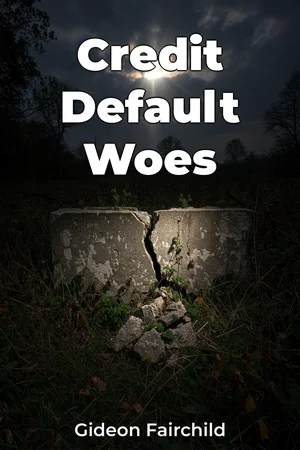
What happens when the seemingly unbreakable foundations of global credit markets begin to crumble? "Credit Default Woes" delves into this critical question, providing a comprehensive analysis of bond defaults and their far-reaching economic consequences. This book is essential for anyone seeking to understand the intricate relationship between credit risk, economic stability, and the role of rating agencies in our modern financial system. We will dissect two primary topics: Firstly, the anatomy of bond defaults - examining the causes, characteristics, and warning signs that precede these events. Secondly, we will explore the cascading effects of defaults on national and international economies. These effects ripple through investment portfolios, corporate balance sheets, and ultimately, impact everyday citizens. "Credit Default Woes" builds upon fundamental economic principles of risk management and financial market dynamics. Familiarity with basic investment concepts and macroeconomic indicators will be beneficial, though we will comprehensively explain all necessary terms. The central argument of this book posits that an over-reliance on credit rating agencies, coupled with increasingly complex financial instruments, has created a systemic vulnerability to unexpected economic shocks. Furthermore, this vulnerability is exacerbated by inadequate regulatory oversight and a lack of transparency in the bond market. Understanding this argument is crucial for investors, policymakers, and anyone concerned about the stability of the global financial system. The book is structured to provide a clear and logical progression of ideas. We begin by defining key concepts such as bond default rates, credit spreads, and the role of rating agencies like Moody's, Standard & Poor's, and Fitch. We examine historical default data, revealing patterns and trends that shed light on the underlying drivers of credit risk. A core section analyzes specific case studies of significant bond defaults, dissecting the events leading up to the default and the subsequent economic fallout. We culminate with a discussion of policy recommendations aimed at mitigating future credit crises, including enhanced regulatory frameworks and improved risk assessment methodologies. These recommendations provide a framework for a more stable and resilient financial system. The analysis presented relies heavily on quantitative data from rating agencies, financial institutions, and government sources. We present statistical models and econometric analyses to support our findings. This book also scrutinizes the methodologies employed by rating agencies, highlighting potential biases and limitations that may contribute to inaccurate risk assessments. "Credit Default Woes" intersects with several related disciplines, including political science (examining the influence of lobbying on financial regulation), sociology (analyzing the behavioral aspects of risk-taking in financial markets), and law (investigating the legal framework governing bond issuances and defaults). These interdisciplinary connections provide a more holistic understanding of the complex factors that contribute to credit risk. A unique aspect of this book is its focus on the often-overlooked role of non-financial corporations in the bond market. While much attention is given to sovereign debt and financial institutions, we analyze the impact of corporate bond defaults on economic growth and employment, providing a more complete picture of the risks inherent in the credit market. The tone of this book is factual and analytical. We aim to provide a balanced and objective assessment of the issues, avoiding sensationalism or alarmist rhetoric. The writing style is accessible to both finance professionals and informed general readers. The target audience includes investors, financial analysts, economists, policymakers, regulators, and students of finance and economics. This book is valuable to anyone seeking a comprehensive understanding of the risks associated with bond investments and the potential consequences of credit defaults. As a work of non-fiction in the genres of finance and economics, the book adheres to the conventions of providing accurate data, transparent methodologies, and well-supported arguments. Citations and references are provided throughout to ensure intellectual honesty and allow readers to verify the information presented. The scope of the book is limited to the analysis of investment-grade and high-yield corporate and sovereign bonds. We do not delve into the complexities of structured credit products or other more esoteric financial instruments. The information in "Credit Default Woes" can be applied practically by investors to make more informed investment decisions, by policymakers to develop more effective regulatory frameworks, and by economists to improve their understanding of macroeconomic risks. The goal is to empower readers to make better decisions in the face of inevitable economic uncertainty. This book addresses ongoing debates regarding the effectiveness of credit rating agencies and the appropriate level of government intervention in financial markets. By presenting a balanced and evidence-based analysis, we aim to contribute to a more informed and productive discussion of these critical issues.
What happens when the seemingly unbreakable foundations of global credit markets begin to crumble? "Credit Default Woes" delves into this critical question, providing a comprehensive analysis of bond defaults and their far-reaching economic consequences. This book is essential for anyone seeking to understand the intricate relationship between credit risk, economic stability, and the role of rating agencies in our modern financial system. We will dissect two primary topics: Firstly, the anatomy of bond defaults - examining the causes, characteristics, and warning signs that precede these events. Secondly, we will explore the cascading effects of defaults on national and international economies. These effects ripple through investment portfolios, corporate balance sheets, and ultimately, impact everyday citizens. "Credit Default Woes" builds upon fundamental economic principles of risk management and financial market dynamics. Familiarity with basic investment concepts and macroeconomic indicators will be beneficial, though we will comprehensively explain all necessary terms. The central argument of this book posits that an over-reliance on credit rating agencies, coupled with increasingly complex financial instruments, has created a systemic vulnerability to unexpected economic shocks. Furthermore, this vulnerability is exacerbated by inadequate regulatory oversight and a lack of transparency in the bond market. Understanding this argument is crucial for investors, policymakers, and anyone concerned about the stability of the global financial system. The book is structured to provide a clear and logical progression of ideas. We begin by defining key concepts such as bond default rates, credit spreads, and the role of rating agencies like Moody's, Standard & Poor's, and Fitch. We examine historical default data, revealing patterns and trends that shed light on the underlying drivers of credit risk. A core section analyzes specific case studies of significant bond defaults, dissecting the events leading up to the default and the subsequent economic fallout. We culminate with a discussion of policy recommendations aimed at mitigating future credit crises, including enhanced regulatory frameworks and improved risk assessment methodologies. These recommendations provide a framework for a more stable and resilient financial system. The analysis presented relies heavily on quantitative data from rating agencies, financial institutions, and government sources. We present statistical models and econometric analyses to support our findings. This book also scrutinizes the methodologies employed by rating agencies, highlighting potential biases and limitations that may contribute to inaccurate risk assessments. "Credit Default Woes" intersects with several related disciplines, including political science (examining the influence of lobbying on financial regulation), sociology (analyzing the behavioral aspects of risk-taking in financial markets), and law (investigating the legal framework governing bond issuances and defaults). These interdisciplinary connections provide a more holistic understanding of the complex factors that contribute to credit risk. A unique aspect of this book is its focus on the often-overlooked role of non-financial corporations in the bond market. While much attention is given to sovereign debt and financial institutions, we analyze the impact of corporate bond defaults on economic growth and employment, providing a more complete picture of the risks inherent in the credit market. The tone of this book is factual and analytical. We aim to provide a balanced and objective assessment of the issues, avoiding sensationalism or alarmist rhetoric. The writing style is accessible to both finance professionals and informed general readers. The target audience includes investors, financial analysts, economists, policymakers, regulators, and students of finance and economics. This book is valuable to anyone seeking a comprehensive understanding of the risks associated with bond investments and the potential consequences of credit defaults. As a work of non-fiction in the genres of finance and economics, the book adheres to the conventions of providing accurate data, transparent methodologies, and well-supported arguments. Citations and references are provided throughout to ensure intellectual honesty and allow readers to verify the information presented. The scope of the book is limited to the analysis of investment-grade and high-yield corporate and sovereign bonds. We do not delve into the complexities of structured credit products or other more esoteric financial instruments. The information in "Credit Default Woes" can be applied practically by investors to make more informed investment decisions, by policymakers to develop more effective regulatory frameworks, and by economists to improve their understanding of macroeconomic risks. The goal is to empower readers to make better decisions in the face of inevitable economic uncertainty. This book addresses ongoing debates regarding the effectiveness of credit rating agencies and the appropriate level of government intervention in financial markets. By presenting a balanced and evidence-based analysis, we aim to contribute to a more informed and productive discussion of these critical issues.
"Credit Default Woes" examines the critical issue of bond defaults and their widespread economic consequences. It highlights the intricate relationship between credit risk, financial system stability, and the influence of credit rating agencies. The book posits that over-reliance on these agencies, combined with complex financial instruments and inadequate regulatory oversight, creates vulnerability to economic shocks. Did you know that bond defaults can ripple through investment portfolios and impact everyday citizens? Or that non-financial corporations play a crucial role in the bond market, affecting economic growth and employment when defaults occur? The book builds upon risk management and financial market dynamics to define key concepts, analyze historical default data, and dissect case studies of significant bond defaults. It uses quantitative data and econometric analyses to support its findings, also scrutinizing the methodologies employed by rating agencies. The book progresses logically from defining basic concepts to analyzing historical data, examining case studies, and proposing policy recommendations for mitigating future credit crises. Ultimately, "Credit Default Woes" aims to empower investors, policymakers, and economists with the knowledge to make better decisions amidst economic uncertainty and contribute to a more stable financial system through enhanced financial regulation.
Book Details
ISBN
9788233977931
Publisher
Publifye AS
Your Licenses
You don't own any licenses for this book
Purchase a license below to unlock this book and download the EPUB.
Purchase License
Select a tier to unlock this book
Need bulk licensing?
Contact us for enterprise agreements.