
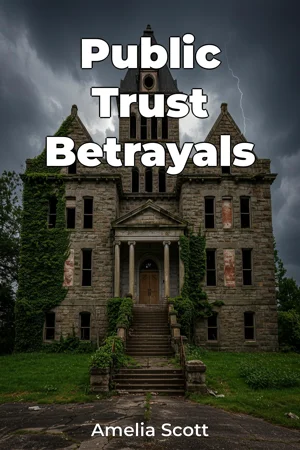
About This Book
How much does a breach of public trust truly cost? This book, "Public Trust Betrayals," delves into the profound and often devastating consequences of misappropriated funds on society. It examines the mechanisms by which corruption erodes the foundations of governance, weakens economic stability, and diminishes social well-being. The core topics explored include the systemic nature of corruption in political and financial systems, the tangible impacts on public services and infrastructure, and the erosion of citizen faith in democratic institutions. These topics are crucial because they illuminate the hidden costs of corruption, revealing how seemingly isolated incidents can have far-reaching and long-lasting repercussions. Understanding the historical and political context is essential. The misuse of public funds is not a new phenomenon, and this book traces its manifestations across different eras and political systems. It acknowledges that while the specific methods of corruption evolve with technological advancements and globalization, the underlying dynamics of power, greed, and impunity remain remarkably consistent. No specialized knowledge is required; the book presents complex financial and political concepts in an accessible manner. The central argument posits that misappropriated funds represent not just a financial loss, but a fundamental violation of the social contract between citizens and their governments. This breach of trust undermines the legitimacy of institutions, fosters cynicism and apathy, and creates a fertile ground for further corruption and instability. This argument is vital because it challenges the common perception of corruption as a victimless crime, highlighting its corrosive effects on the very fabric of society. The book is structured to systematically unpack this argument. It begins by defining key concepts, such as public trust, misappropriation, and corruption, and establishing a framework for analyzing their interrelationships. The book then develops its core ideas through case studies of significant fraud incidents. These analyses will cover both large-scale international scandals and smaller, localized instances of corruption, revealing common patterns and diverse manifestations. Examples will be drawn from various sectors, including government procurement, infrastructure projects, and financial institutions. The culmination of the argument demonstrates the long-term costs of corruption, not only in economic terms but also in terms of social cohesion, political stability, and environmental sustainability and it provides practical recommendations for strengthening accountability mechanisms and promoting ethical governance, aiming to equip readers with tools to combat corruption in their own communities and countries. The evidence presented relies heavily on investigative journalism, government audit reports, academic research, and legal documents. Unique data sources, such as leaked financial records and whistleblower accounts, provide insider perspectives on the mechanics of corruption. The methodology involves a mixed-methods approach, combining quantitative analysis of financial flows with qualitative case studies. "Public Trust Betrayals" connects to several other fields of study. Firstly, it links to economics, as it analyzes the macroeconomic effects of corruption, including reduced investment, slower economic growth, and increased inequality. Secondly, it connects to sociology, as it examines the social norms and cultural factors that contribute to corruption. Thirdly, it connects to law and criminal justice, as it explores the legal frameworks for prosecuting corruption and the challenges of enforcing these laws. These interdisciplinary connections enrich the book's analysis and provide a more holistic understanding of the phenomenon. This book differentiates itself by taking a holistic approach. It moves beyond simply documenting instances of corruption to analyze the underlying causes and consequences, offering practical solutions for preventing and mitigating these harms. The writing style is fact-based, clear, and engaging, aiming to inform and inspire readers to action. The tone remains objective and analytical. The target audience includes students of political science, economics, and public policy, as well as journalists, policymakers, and concerned citizens. It is valuable to anyone seeking to understand the complex dynamics of corruption and its impact on society. As a work of non-fiction in the genres of politics and finance, "Public Trust Betrayals" adheres to the principles of accuracy, objectivity, and thoroughness. It relies on verifiable evidence and presents multiple perspectives on complex issues. The book focuses on the societal impacts of misappropriated funds, intentionally limiting its scope to minimize extensive technical discussions of specific legal or accounting procedures. While it acknowledges the role of individual actors in corruption, the primary focus remains on systemic factors and broader societal consequences. The information in the book can be applied by readers to advocate for greater transparency and accountability in their own communities and countries, to support anti-corruption initiatives, and to hold public officials accountable for their actions. The book addresses ongoing debates about the effectiveness of different anti-corruption strategies, the role of international organizations in combating corruption, and the challenges of balancing economic development with ethical governance.
How much does a breach of public trust truly cost? This book, "Public Trust Betrayals," delves into the profound and often devastating consequences of misappropriated funds on society. It examines the mechanisms by which corruption erodes the foundations of governance, weakens economic stability, and diminishes social well-being. The core topics explored include the systemic nature of corruption in political and financial systems, the tangible impacts on public services and infrastructure, and the erosion of citizen faith in democratic institutions. These topics are crucial because they illuminate the hidden costs of corruption, revealing how seemingly isolated incidents can have far-reaching and long-lasting repercussions. Understanding the historical and political context is essential. The misuse of public funds is not a new phenomenon, and this book traces its manifestations across different eras and political systems. It acknowledges that while the specific methods of corruption evolve with technological advancements and globalization, the underlying dynamics of power, greed, and impunity remain remarkably consistent. No specialized knowledge is required; the book presents complex financial and political concepts in an accessible manner. The central argument posits that misappropriated funds represent not just a financial loss, but a fundamental violation of the social contract between citizens and their governments. This breach of trust undermines the legitimacy of institutions, fosters cynicism and apathy, and creates a fertile ground for further corruption and instability. This argument is vital because it challenges the common perception of corruption as a victimless crime, highlighting its corrosive effects on the very fabric of society. The book is structured to systematically unpack this argument. It begins by defining key concepts, such as public trust, misappropriation, and corruption, and establishing a framework for analyzing their interrelationships. The book then develops its core ideas through case studies of significant fraud incidents. These analyses will cover both large-scale international scandals and smaller, localized instances of corruption, revealing common patterns and diverse manifestations. Examples will be drawn from various sectors, including government procurement, infrastructure projects, and financial institutions. The culmination of the argument demonstrates the long-term costs of corruption, not only in economic terms but also in terms of social cohesion, political stability, and environmental sustainability and it provides practical recommendations for strengthening accountability mechanisms and promoting ethical governance, aiming to equip readers with tools to combat corruption in their own communities and countries. The evidence presented relies heavily on investigative journalism, government audit reports, academic research, and legal documents. Unique data sources, such as leaked financial records and whistleblower accounts, provide insider perspectives on the mechanics of corruption. The methodology involves a mixed-methods approach, combining quantitative analysis of financial flows with qualitative case studies. "Public Trust Betrayals" connects to several other fields of study. Firstly, it links to economics, as it analyzes the macroeconomic effects of corruption, including reduced investment, slower economic growth, and increased inequality. Secondly, it connects to sociology, as it examines the social norms and cultural factors that contribute to corruption. Thirdly, it connects to law and criminal justice, as it explores the legal frameworks for prosecuting corruption and the challenges of enforcing these laws. These interdisciplinary connections enrich the book's analysis and provide a more holistic understanding of the phenomenon. This book differentiates itself by taking a holistic approach. It moves beyond simply documenting instances of corruption to analyze the underlying causes and consequences, offering practical solutions for preventing and mitigating these harms. The writing style is fact-based, clear, and engaging, aiming to inform and inspire readers to action. The tone remains objective and analytical. The target audience includes students of political science, economics, and public policy, as well as journalists, policymakers, and concerned citizens. It is valuable to anyone seeking to understand the complex dynamics of corruption and its impact on society. As a work of non-fiction in the genres of politics and finance, "Public Trust Betrayals" adheres to the principles of accuracy, objectivity, and thoroughness. It relies on verifiable evidence and presents multiple perspectives on complex issues. The book focuses on the societal impacts of misappropriated funds, intentionally limiting its scope to minimize extensive technical discussions of specific legal or accounting procedures. While it acknowledges the role of individual actors in corruption, the primary focus remains on systemic factors and broader societal consequences. The information in the book can be applied by readers to advocate for greater transparency and accountability in their own communities and countries, to support anti-corruption initiatives, and to hold public officials accountable for their actions. The book addresses ongoing debates about the effectiveness of different anti-corruption strategies, the role of international organizations in combating corruption, and the challenges of balancing economic development with ethical governance.
"Public Trust Betrayals" investigates the widespread consequences of corruption and misappropriated funds, revealing how these actions erode governance and destabilize economies. The book illustrates how corruption isn't merely a financial issue; it's a violation of the social contract, fostering public cynicism and undermining faith in democratic institutions. It highlights the systemic nature of corruption, demonstrating how even seemingly isolated incidents can have long-lasting repercussions on public services and infrastructure. The book systematically explores these issues, beginning by defining key concepts like public trust and misappropriation, before delving into case studies of significant fraud incidents, both large-scale and localized. It highlights that the methods of corruption evolve with technology but the underlying drivers remain consistent. By examining examples from government procurement to financial institutions, the book demonstrates the long-term economic and social costs of corruption. Ultimately, the analysis emphasizes the need for strengthened accountability mechanisms and ethical governance, offering insights for combating corruption and promoting greater transparency. The book draws from investigative journalism, audit reports, and legal documents to support its arguments, providing a holistic understanding of the phenomenon for students, policymakers, and concerned citizens alike.
Book Details
ISBN
9788233977924
Publisher
Publifye AS
Your Licenses
You don't own any licenses for this book
Purchase a license below to unlock this book and download the EPUB.
Purchase License
Select a tier to unlock this book
Need bulk licensing?
Contact us for enterprise agreements.