
About This Book
Why does poetry, an art form revered for its depth and expressive power, often struggle to achieve widespread readership and circulation in contemporary literary landscapes? "Poetry Circulation Indications" delves into this complex question, offering a comprehensive analysis of the factors influencing poetry's niche popularity and its performance within the broader context of literary collections. This book examines the intricate relationship between poetic expression, market dynamics, and reader engagement, providing valuable insights for poets, publishers, literary scholars, and readers interested in understanding the current state of poetry. Our exploration centers around three key topics: the historical and cultural positioning of poetry in literary canons, contemporary marketing and distribution strategies for poetry collections, and the metrics used to assess poetry's impact and readership. These topics are not mutually exclusive; instead, they represent interconnected facets of poetry's circulation, each influencing the others in significant ways. Understanding these dynamics is crucial for fostering a more vibrant and sustainable ecosystem for poetry. The book begins by establishing a historical and cultural context for poetry, tracing its evolution from a central art form to its current, more specialized position. We examine how broad literary compilations and anthologies have shaped perceptions of poetry, influencing its accessibility and appeal to diverse audiences. The core argument asserts that poetry's circulation is not solely determined by its artistic merit but is also significantly shaped by market forces, publishing practices, and the evolving habits of readers. "Poetry Circulation Indications" is structured to provide a clear and logical progression of ideas. The introduction defines key concepts and sets the stage for in-depth analysis. Subsequent chapters explore the historical context, examining the role of anthologies and literary criticism in shaping poetry's reception; analyze the contemporary publishing landscape, evaluating the impact of marketing strategies, online platforms, and independent presses on poetry's circulation; and scrutinize the metrics used to measure poetry's success, discussing limitations of traditional sales figures and exploring alternative measures of impact, such as website traffic, social media engagement, and community-based initiatives. The culmination of these arguments leads to practical recommendations for poets, publishers, and literary organizations seeking to increase poetry’s reach and readership. The book’s findings are supported by a blend of quantitative and qualitative research. We analyze sales data from major publishing houses, examine readership statistics from online literary platforms, and conduct case studies of successful and less successful poetry collections. Unique data sources include surveys of poets and readers, interviews with publishers and literary critics, and analyses of social media trends related to poetry. The book connects to other fields such as economics through its analysis of market dynamics, sociology through its examination of readership habits and cultural trends, and communication studies through its exploration of the impact of digital platforms on poetry’s dissemination. These interdisciplinary connections enrich the book’s arguments, providing a more comprehensive and nuanced understanding of poetry's circulation. "Poetry Circulation Indications" adopts a fact-based, analytical approach, presenting information in a clear and objective manner. While acknowledging the subjective nature of aesthetic appreciation, the book focuses on measurable indicators and observable trends to provide a data-driven assessment of poetry's circulation. The intended audience includes poets seeking to understand the market for their work, publishers looking to improve their strategies for promoting poetry, literary scholars interested in contemporary readership trends, and general readers who want to deepen their appreciation of poetry's role in contemporary culture. The book confines its exploration to English-language poetry collections published within the last 50 years, acknowledging the diverse landscape of global poetry while maintaining a manageable scope. The information presented in this book can be applied practically by poets seeking to build their audience, publishers aiming to improve their marketing strategies, and literary organizations working to foster a more vibrant poetry community. Further, this book addresses ongoing debates about the value and relevance of poetry in a rapidly changing cultural landscape. While some argue that poetry is inherently niche and resistant to widespread appeal, this book suggests that strategic interventions and a deeper understanding of market dynamics can significantly impact poetry's circulation and readership.
Why does poetry, an art form revered for its depth and expressive power, often struggle to achieve widespread readership and circulation in contemporary literary landscapes? "Poetry Circulation Indications" delves into this complex question, offering a comprehensive analysis of the factors influencing poetry's niche popularity and its performance within the broader context of literary collections. This book examines the intricate relationship between poetic expression, market dynamics, and reader engagement, providing valuable insights for poets, publishers, literary scholars, and readers interested in understanding the current state of poetry. Our exploration centers around three key topics: the historical and cultural positioning of poetry in literary canons, contemporary marketing and distribution strategies for poetry collections, and the metrics used to assess poetry's impact and readership. These topics are not mutually exclusive; instead, they represent interconnected facets of poetry's circulation, each influencing the others in significant ways. Understanding these dynamics is crucial for fostering a more vibrant and sustainable ecosystem for poetry. The book begins by establishing a historical and cultural context for poetry, tracing its evolution from a central art form to its current, more specialized position. We examine how broad literary compilations and anthologies have shaped perceptions of poetry, influencing its accessibility and appeal to diverse audiences. The core argument asserts that poetry's circulation is not solely determined by its artistic merit but is also significantly shaped by market forces, publishing practices, and the evolving habits of readers. "Poetry Circulation Indications" is structured to provide a clear and logical progression of ideas. The introduction defines key concepts and sets the stage for in-depth analysis. Subsequent chapters explore the historical context, examining the role of anthologies and literary criticism in shaping poetry's reception; analyze the contemporary publishing landscape, evaluating the impact of marketing strategies, online platforms, and independent presses on poetry's circulation; and scrutinize the metrics used to measure poetry's success, discussing limitations of traditional sales figures and exploring alternative measures of impact, such as website traffic, social media engagement, and community-based initiatives. The culmination of these arguments leads to practical recommendations for poets, publishers, and literary organizations seeking to increase poetry’s reach and readership. The book’s findings are supported by a blend of quantitative and qualitative research. We analyze sales data from major publishing houses, examine readership statistics from online literary platforms, and conduct case studies of successful and less successful poetry collections. Unique data sources include surveys of poets and readers, interviews with publishers and literary critics, and analyses of social media trends related to poetry. The book connects to other fields such as economics through its analysis of market dynamics, sociology through its examination of readership habits and cultural trends, and communication studies through its exploration of the impact of digital platforms on poetry’s dissemination. These interdisciplinary connections enrich the book’s arguments, providing a more comprehensive and nuanced understanding of poetry's circulation. "Poetry Circulation Indications" adopts a fact-based, analytical approach, presenting information in a clear and objective manner. While acknowledging the subjective nature of aesthetic appreciation, the book focuses on measurable indicators and observable trends to provide a data-driven assessment of poetry's circulation. The intended audience includes poets seeking to understand the market for their work, publishers looking to improve their strategies for promoting poetry, literary scholars interested in contemporary readership trends, and general readers who want to deepen their appreciation of poetry's role in contemporary culture. The book confines its exploration to English-language poetry collections published within the last 50 years, acknowledging the diverse landscape of global poetry while maintaining a manageable scope. The information presented in this book can be applied practically by poets seeking to build their audience, publishers aiming to improve their marketing strategies, and literary organizations working to foster a more vibrant poetry community. Further, this book addresses ongoing debates about the value and relevance of poetry in a rapidly changing cultural landscape. While some argue that poetry is inherently niche and resistant to widespread appeal, this book suggests that strategic interventions and a deeper understanding of market dynamics can significantly impact poetry's circulation and readership.
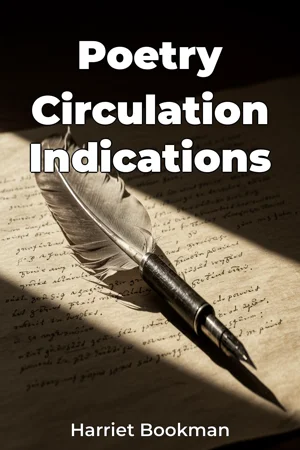
"Poetry Circulation Indications" investigates why poetry, despite its artistic value, often struggles for widespread readership. It examines the interplay between poetic expression, market dynamics, and reader engagement, offering insights for poets, publishers, and readers. The book highlights how poetry's circulation is influenced by market forces, publishing practices, and evolving reader habits, not solely its artistic merit. For example, marketing strategies and online platforms significantly impact how poetry collections reach audiences, underscoring the importance of understanding these factors for a thriving poetry ecosystem. The book adopts a fact-based approach, analyzing sales data, readership statistics, and social media trends to assess poetry's circulation. It explores the historical context of poetry, its contemporary publishing landscape, and the metrics used to measure its success. Beginning with an overview of poetry's evolution, the book progresses through chapters that analyze marketing strategies, online platforms and sales figures, culminating in practical recommendations to enhance poetry's reach and readership.
Book Details
ISBN
9788233977672
Publisher
Publifye AS
Your Licenses
You don't own any licenses for this book
Purchase a license below to unlock this book and download the EPUB.
Purchase License
Select a tier to unlock this book
Need bulk licensing?
Contact us for enterprise agreements.