
About This Book
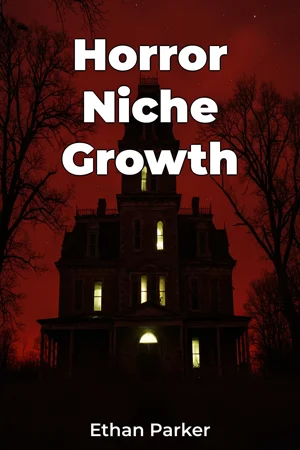
Why does horror, a genre often relegated to the fringes of popular culture, continue to captivate an ever-growing audience? This book, *Horror Niche Growth*, explores the fascinating evolution of horror literature, tracing its journey from a niche interest to a genre increasingly embraced by mainstream readers. We delve into the key factors that have fueled this expansion, analyzing the historical context, the shifting cultural landscape, and the genre's unique ability to reflect and refract societal anxieties. This book tackles three main topics: the historical development of horror literature, the socio-cultural influences that have shaped its popularity, and the genre's increasing integration into mainstream reading habits and popular culture. These topics are vital to understanding the genre's current status and its potential for future growth. We examine how landmark horror novels and authors established the building blocks of the genre but also how film and television adaptations have significantly broadened its reach. No prior knowledge is required, though familiarity with popular horror tropes will enhance the reading experience. Our central argument is that the growing mainstream acceptance of horror isn't a mere trend but a reflection of the genre's adaptability and its capacity to engage with contemporary issues in a way that resonates with a wide range of readers. Horror provides a safe space to confront our deepest fears, anxieties, and societal taboos, making it increasingly relevant in an uncertain world. The book is structured logically to support this argument. Part one introduces horror's origins in folklore and gothic literature, tracing its progression through the twentieth century. Part two examines the role of social and political events, such as wars, economic crises, and pandemics, in shaping horror narratives. This section also analyzes how shifting attitudes towards gender, race, and sexuality have influenced the genre. Part three focuses on horror's increasing presence in mainstream media, including adaptations, the rise of horror-themed streaming services, and the critical acclaim awarded to previously marginalized horror authors and filmmakers. The conclusion synthesizes these points, offering insights into the future trajectory of the genre and its continued relevance in a rapidly changing world. The evidence presented in *Horror Niche Growth* is drawn from a diverse range of sources, including literary analysis, film and television studies, sociological research, and cultural criticism. We utilize sales data, readership surveys, and critical reviews to quantify the genre's growth and assess its cultural impact. Primary source material, such as original manuscripts, interviews with authors and filmmakers, and historical documents, enrich the analysis. This book makes interdisciplinary connections to fields such as sociology, psychology, and cultural studies. By examining the social and psychological underpinnings of fear, we gain a deeper understanding of why horror resonates with audiences. Cultural studies provides a framework for analyzing how horror texts reflect and challenge societal norms. We explore how the genre has been used as a vehicle for social commentary, addressing issues such as inequality, environmental degradation, and political corruption. *Horror Niche Growth* distinguishes itself by offering a comprehensive and nuanced analysis of the genre's evolution. While other studies may focus on specific subgenres or time periods, this book provides a broader historical and cultural context, highlighting the interconnectedness of literary, cinematic, and social forces. Written in an accessible and engaging style, *Horror Niche Growth* is targeted towards students and scholars of literature, film, and cultural studies, as well as general readers with an interest in the horror genre. This book would be valuable to anyone seeking a deeper understanding of the genre's historical development, its cultural significance, and its potential for future growth. As a work of non-fiction, this book prioritizes accuracy, objectivity, and scholarly rigor. While acknowledging the subjective nature of aesthetic appreciation, the analysis is grounded in empirical evidence and established theoretical frameworks. The scope of *Horror Niche Growth* encompasses primarily American and British horror literature and film, with some discussion of international influences. The book intentionally excludes extended discussion of horror-adjacent genres such as thrillers and suspense, to maintain focus. The insights presented in this book have real-world applications for writers, filmmakers, and marketers interested in understanding and engaging with the horror audience. By understanding the genre's historical trajectory and its cultural significance, creators can better tailor their work to meet the evolving needs and expectations of readers and viewers. One ongoing debate within the horror community concerns the extent to which the genre should embrace social and political commentary. Some argue that horror should remain primarily focused on entertainment, while others believe that it has a responsibility to address important social issues. This book examines various perspectives on this debate, arguing that the genre's capacity for social commentary is one of its greatest strengths.
Why does horror, a genre often relegated to the fringes of popular culture, continue to captivate an ever-growing audience? This book, *Horror Niche Growth*, explores the fascinating evolution of horror literature, tracing its journey from a niche interest to a genre increasingly embraced by mainstream readers. We delve into the key factors that have fueled this expansion, analyzing the historical context, the shifting cultural landscape, and the genre's unique ability to reflect and refract societal anxieties. This book tackles three main topics: the historical development of horror literature, the socio-cultural influences that have shaped its popularity, and the genre's increasing integration into mainstream reading habits and popular culture. These topics are vital to understanding the genre's current status and its potential for future growth. We examine how landmark horror novels and authors established the building blocks of the genre but also how film and television adaptations have significantly broadened its reach. No prior knowledge is required, though familiarity with popular horror tropes will enhance the reading experience. Our central argument is that the growing mainstream acceptance of horror isn't a mere trend but a reflection of the genre's adaptability and its capacity to engage with contemporary issues in a way that resonates with a wide range of readers. Horror provides a safe space to confront our deepest fears, anxieties, and societal taboos, making it increasingly relevant in an uncertain world. The book is structured logically to support this argument. Part one introduces horror's origins in folklore and gothic literature, tracing its progression through the twentieth century. Part two examines the role of social and political events, such as wars, economic crises, and pandemics, in shaping horror narratives. This section also analyzes how shifting attitudes towards gender, race, and sexuality have influenced the genre. Part three focuses on horror's increasing presence in mainstream media, including adaptations, the rise of horror-themed streaming services, and the critical acclaim awarded to previously marginalized horror authors and filmmakers. The conclusion synthesizes these points, offering insights into the future trajectory of the genre and its continued relevance in a rapidly changing world. The evidence presented in *Horror Niche Growth* is drawn from a diverse range of sources, including literary analysis, film and television studies, sociological research, and cultural criticism. We utilize sales data, readership surveys, and critical reviews to quantify the genre's growth and assess its cultural impact. Primary source material, such as original manuscripts, interviews with authors and filmmakers, and historical documents, enrich the analysis. This book makes interdisciplinary connections to fields such as sociology, psychology, and cultural studies. By examining the social and psychological underpinnings of fear, we gain a deeper understanding of why horror resonates with audiences. Cultural studies provides a framework for analyzing how horror texts reflect and challenge societal norms. We explore how the genre has been used as a vehicle for social commentary, addressing issues such as inequality, environmental degradation, and political corruption. *Horror Niche Growth* distinguishes itself by offering a comprehensive and nuanced analysis of the genre's evolution. While other studies may focus on specific subgenres or time periods, this book provides a broader historical and cultural context, highlighting the interconnectedness of literary, cinematic, and social forces. Written in an accessible and engaging style, *Horror Niche Growth* is targeted towards students and scholars of literature, film, and cultural studies, as well as general readers with an interest in the horror genre. This book would be valuable to anyone seeking a deeper understanding of the genre's historical development, its cultural significance, and its potential for future growth. As a work of non-fiction, this book prioritizes accuracy, objectivity, and scholarly rigor. While acknowledging the subjective nature of aesthetic appreciation, the analysis is grounded in empirical evidence and established theoretical frameworks. The scope of *Horror Niche Growth* encompasses primarily American and British horror literature and film, with some discussion of international influences. The book intentionally excludes extended discussion of horror-adjacent genres such as thrillers and suspense, to maintain focus. The insights presented in this book have real-world applications for writers, filmmakers, and marketers interested in understanding and engaging with the horror audience. By understanding the genre's historical trajectory and its cultural significance, creators can better tailor their work to meet the evolving needs and expectations of readers and viewers. One ongoing debate within the horror community concerns the extent to which the genre should embrace social and political commentary. Some argue that horror should remain primarily focused on entertainment, while others believe that it has a responsibility to address important social issues. This book examines various perspectives on this debate, arguing that the genre's capacity for social commentary is one of its greatest strengths.
*Horror Niche Growth* explores the evolution of horror from a niche interest to a mainstream phenomenon, examining its historical development, socio-cultural influences, and integration into popular culture. The book argues that horror's growing acceptance reflects its adaptability and ability to engage with contemporary issues. Intriguingly, horror provides a space to confront societal anxieties, and its increased mainstream presence involves adaptations and critical acclaim for previously marginalized creators. The book progresses logically, beginning with horror's origins in folklore and gothic literature before examining the impact of social and political events on horror narratives. It then focuses on horror's increasing presence in mainstream media. By drawing from literary analysis, film and television studies, sociological research, and cultural criticism, *Horror Niche Growth* offers a comprehensive analysis of the genre's evolution, highlighting the interconnectedness of literary, cinematic, and social forces.
Book Details
ISBN
9788233977627
Publisher
Publifye AS
Your Licenses
You don't own any licenses for this book
Purchase a license below to unlock this book and download the EPUB.
Purchase License
Select a tier to unlock this book
Need bulk licensing?
Contact us for enterprise agreements.