
About This Book
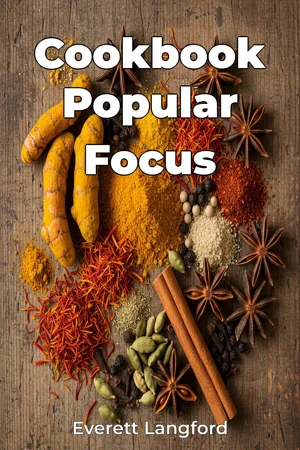
Why, in an age of instant recipes and online culinary tutorials, do cookbooks continue to command shelf space and capture the imaginations of home cooks and professional chefs alike? Cookbook Popular Focus delves into the enduring appeal and continued market relevance of cookbooks, exploring their evolving role within the ever-changing landscapes of dietary trends and easy recipe accessibility across a multitude of cuisines. This book examines the cookbook not merely as a collection of recipes, but as a cultural artifact reflecting societal values, health concerns, and the democratization of culinary knowledge. The primary focus is threefold: first, to analyze the cookbook's persistent economic viability despite digital competition; second, to chart the influence of prominent dietary movements, such as vegetarianism, veganism, gluten-free eating, and the Keto diet, on cookbook content and design; and third, to assess the impact of globalization and digital media on the range and presentation of international cuisines available in cookbook form. These topics are crucial because they shed light on how cookbooks adapt to, and sometimes even shape, contemporary food culture. Historically, cookbooks served as essential household manuals, often passed down through generations, providing practical guidance on food preparation and preservation. Today, cookbooks are increasingly diverse, catering to niche interests and reflecting a broader range of culinary styles. This evolution is intrinsically linked to shifting social norms, increased awareness of health and wellness, and the pervasive influence of digital media. Understanding this context is vital to appreciating the cookbook's ongoing significance. Cookbook Popular Focus argues that the cookbook's sustained popularity stems from its tangible, curated nature. Unlike the often overwhelming and algorithm-driven world of online recipes, cookbooks offer a carefully selected and thoughtfully organized collection of recipes, providing a sense of authority and completeness. The argument is built around the value of physical media in a digital age, suggesting cookbooks offer a sensory experience and a level of trust not always found online. The book unfolds in a structured manner. Part one introduces the concept of the cookbook as a cultural and economic entity. This section explores sales data, publishing trends, and consumer behavior, all contributing to a comprehensive portrait of the cookbook market. Part two delves into the relationship between dietary trends and cookbook content. Chapters here focus on how specific diets have spurred the creation of specialized cookbooks and how these publications, in turn, contribute to the mainstreaming of those diets. Part three examines the globalization of cuisine within cookbooks, tracing the increasing availability of international recipes and analyzing how these recipes are adapted and presented for a Western audience. This section carefully considers issues of authenticity and cultural appropriation. The conclusion synthesizes the various threads, highlighting the cookbook's resilience and adaptability and considering its future role in shaping culinary trends and practices. The analysis is supported by a combination of market research data, content analysis of popular cookbooks across different eras and genres, and interviews with chefs, food writers, and cookbook publishers. The methodology combines quantitative analysis of sales figures with qualitative analyses of cookbook content and consumer reviews. The book makes connections to several other fields, including sociology (examining food as a marker of social identity), media studies (analyzing the cookbook as a form of communication), and economics (assessing the book publishing industry). These interdisciplinary connections enrich the book's argument by providing a broader framework for understanding the cookbook's significance. Cookbook Popular Focus offers a unique perspective by treating the cookbook not simply as a recipe repository but as a dynamic cultural object that reflects and influences societal values. This holistic approach sets it apart from more narrowly focused studies of culinary history or food writing. The tone is informative and analytical, aiming for a balance between academic rigor and accessibility for a general audience interested in food culture. The target audience includes food enthusiasts, culinary students, food studies scholars, librarians, and anyone interested in the cultural history of food and the publishing industry. The book offers valuable insights into the evolving role of cookbooks in a rapidly changing world. As a work of food writing and culinary analysis, Cookbook Popular Focus adheres to standards of accuracy, objectivity, and thorough research. It strives to provide a balanced and nuanced perspective on the subject. The book’s scope is intentionally limited to commercially published cookbooks, excluding self-published works and online recipe databases. This limitation allows for a more focused and manageable analysis. The information presented has real-world applications for cookbook publishers seeking to understand market trends, cookbook authors aiming to craft compelling and relevant content, and consumers seeking to make informed purchasing decisions. One ongoing debate addressed in the book is the question of cultural appropriation in the presentation of international cuisines. The book seeks to approach this issue with sensitivity and nuance, acknowledging the complexities involved.
Why, in an age of instant recipes and online culinary tutorials, do cookbooks continue to command shelf space and capture the imaginations of home cooks and professional chefs alike? Cookbook Popular Focus delves into the enduring appeal and continued market relevance of cookbooks, exploring their evolving role within the ever-changing landscapes of dietary trends and easy recipe accessibility across a multitude of cuisines. This book examines the cookbook not merely as a collection of recipes, but as a cultural artifact reflecting societal values, health concerns, and the democratization of culinary knowledge. The primary focus is threefold: first, to analyze the cookbook's persistent economic viability despite digital competition; second, to chart the influence of prominent dietary movements, such as vegetarianism, veganism, gluten-free eating, and the Keto diet, on cookbook content and design; and third, to assess the impact of globalization and digital media on the range and presentation of international cuisines available in cookbook form. These topics are crucial because they shed light on how cookbooks adapt to, and sometimes even shape, contemporary food culture. Historically, cookbooks served as essential household manuals, often passed down through generations, providing practical guidance on food preparation and preservation. Today, cookbooks are increasingly diverse, catering to niche interests and reflecting a broader range of culinary styles. This evolution is intrinsically linked to shifting social norms, increased awareness of health and wellness, and the pervasive influence of digital media. Understanding this context is vital to appreciating the cookbook's ongoing significance. Cookbook Popular Focus argues that the cookbook's sustained popularity stems from its tangible, curated nature. Unlike the often overwhelming and algorithm-driven world of online recipes, cookbooks offer a carefully selected and thoughtfully organized collection of recipes, providing a sense of authority and completeness. The argument is built around the value of physical media in a digital age, suggesting cookbooks offer a sensory experience and a level of trust not always found online. The book unfolds in a structured manner. Part one introduces the concept of the cookbook as a cultural and economic entity. This section explores sales data, publishing trends, and consumer behavior, all contributing to a comprehensive portrait of the cookbook market. Part two delves into the relationship between dietary trends and cookbook content. Chapters here focus on how specific diets have spurred the creation of specialized cookbooks and how these publications, in turn, contribute to the mainstreaming of those diets. Part three examines the globalization of cuisine within cookbooks, tracing the increasing availability of international recipes and analyzing how these recipes are adapted and presented for a Western audience. This section carefully considers issues of authenticity and cultural appropriation. The conclusion synthesizes the various threads, highlighting the cookbook's resilience and adaptability and considering its future role in shaping culinary trends and practices. The analysis is supported by a combination of market research data, content analysis of popular cookbooks across different eras and genres, and interviews with chefs, food writers, and cookbook publishers. The methodology combines quantitative analysis of sales figures with qualitative analyses of cookbook content and consumer reviews. The book makes connections to several other fields, including sociology (examining food as a marker of social identity), media studies (analyzing the cookbook as a form of communication), and economics (assessing the book publishing industry). These interdisciplinary connections enrich the book's argument by providing a broader framework for understanding the cookbook's significance. Cookbook Popular Focus offers a unique perspective by treating the cookbook not simply as a recipe repository but as a dynamic cultural object that reflects and influences societal values. This holistic approach sets it apart from more narrowly focused studies of culinary history or food writing. The tone is informative and analytical, aiming for a balance between academic rigor and accessibility for a general audience interested in food culture. The target audience includes food enthusiasts, culinary students, food studies scholars, librarians, and anyone interested in the cultural history of food and the publishing industry. The book offers valuable insights into the evolving role of cookbooks in a rapidly changing world. As a work of food writing and culinary analysis, Cookbook Popular Focus adheres to standards of accuracy, objectivity, and thorough research. It strives to provide a balanced and nuanced perspective on the subject. The book’s scope is intentionally limited to commercially published cookbooks, excluding self-published works and online recipe databases. This limitation allows for a more focused and manageable analysis. The information presented has real-world applications for cookbook publishers seeking to understand market trends, cookbook authors aiming to craft compelling and relevant content, and consumers seeking to make informed purchasing decisions. One ongoing debate addressed in the book is the question of cultural appropriation in the presentation of international cuisines. The book seeks to approach this issue with sensitivity and nuance, acknowledging the complexities involved.
"Cookbook Popular Focus" explores the enduring significance of cookbooks in our digital age, arguing they are more than just recipe books; they are cultural artifacts reflecting dietary trends, culinary trends, and societal values. The book examines how these publications have maintained their market relevance amidst online competition, with insights into how they have adapted to and influenced contemporary food culture. From historical household manuals to diverse culinary guides, cookbooks offer a curated experience that contrasts with the overwhelming nature of online recipes. The book progresses systematically, first establishing the cookbook's cultural and economic importance, then delving into the impact of dietary movements like veganism and gluten-free eating on cookbook content. It also analyzes the globalization of cuisine within cookbooks, considering issues of authenticity and cultural appropriation. For example, cookbooks provide tangible, curated content offering a sense of authority, while also showcasing how international cuisine is adapted for Western audiences. Ultimately, "Cookbook Popular Focus" emphasizes the cookbook's resilience and adaptability. It offers valuable insights for food enthusiasts, culinary students, and anyone interested in the cultural history of food writing and the publishing industry, highlighting the cookbook's ongoing role in shaping culinary practices.
Book Details
ISBN
9788233977580
Publisher
Publifye AS
Your Licenses
You don't own any licenses for this book
Purchase a license below to unlock this book and download the EPUB.
Purchase License
Select a tier to unlock this book
Need bulk licensing?
Contact us for enterprise agreements.