
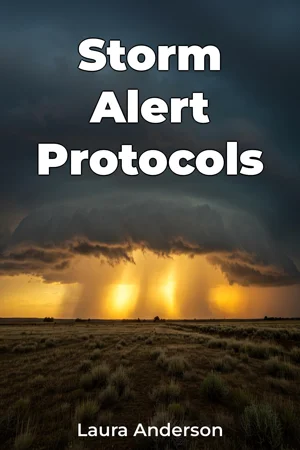
About This Book
Are you prepared for the next extreme weather event? 'Storm Alert Protocols' provides a comprehensive guide to recognizing and responding effectively to diverse weather patterns, grounded in robust meteorological field data. This book addresses the critical need for informed decision-making in the face of increasingly complex and intense weather phenomena. This work focuses on three key areas: the science of storm formation and progression, the interpretation of meteorological data, and the implementation of effective response strategies. The understanding of atmospheric dynamics, including the role of temperature gradients, pressure systems, and moisture content, is crucial for predicting storm behavior. Equally important is the ability to analyze and interpret data from a variety of sources, including weather satellites, radar systems, and surface observation networks. Finally, the translation of this knowledge into practical response protocols is necessary to mitigate the impact of severe weather events. The book offers a historical perspective on the evolution of weather forecasting, tracing its development from rudimentary observations to sophisticated computer models. It explains the basics of atmospheric science, including thermodynamics, fluid dynamics, and cloud physics, providing the necessary background for understanding advanced concepts. A core argument presented is that proactive, data-driven preparation is the most effective approach to minimizing the damages and disruptions caused by storms. 'Storm Alert Protocols' is structured to facilitate a clear understanding of the subject matter. It begins by introducing fundamental meteorological concepts, then progresses to an in-depth analysis of various storm types, from thunderstorms and tornadoes to hurricanes and blizzards. Each chapter integrates theoretical knowledge with real-world case studies, demonstrating how meteorological data can be used to predict and respond to specific weather events. The book culminates with a section on practical applications, including the development of customized storm alert protocols for different environments and industries. The evidence presented in the book is derived from a wide range of sources, including peer-reviewed scientific literature, government reports, and data collected from meteorological field experiments. It incorporates data from advanced weather models and forecasting systems. The book draws connections between meteorology and other disciplines such as geography, environmental science, and emergency management. The geographical context shapes the unique vulnerabilities of regional weather phenomena, while the principles of environmental science influence our comprehension of climate change impacts that may exacerbate the intensity and frequency of extreme weather events. Emergency management strategies provide a framework for translating meteorological insights into effective community responses. This book differentiates itself by emphasizing the practical application of meteorological knowledge. It provides a step-by-step guide to developing and implementing storm alert protocols that are tailored to specific needs and circumstances. The tone is informative and accessible, making complex scientific concepts understandable to a broad audience. 'Storm Alert Protocols' is targeted towards a diverse readership including emergency responders, environmental scientists, urban planners, and anyone living an area prone to severe weather events. This book provides actionable insights and tools that can be used to protect lives and property. The book adheres to the conventions of non-fiction Earth Sciences, emphasizing factual accuracy, and rigorous analysis. The scope is limited to providing practical guidance and the implementation of response protocols. It does not provide an exhaustive overview of theoretical meteorology. The information presented can be used by readers to develop effective storm alert protocols, improve community resilience, and make informed decisions in the face of severe weather threats. While controversies exist regarding the precise impacts of climate change on extreme weather, this book focuses on adaptation strategies that are effective regardless of the ultimate drivers of these events.
Are you prepared for the next extreme weather event? 'Storm Alert Protocols' provides a comprehensive guide to recognizing and responding effectively to diverse weather patterns, grounded in robust meteorological field data. This book addresses the critical need for informed decision-making in the face of increasingly complex and intense weather phenomena. This work focuses on three key areas: the science of storm formation and progression, the interpretation of meteorological data, and the implementation of effective response strategies. The understanding of atmospheric dynamics, including the role of temperature gradients, pressure systems, and moisture content, is crucial for predicting storm behavior. Equally important is the ability to analyze and interpret data from a variety of sources, including weather satellites, radar systems, and surface observation networks. Finally, the translation of this knowledge into practical response protocols is necessary to mitigate the impact of severe weather events. The book offers a historical perspective on the evolution of weather forecasting, tracing its development from rudimentary observations to sophisticated computer models. It explains the basics of atmospheric science, including thermodynamics, fluid dynamics, and cloud physics, providing the necessary background for understanding advanced concepts. A core argument presented is that proactive, data-driven preparation is the most effective approach to minimizing the damages and disruptions caused by storms. 'Storm Alert Protocols' is structured to facilitate a clear understanding of the subject matter. It begins by introducing fundamental meteorological concepts, then progresses to an in-depth analysis of various storm types, from thunderstorms and tornadoes to hurricanes and blizzards. Each chapter integrates theoretical knowledge with real-world case studies, demonstrating how meteorological data can be used to predict and respond to specific weather events. The book culminates with a section on practical applications, including the development of customized storm alert protocols for different environments and industries. The evidence presented in the book is derived from a wide range of sources, including peer-reviewed scientific literature, government reports, and data collected from meteorological field experiments. It incorporates data from advanced weather models and forecasting systems. The book draws connections between meteorology and other disciplines such as geography, environmental science, and emergency management. The geographical context shapes the unique vulnerabilities of regional weather phenomena, while the principles of environmental science influence our comprehension of climate change impacts that may exacerbate the intensity and frequency of extreme weather events. Emergency management strategies provide a framework for translating meteorological insights into effective community responses. This book differentiates itself by emphasizing the practical application of meteorological knowledge. It provides a step-by-step guide to developing and implementing storm alert protocols that are tailored to specific needs and circumstances. The tone is informative and accessible, making complex scientific concepts understandable to a broad audience. 'Storm Alert Protocols' is targeted towards a diverse readership including emergency responders, environmental scientists, urban planners, and anyone living an area prone to severe weather events. This book provides actionable insights and tools that can be used to protect lives and property. The book adheres to the conventions of non-fiction Earth Sciences, emphasizing factual accuracy, and rigorous analysis. The scope is limited to providing practical guidance and the implementation of response protocols. It does not provide an exhaustive overview of theoretical meteorology. The information presented can be used by readers to develop effective storm alert protocols, improve community resilience, and make informed decisions in the face of severe weather threats. While controversies exist regarding the precise impacts of climate change on extreme weather, this book focuses on adaptation strategies that are effective regardless of the ultimate drivers of these events.
"Storm Alert Protocols" offers a vital guide to understanding and preparing for severe weather. It emphasizes translating meteorological data into effective emergency response strategies, highlighting the importance of proactive storm preparedness in minimizing damage. The book uniquely combines the science of storm formation with practical application, providing a step-by-step approach to creating customized storm alert protocols. Did you know that understanding atmospheric dynamics is key to predicting storm behavior? Or that analyzing data from weather satellites and radar systems can significantly improve forecasting accuracy? The book's approach involves progressing from basic meteorological concepts to in-depth analyses of various storm types, such as hurricanes and blizzards, integrating real-world case studies. It emphasizes the interconnectedness of Earth Sciences, Geography, and Nature, drawing connections between meteorology, environmental science, and urban planning. This comprehensive resource is designed for a broad audience, including emergency responders and environmental scientists, offering actionable insights to enhance community resilience in the face of extreme weather.
Book Details
ISBN
9788233977153
Publisher
Publifye AS
Your Licenses
You don't own any licenses for this book
Purchase a license below to unlock this book and download the EPUB.
Purchase License
Select a tier to unlock this book
Need bulk licensing?
Contact us for enterprise agreements.