
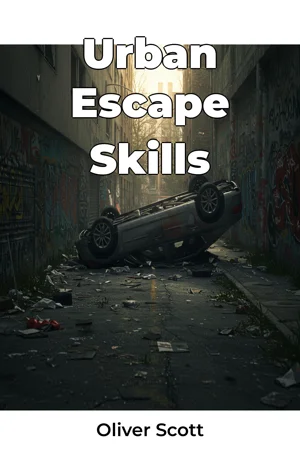
About This Book
Are you truly prepared to navigate the unexpected dangers lurking within the modern city? This book, *Urban Escape Skills*, provides a crucial guide to recognizing, assessing, and safely escaping urban hazards, all while adhering to fundamental security protocols. In an era marked by increasing civil unrest, natural disasters, and unpredictable events, understanding urban risk and preparedness is no longer optional – it's essential for personal safety and survival. This book focuses on three key areas: hazard identification and assessment, safe evacuation route planning, and basic security protocols in urban environments. Hazard identification involves learning to recognize potential threats, from structural weaknesses in buildings to signs of impending civil disorder. Effective evacuation planning requires understanding how to identify primary and alternate escape routes, accounting for potential bottlenecks and obstacles. Basic security protocols encompass situational awareness, threat avoidance, and methods for protecting oneself and others in hostile environments. We will delve into the historical context of urban disasters, examining case studies of events like the Great Fire of London, Hurricane Katrina, and recent instances of civil unrest. Analyzing these events provides valuable insights into common vulnerabilities and effective survival strategies. Readers should possess a basic understanding of urban geography and emergency response procedures. The central argument of *Urban Escape Skills* is that proactive preparation and informed decision-making significantly increase your chances of survival and well-being during urban emergencies. This book emphasizes that with the right knowledge and skills, individuals can mitigate risks and navigate dangerous situations effectively. The practical guidance within empowers readers to take control of their safety and security. The book begins by introducing the core concepts of urban risk assessment and security. Subsequent chapters develop these concepts, including: * **Chapter 1**: Assessing Urban Hazards: This section details how to identify potential threats, evaluate risk levels, and understand the vulnerabilities of urban infrastructure. * **Chapter 2**: Planning Safe Evacuation Routes: The book then moves into the practical application of creating multiple emergency escape routes, how to identifying rally points, and understanding urban navigation techniques. * **Chapter 3**: Applying Security Protocols: The final major segment deals with the basic security protocols and tactics needed to survive different urban threats, including situational awareness techniques, threat avoidance, and basic self-defense strategies. This book draws upon a range of sources, from official government reports on emergency preparedness to academic research on urban planning and security. We will also incorporate insights from interviews conducted with emergency responders, security professionals, and individuals who have experienced urban emergencies firsthand. *Urban Escape Skills* connects to several other fields, including urban planning, disaster management, and criminology. Understanding how cities are designed and managed is crucial for identifying potential hazards. Knowledge of disaster management principles informs effective evacuation strategies. Concepts from criminology provide insights into criminal behavior and threat assessment. These interdisciplinary connections are vital to a comprehensive understanding of urban escape and survival. The book distinguishes itself by offering a practical, actionable guide that combines theoretical knowledge with real-world application. While many resources focus solely on emergency preparedness in general, *Urban Escape Skills* is specifically tailored to the unique challenges of urban environments. The tone is informative and direct, aiming to be both accessible and authoritative. The writing style is clear and concise, avoiding jargon while providing essential information. The target audience includes urban dwellers, travelers, preparedness enthusiasts, and anyone concerned about personal safety in urban environments. This book offers valuable insights and tools for individuals seeking to enhance their awareness and preparedness. As a work of travel and current events, *Urban Escape Skills* fulfills the genre's expectation of providing timely, relevant information that empowers readers to navigate the world safely and confidently. The book focuses specifically on urban environments, excluding rural or wilderness survival techniques. It also emphasizes individual preparedness rather than large-scale emergency management strategies. Our scope is limited to readily available, low-cost methods that can be applied by anyone. Readers will learn how to conduct personal risk assessments of their homes, workplaces, and travel routes. They will also gain the skills to develop personalized evacuation plans, improve their situational awareness, and implement basic security measures to protect themselves and their loved ones. This book provides actionable intelligence that can be applied immediately to improve personal safety. While this book is not intended to promote panic, it acknowledges that there are ongoing debates about the best approaches to urban security and preparedness. We address various perspectives. *Urban Escape Skills* provides a comprehensive, evidence-based guide to navigating the complexities and potential dangers of urban environments. It emphasizes the importance of proactive preparation and informed decision-making.
Are you truly prepared to navigate the unexpected dangers lurking within the modern city? This book, *Urban Escape Skills*, provides a crucial guide to recognizing, assessing, and safely escaping urban hazards, all while adhering to fundamental security protocols. In an era marked by increasing civil unrest, natural disasters, and unpredictable events, understanding urban risk and preparedness is no longer optional – it's essential for personal safety and survival. This book focuses on three key areas: hazard identification and assessment, safe evacuation route planning, and basic security protocols in urban environments. Hazard identification involves learning to recognize potential threats, from structural weaknesses in buildings to signs of impending civil disorder. Effective evacuation planning requires understanding how to identify primary and alternate escape routes, accounting for potential bottlenecks and obstacles. Basic security protocols encompass situational awareness, threat avoidance, and methods for protecting oneself and others in hostile environments. We will delve into the historical context of urban disasters, examining case studies of events like the Great Fire of London, Hurricane Katrina, and recent instances of civil unrest. Analyzing these events provides valuable insights into common vulnerabilities and effective survival strategies. Readers should possess a basic understanding of urban geography and emergency response procedures. The central argument of *Urban Escape Skills* is that proactive preparation and informed decision-making significantly increase your chances of survival and well-being during urban emergencies. This book emphasizes that with the right knowledge and skills, individuals can mitigate risks and navigate dangerous situations effectively. The practical guidance within empowers readers to take control of their safety and security. The book begins by introducing the core concepts of urban risk assessment and security. Subsequent chapters develop these concepts, including: * **Chapter 1**: Assessing Urban Hazards: This section details how to identify potential threats, evaluate risk levels, and understand the vulnerabilities of urban infrastructure. * **Chapter 2**: Planning Safe Evacuation Routes: The book then moves into the practical application of creating multiple emergency escape routes, how to identifying rally points, and understanding urban navigation techniques. * **Chapter 3**: Applying Security Protocols: The final major segment deals with the basic security protocols and tactics needed to survive different urban threats, including situational awareness techniques, threat avoidance, and basic self-defense strategies. This book draws upon a range of sources, from official government reports on emergency preparedness to academic research on urban planning and security. We will also incorporate insights from interviews conducted with emergency responders, security professionals, and individuals who have experienced urban emergencies firsthand. *Urban Escape Skills* connects to several other fields, including urban planning, disaster management, and criminology. Understanding how cities are designed and managed is crucial for identifying potential hazards. Knowledge of disaster management principles informs effective evacuation strategies. Concepts from criminology provide insights into criminal behavior and threat assessment. These interdisciplinary connections are vital to a comprehensive understanding of urban escape and survival. The book distinguishes itself by offering a practical, actionable guide that combines theoretical knowledge with real-world application. While many resources focus solely on emergency preparedness in general, *Urban Escape Skills* is specifically tailored to the unique challenges of urban environments. The tone is informative and direct, aiming to be both accessible and authoritative. The writing style is clear and concise, avoiding jargon while providing essential information. The target audience includes urban dwellers, travelers, preparedness enthusiasts, and anyone concerned about personal safety in urban environments. This book offers valuable insights and tools for individuals seeking to enhance their awareness and preparedness. As a work of travel and current events, *Urban Escape Skills* fulfills the genre's expectation of providing timely, relevant information that empowers readers to navigate the world safely and confidently. The book focuses specifically on urban environments, excluding rural or wilderness survival techniques. It also emphasizes individual preparedness rather than large-scale emergency management strategies. Our scope is limited to readily available, low-cost methods that can be applied by anyone. Readers will learn how to conduct personal risk assessments of their homes, workplaces, and travel routes. They will also gain the skills to develop personalized evacuation plans, improve their situational awareness, and implement basic security measures to protect themselves and their loved ones. This book provides actionable intelligence that can be applied immediately to improve personal safety. While this book is not intended to promote panic, it acknowledges that there are ongoing debates about the best approaches to urban security and preparedness. We address various perspectives. *Urban Escape Skills* provides a comprehensive, evidence-based guide to navigating the complexities and potential dangers of urban environments. It emphasizes the importance of proactive preparation and informed decision-making.
"Urban Escape Skills" offers vital strategies for navigating the increasing hazards found in modern cities. It emphasizes preparedness through understanding urban risk assessment, safe evacuation routes, and essential security protocols. Readers will discover how to identify potential threats, such as structural weaknesses or signs of civil unrest, and plan multiple escape routes accounting for potential bottlenecks. The book argues that proactive preparation significantly increases survival chances during urban emergencies. The book progresses logically, starting with assessing urban hazards, then moving into planning safe evacuation routes, and finally covering essential security protocols. Examining historical urban disasters, like the Great Fire of London or Hurricane Katrina, provides valuable lessons on vulnerabilities and survival tactics. By combining theoretical knowledge with practical, real-world applications, "Urban Escape Skills" empowers readers to enhance their awareness and preparedness, offering a unique guide tailored specifically to the challenges of urban environments.
Book Details
ISBN
9788233977047
Publisher
Publifye AS
Your Licenses
You don't own any licenses for this book
Purchase a license below to unlock this book and download the EPUB.
Purchase License
Select a tier to unlock this book
Need bulk licensing?
Contact us for enterprise agreements.