
About This Book
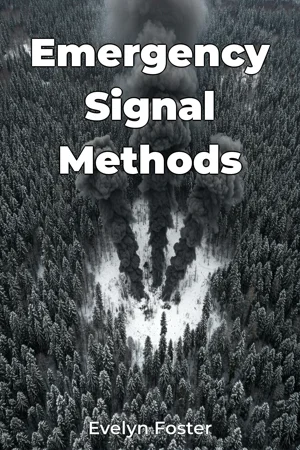
In a wilderness emergency, can you confidently signal for help? Understanding how to create effective distress signals is crucial for survival. "Emergency Signal Methods" is a technical guide designed to equip individuals with the knowledge and skills necessary to generate reliable and visible distress signals in a variety of environments. This book delves into the three core components of successful signaling: signal patterns, material selection, and strategic positioning, all considered within the framework of international search and rescue (SAR) protocols. The significance of this knowledge cannot be overstated. Whether you are a hiker, sailor, pilot or simply venturing into remote areas, knowing how to attract attention in a crisis can dramatically increase your chances of rescue. This book emphasizes that effective signaling is not merely about chance; it is about understanding the science and strategy behind attracting attention from search and rescue teams. We begin by establishing a practical understanding of the underlying principles of visual and auditory signaling, detailing the evolution of SAR practices and the technological advancements that influence search methodologies today. While no prior expertise is required, a basic familiarity with map reading and compass navigation will be beneficial. The central argument of "Emergency Signal Methods" is that effective distress signaling is a learnable skill, grounded in scientific principles and standardized procedures. By mastering signal patterns, understanding material properties, and strategically positioning signals, anyone can significantly improve their chances of being located and rescued in an emergency. The book is structured to progressively build your understanding. Part 1 introduces the essential principles of distress signaling, including an overview of internationally recognized signals, such as the "Rule of Threes" and the universal distress signal. Part 2 focuses on material selection, examining the properties of various natural and man-made materials for signal creation. This section details the optimal use of fire, smoke, reflective materials, and improvised tools like signal mirrors. Part 3 emphasizes the importance of strategic positioning, detailing how terrain, weather conditions, and the likely flight paths of search aircraft influence signal visibility. Practical techniques for selecting optimal signal locations are covered. The book culminates in a comprehensive guide to real-world application, including case studies of successful (and unsuccessful) rescue operations. Appendices offer checklists and practical exercises to reinforce learning. The information presented is supported by extensive field research, analysis of SAR incident reports, and expert consultations with search and rescue professionals. Original data from controlled experiments on signal visibility under varying conditions is also presented. "Emergency Signal Methods" draws upon principles from several disciplines, including: * Material Science: Understanding the properties of materials for signal creation. * Meteorology: Understanding weather's impact on signal effectiveness. * Aviation: To understand search patterns and visual acquisition of signals from the air. What distinguishes this book is its practical, hands-on approach. It emphasizes skill-building through real-world exercises and case studies, providing a level of detail rarely found in general survival guides. The tone is informative and direct, prioritizing clarity and accuracy. The intended audience includes outdoor enthusiasts, survivalists, search and rescue volunteers, and anyone who travels in remote locations. The book will provide valuable insights and practical skills to anyone seeking to improve their preparedness for emergency situations. This book conforms to the expectations of the technology and travel genres by providing actionable information and practical advice grounded in current best practices and real-world applications. The scope of this book is limited to visual and auditory distress signals suitable for terrestrial environments. While the principles discussed are broadly applicable, it does not cover advanced signaling techniques such as satellite communication or radio transmissions. The knowledge presented can be directly applied in pre-trip planning, survival training, and emergency situations to improve the likelihood of a successful rescue. While the effectiveness of certain signaling methods can be debated (e.g., the optimal size and composition of signal fires), this book presents a balanced perspective, drawing upon both scientific research and practical experience to offer evidence-based recommendations.
In a wilderness emergency, can you confidently signal for help? Understanding how to create effective distress signals is crucial for survival. "Emergency Signal Methods" is a technical guide designed to equip individuals with the knowledge and skills necessary to generate reliable and visible distress signals in a variety of environments. This book delves into the three core components of successful signaling: signal patterns, material selection, and strategic positioning, all considered within the framework of international search and rescue (SAR) protocols. The significance of this knowledge cannot be overstated. Whether you are a hiker, sailor, pilot or simply venturing into remote areas, knowing how to attract attention in a crisis can dramatically increase your chances of rescue. This book emphasizes that effective signaling is not merely about chance; it is about understanding the science and strategy behind attracting attention from search and rescue teams. We begin by establishing a practical understanding of the underlying principles of visual and auditory signaling, detailing the evolution of SAR practices and the technological advancements that influence search methodologies today. While no prior expertise is required, a basic familiarity with map reading and compass navigation will be beneficial. The central argument of "Emergency Signal Methods" is that effective distress signaling is a learnable skill, grounded in scientific principles and standardized procedures. By mastering signal patterns, understanding material properties, and strategically positioning signals, anyone can significantly improve their chances of being located and rescued in an emergency. The book is structured to progressively build your understanding. Part 1 introduces the essential principles of distress signaling, including an overview of internationally recognized signals, such as the "Rule of Threes" and the universal distress signal. Part 2 focuses on material selection, examining the properties of various natural and man-made materials for signal creation. This section details the optimal use of fire, smoke, reflective materials, and improvised tools like signal mirrors. Part 3 emphasizes the importance of strategic positioning, detailing how terrain, weather conditions, and the likely flight paths of search aircraft influence signal visibility. Practical techniques for selecting optimal signal locations are covered. The book culminates in a comprehensive guide to real-world application, including case studies of successful (and unsuccessful) rescue operations. Appendices offer checklists and practical exercises to reinforce learning. The information presented is supported by extensive field research, analysis of SAR incident reports, and expert consultations with search and rescue professionals. Original data from controlled experiments on signal visibility under varying conditions is also presented. "Emergency Signal Methods" draws upon principles from several disciplines, including: * Material Science: Understanding the properties of materials for signal creation. * Meteorology: Understanding weather's impact on signal effectiveness. * Aviation: To understand search patterns and visual acquisition of signals from the air. What distinguishes this book is its practical, hands-on approach. It emphasizes skill-building through real-world exercises and case studies, providing a level of detail rarely found in general survival guides. The tone is informative and direct, prioritizing clarity and accuracy. The intended audience includes outdoor enthusiasts, survivalists, search and rescue volunteers, and anyone who travels in remote locations. The book will provide valuable insights and practical skills to anyone seeking to improve their preparedness for emergency situations. This book conforms to the expectations of the technology and travel genres by providing actionable information and practical advice grounded in current best practices and real-world applications. The scope of this book is limited to visual and auditory distress signals suitable for terrestrial environments. While the principles discussed are broadly applicable, it does not cover advanced signaling techniques such as satellite communication or radio transmissions. The knowledge presented can be directly applied in pre-trip planning, survival training, and emergency situations to improve the likelihood of a successful rescue. While the effectiveness of certain signaling methods can be debated (e.g., the optimal size and composition of signal fires), this book presents a balanced perspective, drawing upon both scientific research and practical experience to offer evidence-based recommendations.
"Emergency Signal Methods" offers crucial knowledge for anyone venturing into remote areas, focusing on how to create effective distress signals. It emphasizes that signaling isn't just luck, but a science-based skill involving signal patterns, material selection, and strategic positioning, all within international search and rescue standards. For example, understanding how weather impacts signal visibility can dramatically improve your chances of being seen. This book uniquely combines practical, hands-on advice with scientific principles, distinguishing it from general survival guides. It begins by establishing the core principles of visual and auditory signaling, detailing the evolution of SAR practices and the technological advancements that influence search methodologies. One key insight involves understanding the "Rule of Threes" and the universal distress signal. The book progresses systematically. It starts with the essentials of distress signaling, moves to material selection (like using fire, smoke, or signal mirrors), and then emphasizes strategic positioning based on terrain and weather. Case studies of successful and unsuccessful rescues are included to reinforce learning, making it an invaluable resource for outdoor enthusiasts and survivalists.
Book Details
ISBN
9788233976941
Publisher
Publifye AS
Your Licenses
You don't own any licenses for this book
Purchase a license below to unlock this book and download the EPUB.
Purchase License
Select a tier to unlock this book
Need bulk licensing?
Contact us for enterprise agreements.