
About This Book
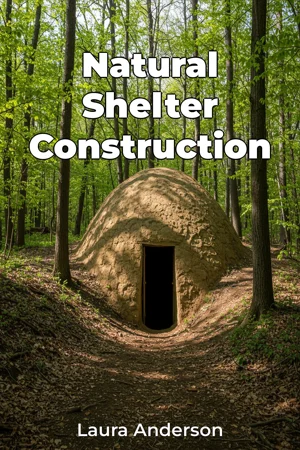
Have you ever considered the possibility of building a sustainable shelter using only materials found in your immediate environment? This book, "Natural Shelter Construction," delves into the engineering principles and practical techniques required to create stable and thermally efficient shelters directly from nature. It bridges the gap between theoretical survival knowledge and the tangible application of architectural design, offering a comprehensive guide to constructing viable habitats in diverse environments. At its core, this book focuses on three key areas: thermal efficiency, structural integrity, and informed site selection. Thermal efficiency is critical for maintaining a comfortable and survivable internal climate, mitigating the risks of hypothermia or hyperthermia. We explore how different natural materials—from earth and timber to grasses and leaves— possess varying thermal properties, and how these properties can be harnessed through specific construction techniques like insulation and ventilation. Structural integrity is paramount for ensuring the shelter can withstand environmental stressors such as wind, rain, and snow. This section details the principles of load-bearing structures, material strength, and jointing methods applicable to natural building. Site selection is examined as the foundational element of successful shelter construction. We investigate optimal locations for minimizing exposure to the elements, maximizing access to resources, and mitigating potential hazards. The book presents survival research, environmental factors, and resource availability. The central argument of "Natural Shelter Construction" is that a deep understanding of engineering principles, combined with a respect for and knowledge of natural materials, empowers individuals to create sustainable and effective shelters in almost any environment. This is not merely a theoretical exercise; it is a practical skill with applications ranging from emergency preparedness to sustainable living, enhancing resilience and self-sufficiency in an increasingly unpredictable world. The book begins by introducing the fundamental concepts of shelter design and the properties of various natural materials. It then develops these ideas through dedicated chapters, focusing on specific construction techniques for different climatic zones and material types. The book includes case studies and step by step instructions for building various shelter types. The book culminates with a discussion of the long-term maintenance and environmental impact of natural shelters, advocating for responsible and sustainable building practices. The arguments presented are supported by a combination of scientific research, engineering principles, and established practices in traditional building. Data from thermal performance studies, structural analysis reports, and ethnographic research on indigenous building techniques are used to validate the methodologies proposed. The book also includes original data collected from field tests and experimental builds, offering a unique perspective on the real-world performance of natural shelters. "Natural Shelter Construction" draws connections to several interdisciplinary fields. Firstly, it integrates principles from ecology, considering the environmental impact of material sourcing and construction. Secondly, it incorporates knowledge from anthropology, examining traditional building practices of diverse cultures. Finally, it applies concepts from material science, analyzing the properties and performance of natural construction materials. These interdisciplinary connections enhance the book's argument by demonstrating the holistic nature of shelter construction and its integration with the environment and human culture. This book provides a practical, engineering-focused approach to natural shelter construction, bridging the gap between theoretical knowledge and applied practice. It offers a valuable resource for anyone interested in emergency preparedness, sustainable living, and the art of building with nature. While the book covers a wide range of environments and construction techniques, it is not intended to be an exhaustive guide to every possible scenario. Instead, it provides a solid foundation of principles and techniques that can be adapted to specific needs and environments. The information presented in "Natural Shelter Construction" can be applied in a variety of real-world scenarios, from building emergency shelters in wilderness environments to constructing sustainable homes in rural communities. It is relevant to survivalists, outdoor enthusiasts, architects interested in sustainable design, and anyone seeking to reduce their environmental impact and enhance their self-sufficiency. The book offers practical guidance and empowers readers to take control of their shelter needs, fostering resilience and a deeper connection with the natural world.
Have you ever considered the possibility of building a sustainable shelter using only materials found in your immediate environment? This book, "Natural Shelter Construction," delves into the engineering principles and practical techniques required to create stable and thermally efficient shelters directly from nature. It bridges the gap between theoretical survival knowledge and the tangible application of architectural design, offering a comprehensive guide to constructing viable habitats in diverse environments. At its core, this book focuses on three key areas: thermal efficiency, structural integrity, and informed site selection. Thermal efficiency is critical for maintaining a comfortable and survivable internal climate, mitigating the risks of hypothermia or hyperthermia. We explore how different natural materials—from earth and timber to grasses and leaves— possess varying thermal properties, and how these properties can be harnessed through specific construction techniques like insulation and ventilation. Structural integrity is paramount for ensuring the shelter can withstand environmental stressors such as wind, rain, and snow. This section details the principles of load-bearing structures, material strength, and jointing methods applicable to natural building. Site selection is examined as the foundational element of successful shelter construction. We investigate optimal locations for minimizing exposure to the elements, maximizing access to resources, and mitigating potential hazards. The book presents survival research, environmental factors, and resource availability. The central argument of "Natural Shelter Construction" is that a deep understanding of engineering principles, combined with a respect for and knowledge of natural materials, empowers individuals to create sustainable and effective shelters in almost any environment. This is not merely a theoretical exercise; it is a practical skill with applications ranging from emergency preparedness to sustainable living, enhancing resilience and self-sufficiency in an increasingly unpredictable world. The book begins by introducing the fundamental concepts of shelter design and the properties of various natural materials. It then develops these ideas through dedicated chapters, focusing on specific construction techniques for different climatic zones and material types. The book includes case studies and step by step instructions for building various shelter types. The book culminates with a discussion of the long-term maintenance and environmental impact of natural shelters, advocating for responsible and sustainable building practices. The arguments presented are supported by a combination of scientific research, engineering principles, and established practices in traditional building. Data from thermal performance studies, structural analysis reports, and ethnographic research on indigenous building techniques are used to validate the methodologies proposed. The book also includes original data collected from field tests and experimental builds, offering a unique perspective on the real-world performance of natural shelters. "Natural Shelter Construction" draws connections to several interdisciplinary fields. Firstly, it integrates principles from ecology, considering the environmental impact of material sourcing and construction. Secondly, it incorporates knowledge from anthropology, examining traditional building practices of diverse cultures. Finally, it applies concepts from material science, analyzing the properties and performance of natural construction materials. These interdisciplinary connections enhance the book's argument by demonstrating the holistic nature of shelter construction and its integration with the environment and human culture. This book provides a practical, engineering-focused approach to natural shelter construction, bridging the gap between theoretical knowledge and applied practice. It offers a valuable resource for anyone interested in emergency preparedness, sustainable living, and the art of building with nature. While the book covers a wide range of environments and construction techniques, it is not intended to be an exhaustive guide to every possible scenario. Instead, it provides a solid foundation of principles and techniques that can be adapted to specific needs and environments. The information presented in "Natural Shelter Construction" can be applied in a variety of real-world scenarios, from building emergency shelters in wilderness environments to constructing sustainable homes in rural communities. It is relevant to survivalists, outdoor enthusiasts, architects interested in sustainable design, and anyone seeking to reduce their environmental impact and enhance their self-sufficiency. The book offers practical guidance and empowers readers to take control of their shelter needs, fostering resilience and a deeper connection with the natural world.
"Natural Shelter Construction" explores how to build sustainable shelters using only natural materials. This book bridges architectural design with practical survival skills, focusing on thermal efficiency, structural integrity, and smart site selection. Discover how different natural materials, like earth and timber, have unique thermal properties that can be optimized for comfortable shelter. Learn the principles of load-bearing structures and jointing methods to ensure your shelter withstands environmental stressors. The book starts with design fundamentals and material properties, progressing to construction techniques for various climates. It emphasizes the importance of understanding engineering principles and respecting natural materials to create effective shelters in diverse environments. This approach demonstrates that building with nature is a practical skill applicable to emergency preparedness and sustainable living, enhancing resilience and self-sufficiency.
Book Details
ISBN
9788233976897
Publisher
Publifye AS
Your Licenses
You don't own any licenses for this book
Purchase a license below to unlock this book and download the EPUB.
Purchase License
Select a tier to unlock this book
Need bulk licensing?
Contact us for enterprise agreements.