
About This Book
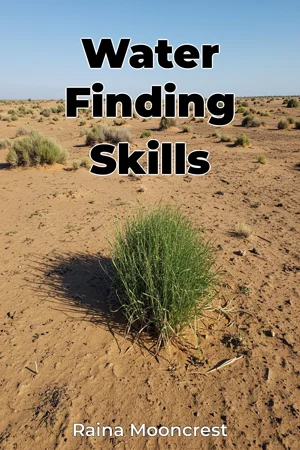
How confident are you that you could find and purify water in a survival situation? This book, "Water Finding Skills," is designed to equip you with the knowledge and techniques necessary to reliably locate, collect, and purify water in diverse environments, all while adhering to established wilderness safety guidelines. We focus on practical, field-tested methods, moving beyond theoretical discussions to actionable skills that could save your life. This book emphasizes two crucial topics: efficient water sourcing and effective purification techniques. Efficient water sourcing involves understanding geological indicators, plant life signs, and animal behavior patterns that can lead you to hidden water sources. We delve into varied methods, from traditional dowsing techniques to modern scientific approaches based on evapotranspiration and soil analysis. Reliable purification techniques are equally vital. The book covers a spectrum of purification methods, ranging from simple boiling and solar disinfection (SODIS) to constructing improvised filtration systems using natural materials. The significance of these topics lies in their immediate impact on survival; dehydration is a rapid and debilitating threat in wilderness situations. To understand modern water finding and purification, we examine the historical context of these practices. Early humans relied on keen observation and inherited knowledge to secure water. These methods have evolved over time, incorporating scientific understanding of hydrology and microbiology. The reader should have a basic understanding of map reading and outdoor navigation but no specialized scientific knowledge is needed. We provide clear explanations of necessary scientific principles. The central argument of "Water Finding Skills" is that acquiring specific knowledge and skills in water procurement significantly increases the chances of survival and comfort in any wilderness or disaster scenario. This is not just about knowing that water is necessary, but understanding where to find it, how to obtain it, and how to render it safe for consumption. The book is structured into three main parts. The first section introduces core concepts, defining different types of water sources (surface water, groundwater, atmospheric water) and explaining the fundamentals of water contamination. The second section details water location techniques across various biomes: forests, deserts, mountains, and coastal regions. Each chapter will cover specific strategies applicable to that environment, supported by real-world examples and case studies. The final section focuses on water purification, examining various methods in detail, including their effectiveness against different types of pathogens and contaminants, and the advantages/disadvantages of each. The information presented is derived from a combination of scientific literature, field research, and expert interviews with survival instructors and hydrologists. We analyze case studies of successful and unsuccessful water procurement attempts in survival situations. "Water Finding Skills" connects to several other fields. Hydrology provides the scientific foundation for understanding water cycles and groundwater movement. Botany helps identify water-bearing plants and indicator species. Emergency medicine informs the discussion of rehydration strategies and the treatment of waterborne illnesses. The book's unique approach lies in its emphasis on practical application. While we cover the scientific principles behind each technique, the focus remains on how to implement these methods in real-world scenarios with limited resources. Checklists, step-by-step instructions, and illustrative diagrams supplement the text. The tone is informative and direct, prioritizing clarity and accuracy. We strive to present complex information in an accessible manner, avoiding jargon and technical language where possible. The primary target audience is outdoor enthusiasts: hikers, campers, hunters, and survivalists. It is also a valuable resource for emergency preparedness professionals and anyone interested in learning vital wilderness survival skills. As an adventure and nature book, it aligns with the genre's focus on practical skills and self-reliance. This book provides actionable advice rather than abstract philosophical musings. The scope is limited to water finding and purification, excluding other aspects of survival such as shelter building or fire starting, which are comprehensively addressed in other resources. We explicitly advise against attempting certain advanced techniques without proper training and caution against disturbing fragile ecosystems in the pursuit of water. The skills taught can be directly applied by readers in emergency situations, during outdoor adventures, or as part of a comprehensive preparedness plan. While there is general agreement on the importance of water purification, debates exist regarding the effectiveness of certain improvised methods against specific pathogens. We address these controversies by presenting the available evidence and recommending a tiered approach to purification, prioritizing the most effective techniques when possible.
How confident are you that you could find and purify water in a survival situation? This book, "Water Finding Skills," is designed to equip you with the knowledge and techniques necessary to reliably locate, collect, and purify water in diverse environments, all while adhering to established wilderness safety guidelines. We focus on practical, field-tested methods, moving beyond theoretical discussions to actionable skills that could save your life. This book emphasizes two crucial topics: efficient water sourcing and effective purification techniques. Efficient water sourcing involves understanding geological indicators, plant life signs, and animal behavior patterns that can lead you to hidden water sources. We delve into varied methods, from traditional dowsing techniques to modern scientific approaches based on evapotranspiration and soil analysis. Reliable purification techniques are equally vital. The book covers a spectrum of purification methods, ranging from simple boiling and solar disinfection (SODIS) to constructing improvised filtration systems using natural materials. The significance of these topics lies in their immediate impact on survival; dehydration is a rapid and debilitating threat in wilderness situations. To understand modern water finding and purification, we examine the historical context of these practices. Early humans relied on keen observation and inherited knowledge to secure water. These methods have evolved over time, incorporating scientific understanding of hydrology and microbiology. The reader should have a basic understanding of map reading and outdoor navigation but no specialized scientific knowledge is needed. We provide clear explanations of necessary scientific principles. The central argument of "Water Finding Skills" is that acquiring specific knowledge and skills in water procurement significantly increases the chances of survival and comfort in any wilderness or disaster scenario. This is not just about knowing that water is necessary, but understanding where to find it, how to obtain it, and how to render it safe for consumption. The book is structured into three main parts. The first section introduces core concepts, defining different types of water sources (surface water, groundwater, atmospheric water) and explaining the fundamentals of water contamination. The second section details water location techniques across various biomes: forests, deserts, mountains, and coastal regions. Each chapter will cover specific strategies applicable to that environment, supported by real-world examples and case studies. The final section focuses on water purification, examining various methods in detail, including their effectiveness against different types of pathogens and contaminants, and the advantages/disadvantages of each. The information presented is derived from a combination of scientific literature, field research, and expert interviews with survival instructors and hydrologists. We analyze case studies of successful and unsuccessful water procurement attempts in survival situations. "Water Finding Skills" connects to several other fields. Hydrology provides the scientific foundation for understanding water cycles and groundwater movement. Botany helps identify water-bearing plants and indicator species. Emergency medicine informs the discussion of rehydration strategies and the treatment of waterborne illnesses. The book's unique approach lies in its emphasis on practical application. While we cover the scientific principles behind each technique, the focus remains on how to implement these methods in real-world scenarios with limited resources. Checklists, step-by-step instructions, and illustrative diagrams supplement the text. The tone is informative and direct, prioritizing clarity and accuracy. We strive to present complex information in an accessible manner, avoiding jargon and technical language where possible. The primary target audience is outdoor enthusiasts: hikers, campers, hunters, and survivalists. It is also a valuable resource for emergency preparedness professionals and anyone interested in learning vital wilderness survival skills. As an adventure and nature book, it aligns with the genre's focus on practical skills and self-reliance. This book provides actionable advice rather than abstract philosophical musings. The scope is limited to water finding and purification, excluding other aspects of survival such as shelter building or fire starting, which are comprehensively addressed in other resources. We explicitly advise against attempting certain advanced techniques without proper training and caution against disturbing fragile ecosystems in the pursuit of water. The skills taught can be directly applied by readers in emergency situations, during outdoor adventures, or as part of a comprehensive preparedness plan. While there is general agreement on the importance of water purification, debates exist regarding the effectiveness of certain improvised methods against specific pathogens. We address these controversies by presenting the available evidence and recommending a tiered approach to purification, prioritizing the most effective techniques when possible.
"Water Finding Skills" offers crucial knowledge for anyone venturing into the wilderness or preparing for emergencies, focusing on the vital art of procuring safe drinking water. The book uniquely combines time-tested techniques with modern scientific understanding, emphasizing practical application over theoretical discussion. Did you know that understanding plant life, like observing specific types of vegetation, can lead you to hidden water sources? Or that even simple methods like solar disinfection (SODIS) can render water potable under the right conditions? The book progresses methodically, starting with core concepts of water sources and contamination before exploring water location strategies across diverse biomes, from forests to deserts. It then delves into purification methods, assessing their effectiveness against various pathogens. What sets this book apart is its focus on real-world scenarios, providing step-by-step instructions, checklists, and diagrams to ensure readers can confidently apply these survival skills in any adventure or emergency.
Book Details
ISBN
9788233976712
Publisher
Publifye AS
Your Licenses
You don't own any licenses for this book
Purchase a license below to unlock this book and download the EPUB.
Purchase License
Select a tier to unlock this book
Need bulk licensing?
Contact us for enterprise agreements.