
About This Book
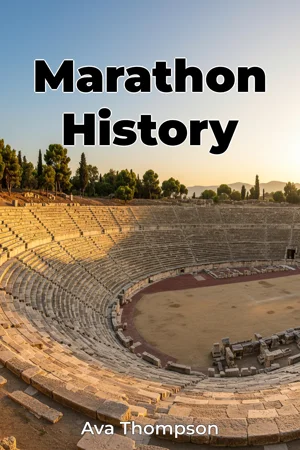
What if everything you thought you knew about the marathon was just the tip of the iceberg? This book, "Marathon History," delves into the captivating story of the marathon, exploring its evolution from ancient origins to its current status as a global phenomenon. We examine not only the races themselves but also the remarkable athletes who have redefined human endurance and reshaped the limits of the possible. This work focuses on three key areas: first, uncovering the historical roots of the marathon narrative, tracing the legend of Pheidippides and the creation of the modern Olympic marathon in 1896. Second, documenting the evolution of training methodologies and nutritional science that have fueled record-breaking performances. Third, analyzing the cultural and societal impact of the marathon, examining its role in promoting health, community, and global unity. These topics are vital because they offer a complete understanding of an event that transcends mere sport; it’s a symbol of human perseverance. To fully appreciate the marathon's significance, it’s essential to understand its historical context, from ancient Greece to the Victorian era's fascination with athleticism and the rise of modern sporting competitions. With that basis, we embark on a journey to understand the central argument: the marathon is not simply a race but a cultural artifact that reflects humanity’s ongoing quest to define its physical and mental boundaries. This argument is important because it provides a deeper appreciation of the marathon's enduring appeal and its effect on our understanding of human potential. The book is structured to guide the reader through this journey. We begin by deconstructing the mythology surrounding the marathon's origin. Then, we progress through milestone events, such as the early Olympic Games, the rise of marathon legends like Emil Zátopek, and the introduction of women into the sport. We explore the scientific advancements in training, nutrition, and sports medicine that have propelled runners to achieve faster times and greater endurance. The book culminates with an look at the present-day marathon landscape, including its global reach, its economic impact, and its role in promoting social causes. The evidence presented relies on diverse sources: firsthand accounts from historical documents, modern scientific research on exercise physiology, statistical analyses of race results, and interviews with marathon runners and coaches. This book uses data from organizations like the Association of Road Racing Statisticians (ARRS) and research published in peer-reviewed journals. "Marathon History" also connects to other fields such as sports psychology, cultural anthropology, and exercise physiology. These interdisciplinary connections add depth to our understanding of the marathon as a complex phenomenon influenced by psychological, social, and physical factors. What sets this book apart is its comprehensive exploration of the marathon's historical, scientific, and cultural dimensions. It avoids simplistic narratives, offering a nuanced understanding of the complexities and contradictions inherent in this iconic event. Written in a style that is both academic and accessible, "Marathon History" is intended for a wide audience. This includes sports enthusiasts, history buffs, athletes, coaches, and anyone curious about the human capacity for endurance. It will be valuable to them because it provides a detailed, research-backed account of a sport that continues to inspire and challenge us. As a history book, "Marathon History" adheres to the conventions of scholarly research, including rigorous sourcing, objective analysis, and a commitment to presenting multiple perspectives. The scope of this book covers the marathon from antiquity to the present day, but focuses primarily on the modern era, beginning with the first modern Olympic Games. The information in this book can educate runners on training strategies. Furthermore, it informs public awareness about the historical dimension of this sport. While we address controversies such as doping and the ongoing debate over record eligibility, our primary focus remains on the historical narrative and the evolution of our understanding of human endurance.
What if everything you thought you knew about the marathon was just the tip of the iceberg? This book, "Marathon History," delves into the captivating story of the marathon, exploring its evolution from ancient origins to its current status as a global phenomenon. We examine not only the races themselves but also the remarkable athletes who have redefined human endurance and reshaped the limits of the possible. This work focuses on three key areas: first, uncovering the historical roots of the marathon narrative, tracing the legend of Pheidippides and the creation of the modern Olympic marathon in 1896. Second, documenting the evolution of training methodologies and nutritional science that have fueled record-breaking performances. Third, analyzing the cultural and societal impact of the marathon, examining its role in promoting health, community, and global unity. These topics are vital because they offer a complete understanding of an event that transcends mere sport; it’s a symbol of human perseverance. To fully appreciate the marathon's significance, it’s essential to understand its historical context, from ancient Greece to the Victorian era's fascination with athleticism and the rise of modern sporting competitions. With that basis, we embark on a journey to understand the central argument: the marathon is not simply a race but a cultural artifact that reflects humanity’s ongoing quest to define its physical and mental boundaries. This argument is important because it provides a deeper appreciation of the marathon's enduring appeal and its effect on our understanding of human potential. The book is structured to guide the reader through this journey. We begin by deconstructing the mythology surrounding the marathon's origin. Then, we progress through milestone events, such as the early Olympic Games, the rise of marathon legends like Emil Zátopek, and the introduction of women into the sport. We explore the scientific advancements in training, nutrition, and sports medicine that have propelled runners to achieve faster times and greater endurance. The book culminates with an look at the present-day marathon landscape, including its global reach, its economic impact, and its role in promoting social causes. The evidence presented relies on diverse sources: firsthand accounts from historical documents, modern scientific research on exercise physiology, statistical analyses of race results, and interviews with marathon runners and coaches. This book uses data from organizations like the Association of Road Racing Statisticians (ARRS) and research published in peer-reviewed journals. "Marathon History" also connects to other fields such as sports psychology, cultural anthropology, and exercise physiology. These interdisciplinary connections add depth to our understanding of the marathon as a complex phenomenon influenced by psychological, social, and physical factors. What sets this book apart is its comprehensive exploration of the marathon's historical, scientific, and cultural dimensions. It avoids simplistic narratives, offering a nuanced understanding of the complexities and contradictions inherent in this iconic event. Written in a style that is both academic and accessible, "Marathon History" is intended for a wide audience. This includes sports enthusiasts, history buffs, athletes, coaches, and anyone curious about the human capacity for endurance. It will be valuable to them because it provides a detailed, research-backed account of a sport that continues to inspire and challenge us. As a history book, "Marathon History" adheres to the conventions of scholarly research, including rigorous sourcing, objective analysis, and a commitment to presenting multiple perspectives. The scope of this book covers the marathon from antiquity to the present day, but focuses primarily on the modern era, beginning with the first modern Olympic Games. The information in this book can educate runners on training strategies. Furthermore, it informs public awareness about the historical dimension of this sport. While we address controversies such as doping and the ongoing debate over record eligibility, our primary focus remains on the historical narrative and the evolution of our understanding of human endurance.
"Marathon History" explores the captivating evolution of the marathon, transforming from its ancient roots to a global phenomenon. Delving into sports history, the book highlights the legend of Pheidippides and the creation of the modern Olympic marathon in 1896, showcasing how the event has come to symbolize human perseverance. Readers will discover how advancements in training methodologies and sports science have fueled record-breaking performances, pushing the limits of human endurance. The book uniquely examines the marathon as a cultural artifact, reflecting humanity’s quest to define its physical and mental boundaries. It progresses chronologically, starting with the deconstruction of the marathon's mythology and moving through milestone events, including the rise of marathon legends and the introduction of women into the sport. The approach involves diverse sources, from historical documents to modern scientific research, offering a comprehensive understanding of the marathon's historical, scientific, and cultural dimensions.
Book Details
ISBN
9788233976279
Publisher
Publifye AS
Your Licenses
You don't own any licenses for this book
Purchase a license below to unlock this book and download the EPUB.
Purchase License
Select a tier to unlock this book
Need bulk licensing?
Contact us for enterprise agreements.