
About This Book
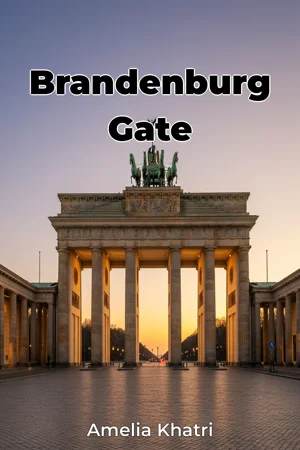
What if a single monument could embody a nation's division and its triumphant reunification? "Brandenburg Gate" explores exactly that, dissecting the iconic Berlin landmark’s multifaceted history and its pivotal symbolic role in the story of Germany. This book delves into the intricate layers of the Gate's past, present, and enduring significance. This book examines three key topics around the Brandenburg Gate. First, its construction and early history as a symbol of Prussian power exposes its initial purpose and the evolving perception of the monument. Second, its role during the Cold War illustrates the Gate as an unwilling participant in the city's and the nation's division including the period when it stood isolated in the no-man's land of the Berlin Wall. Third, the Gate as a unifier examines its symbolism in the events leading up to and following German reunification, covering its transformation into a national emblem of unity and freedom. Understanding these periods is crucial to grasping the Gate's complex and ever-changing representation of the German state. The book provides essential historical context, beginning with the late 18th-century political landscape of Prussia and the evolving notions of national identity in Europe. It then traces the Gate’s experiences through the Napoleonic era, the rise and fall of the German Empire, the Weimar Republic, Nazi Germany including its appropriation of the site, the post-World War II division, and the Cold War setting. Finally, it examines the build-up to the fall of the Berlin Wall, the reunification process, and its modern context within a unified Germany. No prior specialist knowledge is needed, but some familiarity with 20th-century European history will enrich the reading experience. The central argument of "Brandenburg Gate" is that its significance transcends its physical structure. The Gate has served as a reflection of Germany's fluctuating national identity, geopolitical ambitions, and eventual reunification. This argument is important because understanding the Gate's story provides a valuable lens through which to view the broader narrative of German history. It also illustrates how physical structures transcend their initial purposes and take on new layers of meaning that reflect the surrounding social and political environments. The book begins by introducing the Gate’s architectural design and historical background, detailing its construction under Prussian King Frederick William II. The book then develops the argument chronologically, with chapters dedicated to key periods: the Gate's role in Prussian and German history, its experience during the Weimar Republic and Nazi Germany, its position during the Cold War, and its transformation into an emblem of reunification. The book culminates by examining the Gate’s modern significance in a unified Germany, addressing its role in national celebrations, political demonstrations, and cultural memory. The analysis is supported by diverse source material, including archival documents, photographs, political speeches, and eyewitness accounts. The book also draws upon architectural studies, historical analyses, and sociological research to provide a comprehensive and multifaceted perspective. This book connects to other fields, such as political science, sociology, and architectural history. Understanding the Gate’s symbolic significance requires examining the political forces that shaped its meaning, the social dynamics that influenced its perception, and the architectural design that enabled its symbolic function. "Brandenburg Gate" offers an in-depth, chronological analysis of the monument's history, providing fresh insights into its evolving role in German society. It avoids overly academic jargon, instead aiming for a clear and engaging narrative style suitable for a broad audience. This book is aimed at history enthusiasts, students of German studies, architecture aficionados, and general readers interested in European history and cultural symbols. It offers a valuable resource for anyone seeking a more profound grasp of Germany’s past and the enduring power of monuments. As a work in the genres of 'World History, History World, Architecture, Architecture General', this book aims to fulfill genre expectations by providing well-researched information, clear explanations, and a balanced perspective. The book's scope is intentionally limited to the Brandenburg Gate and its direct historical context, without delving into broader discussions of German art or literature. An understanding of such transformations of iconic places, as provided in this book, can be applied to other monuments around the world. It highlights the importance of historic preservation, interpretation, and education to ensure these symbols continue to connect current and future generations to history in a meaningful way.
What if a single monument could embody a nation's division and its triumphant reunification? "Brandenburg Gate" explores exactly that, dissecting the iconic Berlin landmark’s multifaceted history and its pivotal symbolic role in the story of Germany. This book delves into the intricate layers of the Gate's past, present, and enduring significance. This book examines three key topics around the Brandenburg Gate. First, its construction and early history as a symbol of Prussian power exposes its initial purpose and the evolving perception of the monument. Second, its role during the Cold War illustrates the Gate as an unwilling participant in the city's and the nation's division including the period when it stood isolated in the no-man's land of the Berlin Wall. Third, the Gate as a unifier examines its symbolism in the events leading up to and following German reunification, covering its transformation into a national emblem of unity and freedom. Understanding these periods is crucial to grasping the Gate's complex and ever-changing representation of the German state. The book provides essential historical context, beginning with the late 18th-century political landscape of Prussia and the evolving notions of national identity in Europe. It then traces the Gate’s experiences through the Napoleonic era, the rise and fall of the German Empire, the Weimar Republic, Nazi Germany including its appropriation of the site, the post-World War II division, and the Cold War setting. Finally, it examines the build-up to the fall of the Berlin Wall, the reunification process, and its modern context within a unified Germany. No prior specialist knowledge is needed, but some familiarity with 20th-century European history will enrich the reading experience. The central argument of "Brandenburg Gate" is that its significance transcends its physical structure. The Gate has served as a reflection of Germany's fluctuating national identity, geopolitical ambitions, and eventual reunification. This argument is important because understanding the Gate's story provides a valuable lens through which to view the broader narrative of German history. It also illustrates how physical structures transcend their initial purposes and take on new layers of meaning that reflect the surrounding social and political environments. The book begins by introducing the Gate’s architectural design and historical background, detailing its construction under Prussian King Frederick William II. The book then develops the argument chronologically, with chapters dedicated to key periods: the Gate's role in Prussian and German history, its experience during the Weimar Republic and Nazi Germany, its position during the Cold War, and its transformation into an emblem of reunification. The book culminates by examining the Gate’s modern significance in a unified Germany, addressing its role in national celebrations, political demonstrations, and cultural memory. The analysis is supported by diverse source material, including archival documents, photographs, political speeches, and eyewitness accounts. The book also draws upon architectural studies, historical analyses, and sociological research to provide a comprehensive and multifaceted perspective. This book connects to other fields, such as political science, sociology, and architectural history. Understanding the Gate’s symbolic significance requires examining the political forces that shaped its meaning, the social dynamics that influenced its perception, and the architectural design that enabled its symbolic function. "Brandenburg Gate" offers an in-depth, chronological analysis of the monument's history, providing fresh insights into its evolving role in German society. It avoids overly academic jargon, instead aiming for a clear and engaging narrative style suitable for a broad audience. This book is aimed at history enthusiasts, students of German studies, architecture aficionados, and general readers interested in European history and cultural symbols. It offers a valuable resource for anyone seeking a more profound grasp of Germany’s past and the enduring power of monuments. As a work in the genres of 'World History, History World, Architecture, Architecture General', this book aims to fulfill genre expectations by providing well-researched information, clear explanations, and a balanced perspective. The book's scope is intentionally limited to the Brandenburg Gate and its direct historical context, without delving into broader discussions of German art or literature. An understanding of such transformations of iconic places, as provided in this book, can be applied to other monuments around the world. It highlights the importance of historic preservation, interpretation, and education to ensure these symbols continue to connect current and future generations to history in a meaningful way.
"Brandenburg Gate" explores the rich history and symbolic significance of Berlin's iconic landmark. More than just an architectural marvel, the Gate has mirrored Germany's tumultuous journey, from Prussian power symbol to a poignant emblem of division during the Cold War, when it stood isolated in the Berlin Wall's no-man's land. The book traces its transformation into a potent symbol of German reunification, illustrating how monuments can transcend their original purpose to reflect a nation's evolving identity. The book progresses chronologically through key periods, starting with the Gate's construction in the late 18th century and moving through the Napoleonic era, the World Wars, and the Cold War. Each chapter examines the Gate's role during pivotal historical moments, such as its appropriation by Nazi Germany and its symbolic representation of a divided Berlin. By analyzing archival documents, photographs, and architectural studies, the book reveals the Gate's cultural significance and its place in world history.
Book Details
ISBN
9788233976163
Publisher
Publifye AS
Your Licenses
You don't own any licenses for this book
Purchase a license below to unlock this book and download the EPUB.
Purchase License
Select a tier to unlock this book
Need bulk licensing?
Contact us for enterprise agreements.