
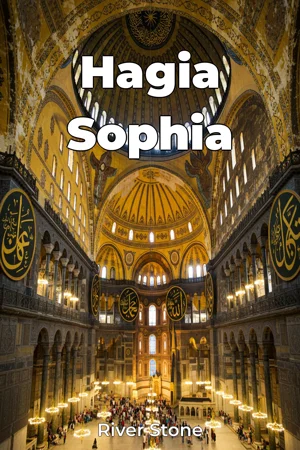
About This Book
How can a single building embody the sweep of empires, the clash of religions, and the enduring power of architectural innovation? This book, "Hagia Sophia," delves into the multifaceted history, architectural significance, and transformative journey of this iconic structure from a Christian cathedral to an Ottoman mosque and, subsequently, a museum and now once again a mosque. Understanding Hagia Sophia is crucial not only for comprehending Byzantine and Ottoman history but also for appreciating the complex interplay between architectural design, religious identity, and political power. This exploration unfolds against the backdrop of Constantinople, a city strategically positioned as a bridge between East and West. The book provides critical historical context, outlining the rise of the Byzantine Empire, its embrace of Christianity, and the subsequent Ottoman conquest that reshaped the city and its landmarks. No prior knowledge is explicitly required, but a general understanding of Roman and medieval history will enrich the reading experience. The central argument of "Hagia Sophia" is that the building's enduring legacy lies not merely in its physical grandeur but also in its capacity to reflect and refract the changing cultural and political landscapes of the civilizations that have claimed it. It serves as a tangible record of shifting religious ideologies, evolving architectural techniques, and the enduring human desire to create spaces of awe and reverence. The book’s structure proceeds as follows: First, it introduces the genesis of Hagia Sophia, tracing its origins to the earlier churches that stood on the same site and culminated in Justinian I’s ambitious vision for a cathedral that would surpass all others. Second, it discusses the evolution of the architectural and decorative elements, highlighting engineering feats such as the innovative dome design and the intricate mosaic work that served both aesthetic and theological purposes. We examine the impact of the Ottoman conquest, detailing the structural adaptations made to transform the church into a mosque, including the addition of minarets and the incorporation of Islamic decorative elements. Finally, the book explores Hagia Sophia’s modern identity, examining its role as a museum, a symbol of secular Turkey, and, most recently, its reconversion into a mosque, exploring the controversies and debates surrounding its changing status. The analysis presented is supported by a diverse range of evidence, including historical chronicles, architectural surveys, and art historical analyses. Primary source materials, such as Byzantine texts and Ottoman documents, provide firsthand accounts of the building's construction, use, and transformation. Architectural plans and diagrams offer insight into the structural complexities of the building, while photographic documentation captures its evolving appearance over time. "Hagia Sophia" also forges connections with other disciplines, including religious studies, political science, and art history. The book examines the theological significance of Hagia Sophia within both Christian and Islamic traditions. It explores the political implications of its shifting religious status, demonstrating how the building has been used to project power and assert cultural dominance. The book considers the building as an impressive feat of architectural and artistic skill. What sets this book apart is its comprehensive approach to understanding Hagia Sophia as a dynamic entity that has been continually shaped and reshaped by the forces of history. It moves beyond a simple recounting of facts to offer a nuanced interpretation of the building's significance as a cultural artifact. Written in a detailed, informative style, "Hagia Sophia" is aimed at anyone interested in history, architecture, or religious studies. It will appeal to general readers who enjoy historical narratives, as well as students and scholars seeking a deeper understanding of this complex masterpiece. As a work of historical and architectural analysis, the book adheres to the conventions of academic scholarship, providing detailed citations and engaging with existing debates in the field. The book focuses primarily on the physical history and architectural evolution of Hagia Sophia itself. While it touches on broader themes of Byzantine and Ottoman history, its primary focus remains on the building and its immediate context. The information presented in "Hagia Sophia" provides insights into the intersection of cultural heritage and political identity. It highlights the challenges of preserving historical landmarks in the face of changing social and political landscapes. It also serves as a case study for understanding how architecture can be used to express and reinforce religious and cultural values. The book addresses ongoing debates surrounding Hagia Sophia's reconversion into a mosque. By presenting a balanced and nuanced account of the building's history, it seeks to foster a deeper understanding of the complex issues at stake.
How can a single building embody the sweep of empires, the clash of religions, and the enduring power of architectural innovation? This book, "Hagia Sophia," delves into the multifaceted history, architectural significance, and transformative journey of this iconic structure from a Christian cathedral to an Ottoman mosque and, subsequently, a museum and now once again a mosque. Understanding Hagia Sophia is crucial not only for comprehending Byzantine and Ottoman history but also for appreciating the complex interplay between architectural design, religious identity, and political power. This exploration unfolds against the backdrop of Constantinople, a city strategically positioned as a bridge between East and West. The book provides critical historical context, outlining the rise of the Byzantine Empire, its embrace of Christianity, and the subsequent Ottoman conquest that reshaped the city and its landmarks. No prior knowledge is explicitly required, but a general understanding of Roman and medieval history will enrich the reading experience. The central argument of "Hagia Sophia" is that the building's enduring legacy lies not merely in its physical grandeur but also in its capacity to reflect and refract the changing cultural and political landscapes of the civilizations that have claimed it. It serves as a tangible record of shifting religious ideologies, evolving architectural techniques, and the enduring human desire to create spaces of awe and reverence. The book’s structure proceeds as follows: First, it introduces the genesis of Hagia Sophia, tracing its origins to the earlier churches that stood on the same site and culminated in Justinian I’s ambitious vision for a cathedral that would surpass all others. Second, it discusses the evolution of the architectural and decorative elements, highlighting engineering feats such as the innovative dome design and the intricate mosaic work that served both aesthetic and theological purposes. We examine the impact of the Ottoman conquest, detailing the structural adaptations made to transform the church into a mosque, including the addition of minarets and the incorporation of Islamic decorative elements. Finally, the book explores Hagia Sophia’s modern identity, examining its role as a museum, a symbol of secular Turkey, and, most recently, its reconversion into a mosque, exploring the controversies and debates surrounding its changing status. The analysis presented is supported by a diverse range of evidence, including historical chronicles, architectural surveys, and art historical analyses. Primary source materials, such as Byzantine texts and Ottoman documents, provide firsthand accounts of the building's construction, use, and transformation. Architectural plans and diagrams offer insight into the structural complexities of the building, while photographic documentation captures its evolving appearance over time. "Hagia Sophia" also forges connections with other disciplines, including religious studies, political science, and art history. The book examines the theological significance of Hagia Sophia within both Christian and Islamic traditions. It explores the political implications of its shifting religious status, demonstrating how the building has been used to project power and assert cultural dominance. The book considers the building as an impressive feat of architectural and artistic skill. What sets this book apart is its comprehensive approach to understanding Hagia Sophia as a dynamic entity that has been continually shaped and reshaped by the forces of history. It moves beyond a simple recounting of facts to offer a nuanced interpretation of the building's significance as a cultural artifact. Written in a detailed, informative style, "Hagia Sophia" is aimed at anyone interested in history, architecture, or religious studies. It will appeal to general readers who enjoy historical narratives, as well as students and scholars seeking a deeper understanding of this complex masterpiece. As a work of historical and architectural analysis, the book adheres to the conventions of academic scholarship, providing detailed citations and engaging with existing debates in the field. The book focuses primarily on the physical history and architectural evolution of Hagia Sophia itself. While it touches on broader themes of Byzantine and Ottoman history, its primary focus remains on the building and its immediate context. The information presented in "Hagia Sophia" provides insights into the intersection of cultural heritage and political identity. It highlights the challenges of preserving historical landmarks in the face of changing social and political landscapes. It also serves as a case study for understanding how architecture can be used to express and reinforce religious and cultural values. The book addresses ongoing debates surrounding Hagia Sophia's reconversion into a mosque. By presenting a balanced and nuanced account of the building's history, it seeks to foster a deeper understanding of the complex issues at stake.
Hagia Sophia stands as a testament to the enduring intersection of history, religion, and architecture. This book, "Hagia Sophia," explores the captivating journey of this iconic structure, from its origins as a Christian cathedral in Constantinople, through its transformation into an Ottoman mosque, its time as a museum, and its recent reconversion back into a mosque. Understanding its evolution provides insight into the Byzantine and Ottoman Empires, showcasing how architecture reflects shifting cultural and political landscapes. The book highlights intriguing facts, such as the innovative dome construction and the adaptation of the building following the Ottoman conquest, including the addition of minarets. The book uniquely positions Hagia Sophia as a dynamic entity shaped by historical forces. It begins by detailing the genesis of Hagia Sophia, tracing its roots to the earlier churches on the site and Justinian I's vision for a cathedral. It then discusses the architectural and decorative elements and the impact of the Ottoman conquest. Finally, it looks at Hagia Sophia’s modern identity, examining its role as a museum and the controversies surrounding its reconversion into a mosque. Supported by historical chronicles and architectural surveys, the book offers a nuanced interpretation of this cultural artifact that will appeal to anyone interested in religious history and architectural history.
Book Details
ISBN
9788233976118
Publisher
Publifye AS
Your Licenses
You don't own any licenses for this book
Purchase a license below to unlock this book and download the EPUB.
Purchase License
Select a tier to unlock this book
Need bulk licensing?
Contact us for enterprise agreements.