
About This Book
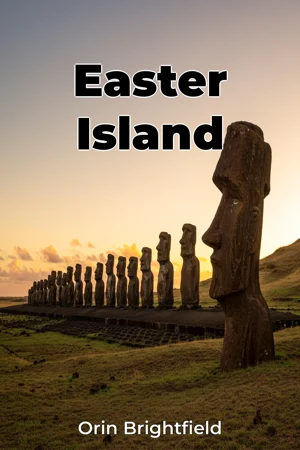
How did a remote island, adrift in the vast expanse of the Pacific Ocean, become home to one of the world's most perplexing archaeological enigmas: the monumental statues known as Moai? This book, *Easter Island*, delves into the heart of this mystery, exploring the history, culture, and environment of Rapa Nui, the island's Polynesian name, to unravel the secrets behind its iconic stone giants. Crucial to understanding the island's past are three interconnected themes: the construction and transportation of the Moai, the societal structure of the Rapa Nui people, and the island's fragile and changing environment. These elements are pivotal for anyone seeking to grasp the complexities of Easter Island's story and the lessons it holds for our own world. The book provides a comprehensive investigation into the civilization that created these massive sculptures. It begins by establishing the geographical and historical context, detailing the island's discovery, its unique ecosystem, and the arrival of the Polynesian voyagers who would shape its destiny. We then explore the central argument: that the rise and fall of the Rapa Nui civilization was intricately linked to its resource management practices, its hierarchical social structure, and its ambitious construction projects. This argument is vital because it offers a cautionary tale about the potential consequences of environmental degradation and societal imbalances. The structure of *Easter Island* is designed to guide the reader through a logical progression of understanding. First, we introduce the Moai themselves, examining their diverse styles, sizes, and locations, as well as the quarries where they were carved. Second, we delve into the Rapa Nui society, exploring their traditions, beliefs, and social organization. This section analyzes the evidence for a stratified society, the role of chiefs and priests, and the importance of ancestor worship. Third, the book addresses the environmental history of the island, tracing the deforestation, soil erosion, and ecological changes that occurred over centuries. We consider various theories about the Moai's transport that don't rely on pseudo-archeology, presenting evidence from archaeological experiments and traditional knowledge. The culmination of these investigations leads to a detailed discussion of the island's eventual decline, exploring competing hypotheses about the causes of societal collapse. The book relies on archaeological evidence, including radiocarbon dating, pollen analysis, and lithic studies, as well as historical accounts from early European explorers. It incorporates recent discoveries and reinterpretations of existing data. The methodologies employed include comparative analysis of Moai construction techniques, spatial analysis of archaeological sites, and environmental reconstruction based on paleoecological data. *Easter Island* connects to several other fields of study, including anthropology, environmental science, and Polynesian history. By examining the cultural adaptations of the Rapa Nui people, the book offers insights into the broader human experience. The study of the island's ecological history provides valuable lessons for contemporary environmental challenges. The book adopts a balanced and evidence-based approach, presenting different perspectives on the controversies surrounding the island's history and decline. Targeted towards readers with an interest in world history, archaeology, and environmental studies, *Easter Island* offers a comprehensive accessible, and thought-provoking account of one of the world's most enigmatic places. The book's scope is intentionally broad, covering the major aspects of Easter Island's history and culture while avoiding overly technical jargon. The information may be helpful for promoting responsible tourism to the island. The book addresses the ongoing debates about the causes of Easter Island's societal collapse, presenting a nuanced analysis of the available evidence and considering multiple perspectives.
How did a remote island, adrift in the vast expanse of the Pacific Ocean, become home to one of the world's most perplexing archaeological enigmas: the monumental statues known as Moai? This book, *Easter Island*, delves into the heart of this mystery, exploring the history, culture, and environment of Rapa Nui, the island's Polynesian name, to unravel the secrets behind its iconic stone giants. Crucial to understanding the island's past are three interconnected themes: the construction and transportation of the Moai, the societal structure of the Rapa Nui people, and the island's fragile and changing environment. These elements are pivotal for anyone seeking to grasp the complexities of Easter Island's story and the lessons it holds for our own world. The book provides a comprehensive investigation into the civilization that created these massive sculptures. It begins by establishing the geographical and historical context, detailing the island's discovery, its unique ecosystem, and the arrival of the Polynesian voyagers who would shape its destiny. We then explore the central argument: that the rise and fall of the Rapa Nui civilization was intricately linked to its resource management practices, its hierarchical social structure, and its ambitious construction projects. This argument is vital because it offers a cautionary tale about the potential consequences of environmental degradation and societal imbalances. The structure of *Easter Island* is designed to guide the reader through a logical progression of understanding. First, we introduce the Moai themselves, examining their diverse styles, sizes, and locations, as well as the quarries where they were carved. Second, we delve into the Rapa Nui society, exploring their traditions, beliefs, and social organization. This section analyzes the evidence for a stratified society, the role of chiefs and priests, and the importance of ancestor worship. Third, the book addresses the environmental history of the island, tracing the deforestation, soil erosion, and ecological changes that occurred over centuries. We consider various theories about the Moai's transport that don't rely on pseudo-archeology, presenting evidence from archaeological experiments and traditional knowledge. The culmination of these investigations leads to a detailed discussion of the island's eventual decline, exploring competing hypotheses about the causes of societal collapse. The book relies on archaeological evidence, including radiocarbon dating, pollen analysis, and lithic studies, as well as historical accounts from early European explorers. It incorporates recent discoveries and reinterpretations of existing data. The methodologies employed include comparative analysis of Moai construction techniques, spatial analysis of archaeological sites, and environmental reconstruction based on paleoecological data. *Easter Island* connects to several other fields of study, including anthropology, environmental science, and Polynesian history. By examining the cultural adaptations of the Rapa Nui people, the book offers insights into the broader human experience. The study of the island's ecological history provides valuable lessons for contemporary environmental challenges. The book adopts a balanced and evidence-based approach, presenting different perspectives on the controversies surrounding the island's history and decline. Targeted towards readers with an interest in world history, archaeology, and environmental studies, *Easter Island* offers a comprehensive accessible, and thought-provoking account of one of the world's most enigmatic places. The book's scope is intentionally broad, covering the major aspects of Easter Island's history and culture while avoiding overly technical jargon. The information may be helpful for promoting responsible tourism to the island. The book addresses the ongoing debates about the causes of Easter Island's societal collapse, presenting a nuanced analysis of the available evidence and considering multiple perspectives.
Easter Island, or Rapa Nui, presents a captivating enigma in world history: How did a remote Pacific island support a civilization capable of creating and transporting the colossal Moai statues? This book, *Easter Island*, explores the interconnected themes of Moai construction, Rapa Nui society, and the island's fragile environment to unravel this mystery. The book emphasizes the importance of resource management, social structures, and ambitious construction projects in understanding the island's history. For example, pollen analysis reveals dramatic deforestation, suggesting a link between environmental degradation and societal change. The book's approach is a logical progression, starting with an examination of the Moai themselves, including their diverse styles and quarry locations. It then delves into Rapa Nui society, exploring traditions, beliefs, and social organization. Finally, it addresses the environmental history of the island, tracing deforestation, soil erosion, and ecological changes. Through archaeological evidence and historical accounts, the book connects to broader fields such as anthropology, environmental science, and Polynesian history, making it valuable for anyone interested in archaeology and earth sciences geography.
Book Details
ISBN
9788233976057
Publisher
Publifye AS
Your Licenses
You don't own any licenses for this book
Purchase a license below to unlock this book and download the EPUB.
Purchase License
Select a tier to unlock this book
Need bulk licensing?
Contact us for enterprise agreements.