
About This Book
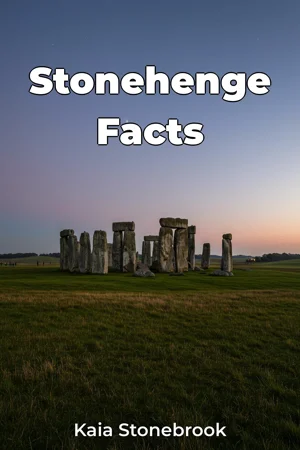
Have you ever gazed upon Stonehenge and wondered about the secrets held within its ancient stones? "Stonehenge Facts" delves into the heart of this enigmatic monument, exploring its astronomical alignments, the compelling theories surrounding its builders, and the enduring mysteries that continue to captivate researchers and the public alike. We embark on this journey to unravel historical complexities and provide insight into this ancient structure. This book focuses on three central themes: firstly, the documented history of Stonehenge and surrounding archaeological sites. Secondly, we analyze the various theories surrounding the construction and purpose of Stonehenge, moving beyond mere speculation by evaluating the historical, astronomical, and geological evidence. Finally, we aim to understand how cultural interpretations of Stonehenge have evolved. Understanding these topics helps us appreciate the multifaceted nature of Stonehenge. To fully grasp the significance of Stonehenge, some historical and archaeological context is necessary. The book will also touch on the Neolithic and Bronze Age societies that inhabited Britain and their documented technological capabilities based on what archaeological finds have been found. The central argument of "Stonehenge Facts" proposes that while a single, definitive explanation for Stonehenge's purpose may remain elusive, a synthesis of archaeological evidence, astronomical analysis, and historical context offers the most balanced and informed perspective. This approach emphasizes the interconnectedness of various theories, moving away from singular explanations toward a more holistic understanding. The book is structured to systematically explore these themes. We begin by introducing Stonehenge and its location. Then, we critically examine the archaeological record, analyzing the construction techniques, the origins of the stones, and the layout of the site. Next, we delve into the astronomical alignments of Stonehenge, exploring claims of solar and lunar observatories and the statistical validity of these alignments. Finally, we examine the evolution of interpretations, from Druidic associations to modern scientific theories, and how these interpretations reflect the changing cultural landscape. The evidence presented in "Stonehenge Facts" is drawn from a range of sources, including archaeological excavation reports, geological surveys, astronomical simulations, and historical texts. We will also look at comparative analyses of other megalithic sites around the world to provide a broader context. The book will also present a balanced perspective, acknowledging areas of uncertainty and ongoing research. This book draws interdisciplinary connections between archaeology, astronomy, and history, helping to illustrate a more complete picture. We will also look at anthropology and sociology, mainly by analyzing the cultural impact and modern interpretations of Stonehenge. These connections will help us understand the monument. "Stonehenge Facts" distinguishes itself through its commitment to evidence-based analysis and its holistic approach by considering multiple perspectives. It avoids sensationalism, opting instead for a balanced assessment of established facts. We will also look at other standing stones in the area to compare and identify what makes Stonehenge so unique. Written in a clear and accessible style, "Stonehenge Facts" is targeted toward a broad audience, including history enthusiasts, amateur archaeologists, and anyone intrigued by the mysteries of the past. It offers valuable insights for students, researchers, and general readers alike. As a work of non-fiction, "Stonehenge Facts" adheres to the conventions of academic rigor and factual accuracy, with all claims supported by credible sources. We will also use a professional tone, but it will also maintain clarity and conciseness. The book's scope is intentionally limited to the factual exploration of Stonehenge, focusing on the archaeological, astronomical, and historical evidence. It does not delve into speculative or unsubstantiated theories. By understanding the construction, alignment, and historical context of Stonehenge, readers can gain a deeper appreciation for human history and the ingenuity of our ancestors. The book also encourages critical thinking and provides a framework for evaluating competing claims and theories. The field of Stonehenge studies is not without its controversies. This includes debates over the precise dating of the site, the exact methods used to transport and erect the stones, and the relative importance of different interpretations. "Stonehenge Facts" addresses these controversies directly, presenting different viewpoints and evaluating the evidence for each.
Have you ever gazed upon Stonehenge and wondered about the secrets held within its ancient stones? "Stonehenge Facts" delves into the heart of this enigmatic monument, exploring its astronomical alignments, the compelling theories surrounding its builders, and the enduring mysteries that continue to captivate researchers and the public alike. We embark on this journey to unravel historical complexities and provide insight into this ancient structure. This book focuses on three central themes: firstly, the documented history of Stonehenge and surrounding archaeological sites. Secondly, we analyze the various theories surrounding the construction and purpose of Stonehenge, moving beyond mere speculation by evaluating the historical, astronomical, and geological evidence. Finally, we aim to understand how cultural interpretations of Stonehenge have evolved. Understanding these topics helps us appreciate the multifaceted nature of Stonehenge. To fully grasp the significance of Stonehenge, some historical and archaeological context is necessary. The book will also touch on the Neolithic and Bronze Age societies that inhabited Britain and their documented technological capabilities based on what archaeological finds have been found. The central argument of "Stonehenge Facts" proposes that while a single, definitive explanation for Stonehenge's purpose may remain elusive, a synthesis of archaeological evidence, astronomical analysis, and historical context offers the most balanced and informed perspective. This approach emphasizes the interconnectedness of various theories, moving away from singular explanations toward a more holistic understanding. The book is structured to systematically explore these themes. We begin by introducing Stonehenge and its location. Then, we critically examine the archaeological record, analyzing the construction techniques, the origins of the stones, and the layout of the site. Next, we delve into the astronomical alignments of Stonehenge, exploring claims of solar and lunar observatories and the statistical validity of these alignments. Finally, we examine the evolution of interpretations, from Druidic associations to modern scientific theories, and how these interpretations reflect the changing cultural landscape. The evidence presented in "Stonehenge Facts" is drawn from a range of sources, including archaeological excavation reports, geological surveys, astronomical simulations, and historical texts. We will also look at comparative analyses of other megalithic sites around the world to provide a broader context. The book will also present a balanced perspective, acknowledging areas of uncertainty and ongoing research. This book draws interdisciplinary connections between archaeology, astronomy, and history, helping to illustrate a more complete picture. We will also look at anthropology and sociology, mainly by analyzing the cultural impact and modern interpretations of Stonehenge. These connections will help us understand the monument. "Stonehenge Facts" distinguishes itself through its commitment to evidence-based analysis and its holistic approach by considering multiple perspectives. It avoids sensationalism, opting instead for a balanced assessment of established facts. We will also look at other standing stones in the area to compare and identify what makes Stonehenge so unique. Written in a clear and accessible style, "Stonehenge Facts" is targeted toward a broad audience, including history enthusiasts, amateur archaeologists, and anyone intrigued by the mysteries of the past. It offers valuable insights for students, researchers, and general readers alike. As a work of non-fiction, "Stonehenge Facts" adheres to the conventions of academic rigor and factual accuracy, with all claims supported by credible sources. We will also use a professional tone, but it will also maintain clarity and conciseness. The book's scope is intentionally limited to the factual exploration of Stonehenge, focusing on the archaeological, astronomical, and historical evidence. It does not delve into speculative or unsubstantiated theories. By understanding the construction, alignment, and historical context of Stonehenge, readers can gain a deeper appreciation for human history and the ingenuity of our ancestors. The book also encourages critical thinking and provides a framework for evaluating competing claims and theories. The field of Stonehenge studies is not without its controversies. This includes debates over the precise dating of the site, the exact methods used to transport and erect the stones, and the relative importance of different interpretations. "Stonehenge Facts" addresses these controversies directly, presenting different viewpoints and evaluating the evidence for each.
"Stonehenge Facts" explores the enduring mysteries of Stonehenge, delving into its history, construction, and cultural significance. The book meticulously examines the archaeological record, astronomical alignments, and historical context to offer a balanced perspective on this ancient structure. Readers will discover how Neolithic and Bronze Age societies might have used sophisticated techniques to erect the monument and how its layout may reflect astronomical events. The book approaches its subject by systematically exploring the site's history, analyzing theories about its purpose, and tracing the evolution of cultural interpretations. It critically examines the archaeological record, construction techniques, and astronomical alignments, offering a synthesis of evidence-based analysis. By connecting archaeology, astronomy, and history, "Stonehenge Facts" provides a holistic understanding of this megalithic site and its place in British history. The narrative progresses from introducing the site to examining the archaeological record, exploring astronomical alignments, and analyzing evolving interpretations. The book distinguishes itself by carefully addressing controversies, presenting different viewpoints, and evaluating the evidence for each, thus providing an informed perspective on the continuing debates surrounding Stonehenge.
Book Details
ISBN
9788233976019
Publisher
Publifye AS
Your Licenses
You don't own any licenses for this book
Purchase a license below to unlock this book and download the EPUB.
Purchase License
Select a tier to unlock this book
Need bulk licensing?
Contact us for enterprise agreements.