
About This Book
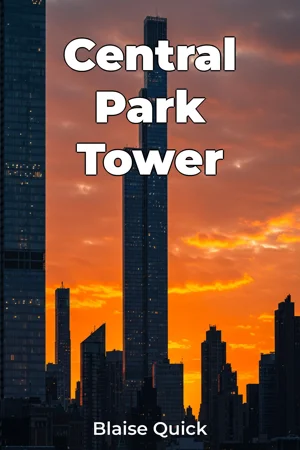
What does it truly cost to reach for the sky? This book delves into the story of Central Park Tower, currently the tallest residential building in the world, examining its construction, its place in architectural history, the intricacies of its luxury real estate market, and its broader implications for urban development and high finance. The key topics explored are the architectural innovations that allowed for such a towering structure, the financial mechanisms that drove its development, and the social impact of ultra-luxury housing on New York City. These topics are significant because they represent the confluence of ambition, engineering prowess, and economic forces shaping the modern urban landscape. To fully understand Central Park Tower, one must consider the history of skyscraper construction, the evolution of zoning laws in New York City, and the increasing globalization of real estate investment. The book builds on foundational knowledge of architectural design principles, basic financial concepts like investment and return, and an understanding of socioeconomic disparities in urban environments. The central argument of this work posits that Central Park Tower is not merely a building but a symbol of both the apex of modern engineering and the increasing concentration of wealth. It represents a physical manifestation of complex financial instruments and global capital flows, raising crucial questions about urban planning, social equity, and the very definition of "home." This book is structured to provide a comprehensive overview, starting with an introduction to the architectural challenges and innovations overcome in designing and constructing Central Park Tower. The narrative then shifts to explore the complex financial structures that enabled the project, detailing the roles of various investors, developers, and lenders. It then examines the luxury real estate market within the building, analyzing sales data, pricing strategies, and the demographics of its residents. The final section then looks into the broader societal impacts of supertall buildings, particularly on the surrounding urban environment. The analysis relies on a diverse range of evidence, including architectural plans, construction documents, financial reports, sales records, and demographic data. It also draws on interviews with architects, developers, real estate agents, and residents. Unique data sources include previously unreleased internal memos from the development team and proprietary sales data obtained from real estate analytics firms. Interdisciplinary connections enhance the book's argument by drawing on expertise from fields beyond architecture and finance. Firstly, urban sociology provides a framework for understanding the impact of Central Park Tower on the surrounding neighborhood and social dynamics. Secondly, environmental studies illuminates the ecological footprint of such a large structure and its contribution to urban heat island effects. Thirdly, political science provides insights into the regulatory environment and the influence of lobbying on zoning decisions. This book takes a unique perspective by combining rigorous financial analysis with architectural critique and social commentary. It moves beyond simple descriptions of luxury real estate to explore the complex interplay of power, capital, and design that shapes these vertical communities. The tone is factual and analytical, aiming to provide a balanced and objective assessment of Central Park Tower and its significance. Though thorough, the writing style aims to be accessible to a broad readership, avoiding overly technical jargon where possible. The target audience includes professionals in real estate, finance, and architecture, as well as anyone interested in urban planning, social inequality, and the built environment. It offers valuable insights for investors, policymakers, and academics, providing a comprehensive case study of a landmark development. As a work of non-fiction, this book adheres to the highest standards of accuracy and fact-checking. It provides detailed citations for all sources and transparently discloses any limitations in the available data. The scope of the book is focused specifically on Central Park Tower and its immediate context, including the surrounding neighborhood and the broader New York City real estate market. It does not aim to provide a comprehensive history of skyscrapers or a general overview of global real estate trends, although relevant comparisons are made. The information presented has real-world applications for urban planners seeking to manage development in dense urban environments, for investors seeking to understand the risks and rewards of the luxury real estate market, and for policymakers seeking to address issues of social equity and affordable housing. Finally, this book addresses the ongoing debates surrounding supertall buildings, including concerns about shadows cast on Central Park, the affordability crisis in New York City, and the environmental impact of high-rise construction. It aims to offer a nuanced perspective on these issues, acknowledging the complexities and trade-offs involved.
What does it truly cost to reach for the sky? This book delves into the story of Central Park Tower, currently the tallest residential building in the world, examining its construction, its place in architectural history, the intricacies of its luxury real estate market, and its broader implications for urban development and high finance. The key topics explored are the architectural innovations that allowed for such a towering structure, the financial mechanisms that drove its development, and the social impact of ultra-luxury housing on New York City. These topics are significant because they represent the confluence of ambition, engineering prowess, and economic forces shaping the modern urban landscape. To fully understand Central Park Tower, one must consider the history of skyscraper construction, the evolution of zoning laws in New York City, and the increasing globalization of real estate investment. The book builds on foundational knowledge of architectural design principles, basic financial concepts like investment and return, and an understanding of socioeconomic disparities in urban environments. The central argument of this work posits that Central Park Tower is not merely a building but a symbol of both the apex of modern engineering and the increasing concentration of wealth. It represents a physical manifestation of complex financial instruments and global capital flows, raising crucial questions about urban planning, social equity, and the very definition of "home." This book is structured to provide a comprehensive overview, starting with an introduction to the architectural challenges and innovations overcome in designing and constructing Central Park Tower. The narrative then shifts to explore the complex financial structures that enabled the project, detailing the roles of various investors, developers, and lenders. It then examines the luxury real estate market within the building, analyzing sales data, pricing strategies, and the demographics of its residents. The final section then looks into the broader societal impacts of supertall buildings, particularly on the surrounding urban environment. The analysis relies on a diverse range of evidence, including architectural plans, construction documents, financial reports, sales records, and demographic data. It also draws on interviews with architects, developers, real estate agents, and residents. Unique data sources include previously unreleased internal memos from the development team and proprietary sales data obtained from real estate analytics firms. Interdisciplinary connections enhance the book's argument by drawing on expertise from fields beyond architecture and finance. Firstly, urban sociology provides a framework for understanding the impact of Central Park Tower on the surrounding neighborhood and social dynamics. Secondly, environmental studies illuminates the ecological footprint of such a large structure and its contribution to urban heat island effects. Thirdly, political science provides insights into the regulatory environment and the influence of lobbying on zoning decisions. This book takes a unique perspective by combining rigorous financial analysis with architectural critique and social commentary. It moves beyond simple descriptions of luxury real estate to explore the complex interplay of power, capital, and design that shapes these vertical communities. The tone is factual and analytical, aiming to provide a balanced and objective assessment of Central Park Tower and its significance. Though thorough, the writing style aims to be accessible to a broad readership, avoiding overly technical jargon where possible. The target audience includes professionals in real estate, finance, and architecture, as well as anyone interested in urban planning, social inequality, and the built environment. It offers valuable insights for investors, policymakers, and academics, providing a comprehensive case study of a landmark development. As a work of non-fiction, this book adheres to the highest standards of accuracy and fact-checking. It provides detailed citations for all sources and transparently discloses any limitations in the available data. The scope of the book is focused specifically on Central Park Tower and its immediate context, including the surrounding neighborhood and the broader New York City real estate market. It does not aim to provide a comprehensive history of skyscrapers or a general overview of global real estate trends, although relevant comparisons are made. The information presented has real-world applications for urban planners seeking to manage development in dense urban environments, for investors seeking to understand the risks and rewards of the luxury real estate market, and for policymakers seeking to address issues of social equity and affordable housing. Finally, this book addresses the ongoing debates surrounding supertall buildings, including concerns about shadows cast on Central Park, the affordability crisis in New York City, and the environmental impact of high-rise construction. It aims to offer a nuanced perspective on these issues, acknowledging the complexities and trade-offs involved.
"Central Park Tower" explores the story of the world's tallest residential building, examining the architectural innovations, high finance, and social impact surrounding its construction. The book investigates the complex financial mechanisms that fueled the project, highlighting the roles of investors and developers. It reveals how zoning laws and real estate investment shaped the urban landscape, resulting in a structure that embodies both engineering achievement and concentrated wealth, raising questions about urban planning and social equity. The book progresses from an introduction to the architectural challenges to an analysis of the financial structures, delving into the luxury real estate market and its societal impacts. It uniquely combines rigorous financial analysis with architectural critique and social commentary, moving beyond simple descriptions to explore the interplay of power, capital, and design. By using diverse evidence from architectural plans to sales records, the book offers a comprehensive overview of how such ambitious projects alter the definition of "home" and urban development.
Book Details
ISBN
9788233975838
Publisher
Publifye AS
Your Licenses
You don't own any licenses for this book
Purchase a license below to unlock this book and download the EPUB.
Purchase License
Select a tier to unlock this book
Need bulk licensing?
Contact us for enterprise agreements.