
About This Book
How did a skyscraper become a symbol of national identity and engineering prowess? Taipei 101 is more than just a tall building; it’s a testament to human ingenuity, cultural pride, and resilience in the face of natural challenges. This book delves into the multi-faceted story of Taipei 101, exploring its architectural design and its impact on Taiwan's cultural landscape, as well as the fascinating story of how it was built to withstand the region's frequent earthquakes and typhoons. These topics are important because they provide insight into how ambitious architectural projects can shape a nation's image, advance engineering knowledge, and reflect cultural values on a global stage. Understanding Taipei 101 requires appreciating the broader context of Taiwan’s economic development, its complex geological environment, and its aspirations for global recognition. The rapid economic growth of Taiwan in the late 20th century created the need for a structure that could represent the island's ambitions. Taiwan's location in an active seismic zone and typhoon alley posed significant engineering challenges, demanding innovative solutions to ensure the building's stability and safety. This book argues that Taipei 101 transcends its physical function as an office building and tourist attraction, serving as a symbol of Taiwan's technological advancement, economic strength, and cultural identity. It demonstrates how the building's design and construction were meticulously planned to address both practical needs and symbolic representations of national pride. The book begins by introducing the historical and economic context that led to the conception of Taipei 101. It then examines the architectural design, detailing how traditional Chinese aesthetics were incorporated into a modern skyscraper. A significant portion of the book is dedicated to the engineering innovations that enable Taipei 101 to withstand earthquakes and typhoons, including the massive tuned mass damper and the building's robust structural design. The book also explores the cultural impact of Taipei 101, examining its role in shaping Taiwan's national image and promoting tourism. Finally, the book will summarize the lessons learned from the Taipei 101 project and its relevance for future skyscraper designs around the world. The analysis is supported by architectural plans, engineering reports, interviews with key architects and engineers involved in the project, and historical data on Taiwan's economic development and cultural policies. The book also draws upon academic research in structural engineering, urban planning, and cultural studies to provide a comprehensive understanding of Taipei 101's significance. This book connects to several disciplines, including architecture, engineering, urban planning, and cultural studies. It demonstrates how architectural design is influenced by engineering constraints, how skyscrapers shape urban landscapes, and how cultural values are reflected in architectural symbols. This book offers a comprehensive and accessible account of Taipei 101's design, construction, and cultural significance. It avoids overly technical jargon while providing sufficient detail to satisfy readers interested in architecture, engineering, and Taiwanese culture. The intended audience includes students and scholars in architecture, engineering, and Asian studies, as well as tourists or general readers interested in learning more about Taipei 101 and Taiwan. This information is valuable in order to understand cultural and technological achievements and to create new buildings according to similar or improved building approaches. This will allow similar buildings to be built in similar environments or inspire new designs. The book focuses specifically on Taipei 101, its design, construction, and cultural impact. While it touches on broader themes of skyscraper design and urban development, it does not attempt to provide a comprehensive history of skyscrapers or a general overview of Taiwanese culture. The information in this book can be applied to various fields, including architectural education, structural engineering research, and urban planning policy. It provides a case study of how innovative design and engineering can address environmental challenges and create iconic landmarks. Taipei 101 was cutting-edge for its time and now lessons learned during its creation could have influenced modern building codes and practices, potentially touching on debates among architects and engineers regarding the balance between aesthetics, functionality, and sustainability in skyscraper design.
How did a skyscraper become a symbol of national identity and engineering prowess? Taipei 101 is more than just a tall building; it’s a testament to human ingenuity, cultural pride, and resilience in the face of natural challenges. This book delves into the multi-faceted story of Taipei 101, exploring its architectural design and its impact on Taiwan's cultural landscape, as well as the fascinating story of how it was built to withstand the region's frequent earthquakes and typhoons. These topics are important because they provide insight into how ambitious architectural projects can shape a nation's image, advance engineering knowledge, and reflect cultural values on a global stage. Understanding Taipei 101 requires appreciating the broader context of Taiwan’s economic development, its complex geological environment, and its aspirations for global recognition. The rapid economic growth of Taiwan in the late 20th century created the need for a structure that could represent the island's ambitions. Taiwan's location in an active seismic zone and typhoon alley posed significant engineering challenges, demanding innovative solutions to ensure the building's stability and safety. This book argues that Taipei 101 transcends its physical function as an office building and tourist attraction, serving as a symbol of Taiwan's technological advancement, economic strength, and cultural identity. It demonstrates how the building's design and construction were meticulously planned to address both practical needs and symbolic representations of national pride. The book begins by introducing the historical and economic context that led to the conception of Taipei 101. It then examines the architectural design, detailing how traditional Chinese aesthetics were incorporated into a modern skyscraper. A significant portion of the book is dedicated to the engineering innovations that enable Taipei 101 to withstand earthquakes and typhoons, including the massive tuned mass damper and the building's robust structural design. The book also explores the cultural impact of Taipei 101, examining its role in shaping Taiwan's national image and promoting tourism. Finally, the book will summarize the lessons learned from the Taipei 101 project and its relevance for future skyscraper designs around the world. The analysis is supported by architectural plans, engineering reports, interviews with key architects and engineers involved in the project, and historical data on Taiwan's economic development and cultural policies. The book also draws upon academic research in structural engineering, urban planning, and cultural studies to provide a comprehensive understanding of Taipei 101's significance. This book connects to several disciplines, including architecture, engineering, urban planning, and cultural studies. It demonstrates how architectural design is influenced by engineering constraints, how skyscrapers shape urban landscapes, and how cultural values are reflected in architectural symbols. This book offers a comprehensive and accessible account of Taipei 101's design, construction, and cultural significance. It avoids overly technical jargon while providing sufficient detail to satisfy readers interested in architecture, engineering, and Taiwanese culture. The intended audience includes students and scholars in architecture, engineering, and Asian studies, as well as tourists or general readers interested in learning more about Taipei 101 and Taiwan. This information is valuable in order to understand cultural and technological achievements and to create new buildings according to similar or improved building approaches. This will allow similar buildings to be built in similar environments or inspire new designs. The book focuses specifically on Taipei 101, its design, construction, and cultural impact. While it touches on broader themes of skyscraper design and urban development, it does not attempt to provide a comprehensive history of skyscrapers or a general overview of Taiwanese culture. The information in this book can be applied to various fields, including architectural education, structural engineering research, and urban planning policy. It provides a case study of how innovative design and engineering can address environmental challenges and create iconic landmarks. Taipei 101 was cutting-edge for its time and now lessons learned during its creation could have influenced modern building codes and practices, potentially touching on debates among architects and engineers regarding the balance between aesthetics, functionality, and sustainability in skyscraper design.
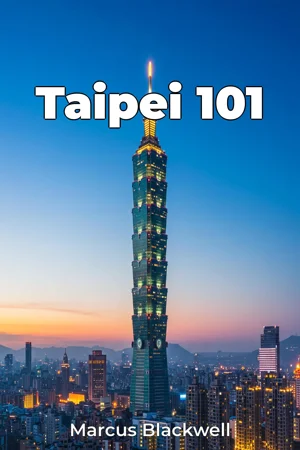
Taipei 101 stands as a symbol of Taiwan's economic rise and cultural identity, showcasing innovative architecture and engineering prowess. More than just a skyscraper, it represents the nation's ambition and resilience. The book "Taipei 101" explores how this iconic structure was designed to withstand frequent earthquakes and typhoons, incorporating elements of traditional Chinese aesthetics into a modern architectural marvel. One intriguing aspect is the tuned mass damper, a massive pendulum that helps stabilize the building against strong winds. The narrative progresses from the historical and economic context that spurred its creation to the detailed architectural and structural engineering solutions. The book examines the cultural impact of Taipei 101, illustrating how it has shaped Taiwan's national image and boosted tourism. It highlights the building's role as a national symbol and its contribution to urban planning, making it a valuable resource for understanding the intersection of architecture, engineering, and cultural studies.
Book Details
ISBN
9788233975715
Publisher
Publifye AS
Your Licenses
You don't own any licenses for this book
Purchase a license below to unlock this book and download the EPUB.
Purchase License
Select a tier to unlock this book
Need bulk licensing?
Contact us for enterprise agreements.