
About This Book
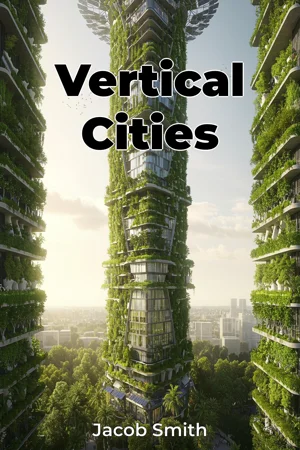
Can skyscrapers become more than just steel and glass monuments to commerce, evolving into self-sufficient ecosystems that redefine urban living? "Vertical Cities" explores this question, arguing that the future of sustainable urban development lies in transforming skyscrapers into comprehensive vertical communities integrating residential spaces, workplaces, and thriving green environments. This book examines the architectural, environmental, and social implications of this radical shift, offering a blueprint for a new era of urban design. The book delves into three core concepts: the integration of sustainable technologies, the creation of functional mixed-use environments, and the fostering of community within vertical structures. These topics are critical as cities face increasing pressure to accommodate growing populations while minimizing environmental impact. Traditional urban sprawl is unsustainable, demanding innovative solutions like vertical urbanism to maximize land use and reduce reliance on transportation. "Vertical Cities" builds upon a rich history of architectural innovation, from early utopian visions of vertical living to modern advancements in green building technologies. It also acknowledges the social experiments of high-rise public housing projects, learning from their failures to inform a more holistic approach. The central thesis posits that true sustainability requires a shift from viewing skyscrapers as isolated entities to understanding them as interconnected components of a broader urban ecosystem. This requires integrating renewable energy sources, efficient waste management systems, and food production within the building's design. The book is structured into three parts. The first section introduces the concept of vertical cities, outlining the challenges of traditional urban development and the potential of high-rise ecosystems. The second section examines the key elements of self-sufficiency, including energy generation through solar and wind power, water recycling and management, and the integration of vertical farms for food production. The third section explores the social dimensions of vertical communities, focusing on creating shared spaces, promoting social interaction, and ensuring equitable access to resources and amenities. The book culminates with case studies of existing and proposed vertical city projects, analyzing their successes and challenges and offering practical recommendations for future development. Evidence supporting the arguments presented in "Vertical Cities" is drawn from diverse sources, including architectural plans and technical specifications, environmental impact assessments, sociological studies of urban communities, and data from existing sustainable buildings. The book uses a combination of quantitative data and qualitative analysis, offering a balanced perspective on the potential and challenges of vertical urbanism. The book has strong interdisciplinary connections. Firstly, environmental science informs the selection of sustainable technologies and the assessment of their environmental impact. Secondly, sociology provides insights into the social dynamics of vertical communities and the factors that contribute to their success. Thirdly, urban planning informs the integration of vertical cities into the broader urban fabric, ensuring that they are well-connected and contribute to the overall sustainability of the city. "Vertical Cities" offers a novel approach by considering the skyscraper as a holistic ecosystem, rather than simply a building. It moves beyond technical solutions to address the social and ethical dimensions of vertical living, promoting a vision of urban development that is both sustainable and equitable. The book is written in a clear and accessible style, suitable for a broad audience interested in architecture, urban planning, and environmental sustainability. While grounded in rigorous research, the book avoids excessive jargon, making it accessible to non-experts. The intended audience includes architects, urban planners, policymakers, environmental advocates, and anyone interested in the future of cities. This book will be valuable to them as it provides a comprehensive and practical guide to designing and implementing vertical city projects. As a work within Architecture and Environmental genres, the book is heavily illustrated with architectural renderings and diagrams. It also addresses core sustainability principles. The book's scope is limited to the design and implementation of vertical cities, focusing primarily on technological and social aspects. It does not delve deeply into the economic factors that influence urban development, although these are acknowledged as important considerations. Readers can apply the information in "Vertical Cities" to their own work by using the book's guidelines and case studies to inform the design of sustainable buildings and urban developments. Policymakers can use the book's recommendations to create incentives for vertical city projects and to promote sustainable urban planning. While the concept of vertical cities holds immense promise, debates persist regarding their feasibility and social impact. Some critics argue that they are inherently unsustainable due to the energy required to construct and operate them. Others question whether they can truly foster a sense of community and social interaction. "Vertical Cities" engages with these debates, acknowledging the challenges and offering evidence-based solutions to address them.
Can skyscrapers become more than just steel and glass monuments to commerce, evolving into self-sufficient ecosystems that redefine urban living? "Vertical Cities" explores this question, arguing that the future of sustainable urban development lies in transforming skyscrapers into comprehensive vertical communities integrating residential spaces, workplaces, and thriving green environments. This book examines the architectural, environmental, and social implications of this radical shift, offering a blueprint for a new era of urban design. The book delves into three core concepts: the integration of sustainable technologies, the creation of functional mixed-use environments, and the fostering of community within vertical structures. These topics are critical as cities face increasing pressure to accommodate growing populations while minimizing environmental impact. Traditional urban sprawl is unsustainable, demanding innovative solutions like vertical urbanism to maximize land use and reduce reliance on transportation. "Vertical Cities" builds upon a rich history of architectural innovation, from early utopian visions of vertical living to modern advancements in green building technologies. It also acknowledges the social experiments of high-rise public housing projects, learning from their failures to inform a more holistic approach. The central thesis posits that true sustainability requires a shift from viewing skyscrapers as isolated entities to understanding them as interconnected components of a broader urban ecosystem. This requires integrating renewable energy sources, efficient waste management systems, and food production within the building's design. The book is structured into three parts. The first section introduces the concept of vertical cities, outlining the challenges of traditional urban development and the potential of high-rise ecosystems. The second section examines the key elements of self-sufficiency, including energy generation through solar and wind power, water recycling and management, and the integration of vertical farms for food production. The third section explores the social dimensions of vertical communities, focusing on creating shared spaces, promoting social interaction, and ensuring equitable access to resources and amenities. The book culminates with case studies of existing and proposed vertical city projects, analyzing their successes and challenges and offering practical recommendations for future development. Evidence supporting the arguments presented in "Vertical Cities" is drawn from diverse sources, including architectural plans and technical specifications, environmental impact assessments, sociological studies of urban communities, and data from existing sustainable buildings. The book uses a combination of quantitative data and qualitative analysis, offering a balanced perspective on the potential and challenges of vertical urbanism. The book has strong interdisciplinary connections. Firstly, environmental science informs the selection of sustainable technologies and the assessment of their environmental impact. Secondly, sociology provides insights into the social dynamics of vertical communities and the factors that contribute to their success. Thirdly, urban planning informs the integration of vertical cities into the broader urban fabric, ensuring that they are well-connected and contribute to the overall sustainability of the city. "Vertical Cities" offers a novel approach by considering the skyscraper as a holistic ecosystem, rather than simply a building. It moves beyond technical solutions to address the social and ethical dimensions of vertical living, promoting a vision of urban development that is both sustainable and equitable. The book is written in a clear and accessible style, suitable for a broad audience interested in architecture, urban planning, and environmental sustainability. While grounded in rigorous research, the book avoids excessive jargon, making it accessible to non-experts. The intended audience includes architects, urban planners, policymakers, environmental advocates, and anyone interested in the future of cities. This book will be valuable to them as it provides a comprehensive and practical guide to designing and implementing vertical city projects. As a work within Architecture and Environmental genres, the book is heavily illustrated with architectural renderings and diagrams. It also addresses core sustainability principles. The book's scope is limited to the design and implementation of vertical cities, focusing primarily on technological and social aspects. It does not delve deeply into the economic factors that influence urban development, although these are acknowledged as important considerations. Readers can apply the information in "Vertical Cities" to their own work by using the book's guidelines and case studies to inform the design of sustainable buildings and urban developments. Policymakers can use the book's recommendations to create incentives for vertical city projects and to promote sustainable urban planning. While the concept of vertical cities holds immense promise, debates persist regarding their feasibility and social impact. Some critics argue that they are inherently unsustainable due to the energy required to construct and operate them. Others question whether they can truly foster a sense of community and social interaction. "Vertical Cities" engages with these debates, acknowledging the challenges and offering evidence-based solutions to address them.
"Vertical Cities" explores how skyscrapers can evolve into self-sufficient ecosystems, transforming urban living through sustainable urban development. The book argues that integrating residential spaces, workplaces, and green environments into high-rise buildings is crucial for accommodating growing populations while minimizing our environmental impact. It highlights the potential of vertical farms and mixed-use environments, suggesting that skyscrapers can become more than just commercial monuments. The book delves into integrating sustainable technologies like renewable energy and efficient waste management into architectural design. It examines creating functional, mixed-use spaces and fostering community within vertical structures. Drawing from architectural plans, environmental assessments, and sociological studies, "Vertical Cities" analyzes existing and proposed projects, acknowledging both successes and challenges. Structured in three parts, the book introduces the concept of vertical cities, examines key elements of self-sufficiency, and explores the social dimensions of vertical communities. This approach makes it valuable for architects, urban planners, and anyone interested in the future of architecture and environmental sustainability.
Book Details
ISBN
9788233975531
Publisher
Publifye AS
Your Licenses
You don't own any licenses for this book
Purchase a license below to unlock this book and download the EPUB.
Purchase License
Select a tier to unlock this book
Need bulk licensing?
Contact us for enterprise agreements.