
About This Book
Have you ever considered the untapped potential residing atop our city skyscrapers? "Skyscraper Rooftops" explores the evolving role of these elevated spaces, arguing that they represent a critical frontier for urban sustainability, architectural innovation, and community engagement. This book demonstrates how these previously overlooked areas are being transformed into thriving observatories, verdant gardens, and hubs for pioneering sustainability projects. The book examines three interconnected themes: the architectural adaptations necessary for rooftop transformations, the environmental benefits of these interventions, and the social impact of integrating these spaces into the urban fabric. These themes are significant because they address pressing challenges of urban density, climate change, and community well-being. Readers don't need specialized architectural or environmental knowledge, as the analysis builds from fundamental principles of design, ecology, and social science. Historically, skyscraper rooftops were primarily functional spaces, housing mechanical equipment and serving as landing pads. However, increasing environmental concerns, coupled with advancements in construction technology and a growing awareness of the need for green spaces in cities, have spurred a paradigm shift. The book delves into this evolution, highlighting the social and economic forces that drive the repurposing of these spaces. "Skyscraper Rooftops” presents a compelling case for the integration of rooftop spaces into comprehensive urban planning strategies. It begins by introducing the concept of the "adaptive rooftop," detailing the engineering and design considerations crucial for transforming underutilized spaces. It then explores two major themes: the cultivation of rooftop gardens focusing on urban agriculture, biodiversity support, and mitigation of the urban heat island effect; and the implementation of sustainability projects, like solar panel installations, rainwater harvesting systems, and vertical wind turbines. The book culminates by examining the social impact of these interventions, including community engagement, educational opportunities, and the enhanced quality of life for city dwellers. The arguments presented are supported by diverse evidence, including case studies of innovative rooftop projects from around the world, statistical data on energy savings and carbon emissions reductions, and sociological research on the impact of green spaces on human well-being. Proprietary data on building performance, gathered through collaborations with engineering firms, will also demonstrate the effectiveness of different rooftop technologies. The book draws connections to several interdisciplinary fields. Firstly, it intersects with environmental science through its analysis of urban ecology and climate change mitigation. Secondly, it connects with sociology through its investigation of community development and the social impact of urban design. Finally, it interfaces with economics through its examination of the economic viability and long-term cost savings associated with sustainable rooftop technologies. These interdisciplinary connections underscore the comprehensive nature of the book's argument. "Skyscraper Rooftops" adopts a solution-oriented approach, emphasizing practical strategies for transforming rooftops into valuable urban assets. It focuses on the technical, economic, and social factors that influence the success of these projects, providing a roadmap for architects, engineers, policymakers, and community stakeholders. The book employs a clear and accessible writing style, relying on concrete examples and visual aids to illustrate complex concepts. This book is targeted toward architects, urban planners, environmental scientists, policymakers, and anyone interested in sustainable urban development. It is valuable for professionals seeking innovative design solutions, policymakers looking to promote green building practices, and citizens eager to improve the quality of life in their cities. As a work of non-fiction in the fields of architecture, architecture general, and environmentalism, "Skyscraper Rooftops" adheres to the genre's conventions of accuracy, objectivity, and evidence-based analysis. While the book covers a wide range of rooftop applications, it focuses primarily on densely populated urban areas and acknowledges the limitations of applying these concepts in different geographic or economic contexts. The information in "Skyscraper Rooftops" can be directly applied by architects and engineers in their design projects, by policymakers in the development of urban planning regulations, and by community organizations in advocating for green infrastructure initiatives. While the benefits of rooftop gardens and sustainability projects are widely recognized, debates continue regarding the cost-effectiveness of certain technologies and the optimal balance between environmental benefits and economic constraints. The book addresses these controversies by presenting a balanced analysis of the available data and exploring the potential for innovative financing mechanisms.
Have you ever considered the untapped potential residing atop our city skyscrapers? "Skyscraper Rooftops" explores the evolving role of these elevated spaces, arguing that they represent a critical frontier for urban sustainability, architectural innovation, and community engagement. This book demonstrates how these previously overlooked areas are being transformed into thriving observatories, verdant gardens, and hubs for pioneering sustainability projects. The book examines three interconnected themes: the architectural adaptations necessary for rooftop transformations, the environmental benefits of these interventions, and the social impact of integrating these spaces into the urban fabric. These themes are significant because they address pressing challenges of urban density, climate change, and community well-being. Readers don't need specialized architectural or environmental knowledge, as the analysis builds from fundamental principles of design, ecology, and social science. Historically, skyscraper rooftops were primarily functional spaces, housing mechanical equipment and serving as landing pads. However, increasing environmental concerns, coupled with advancements in construction technology and a growing awareness of the need for green spaces in cities, have spurred a paradigm shift. The book delves into this evolution, highlighting the social and economic forces that drive the repurposing of these spaces. "Skyscraper Rooftops” presents a compelling case for the integration of rooftop spaces into comprehensive urban planning strategies. It begins by introducing the concept of the "adaptive rooftop," detailing the engineering and design considerations crucial for transforming underutilized spaces. It then explores two major themes: the cultivation of rooftop gardens focusing on urban agriculture, biodiversity support, and mitigation of the urban heat island effect; and the implementation of sustainability projects, like solar panel installations, rainwater harvesting systems, and vertical wind turbines. The book culminates by examining the social impact of these interventions, including community engagement, educational opportunities, and the enhanced quality of life for city dwellers. The arguments presented are supported by diverse evidence, including case studies of innovative rooftop projects from around the world, statistical data on energy savings and carbon emissions reductions, and sociological research on the impact of green spaces on human well-being. Proprietary data on building performance, gathered through collaborations with engineering firms, will also demonstrate the effectiveness of different rooftop technologies. The book draws connections to several interdisciplinary fields. Firstly, it intersects with environmental science through its analysis of urban ecology and climate change mitigation. Secondly, it connects with sociology through its investigation of community development and the social impact of urban design. Finally, it interfaces with economics through its examination of the economic viability and long-term cost savings associated with sustainable rooftop technologies. These interdisciplinary connections underscore the comprehensive nature of the book's argument. "Skyscraper Rooftops" adopts a solution-oriented approach, emphasizing practical strategies for transforming rooftops into valuable urban assets. It focuses on the technical, economic, and social factors that influence the success of these projects, providing a roadmap for architects, engineers, policymakers, and community stakeholders. The book employs a clear and accessible writing style, relying on concrete examples and visual aids to illustrate complex concepts. This book is targeted toward architects, urban planners, environmental scientists, policymakers, and anyone interested in sustainable urban development. It is valuable for professionals seeking innovative design solutions, policymakers looking to promote green building practices, and citizens eager to improve the quality of life in their cities. As a work of non-fiction in the fields of architecture, architecture general, and environmentalism, "Skyscraper Rooftops" adheres to the genre's conventions of accuracy, objectivity, and evidence-based analysis. While the book covers a wide range of rooftop applications, it focuses primarily on densely populated urban areas and acknowledges the limitations of applying these concepts in different geographic or economic contexts. The information in "Skyscraper Rooftops" can be directly applied by architects and engineers in their design projects, by policymakers in the development of urban planning regulations, and by community organizations in advocating for green infrastructure initiatives. While the benefits of rooftop gardens and sustainability projects are widely recognized, debates continue regarding the cost-effectiveness of certain technologies and the optimal balance between environmental benefits and economic constraints. The book addresses these controversies by presenting a balanced analysis of the available data and exploring the potential for innovative financing mechanisms.
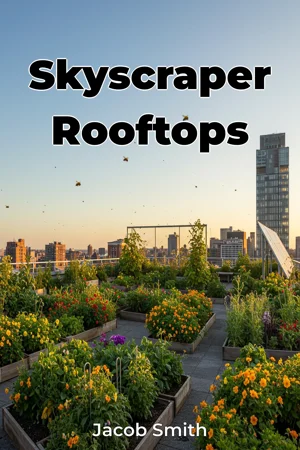
"Skyscraper Rooftops" unveils the untapped potential of urban rooftops as crucial spaces for urban sustainability and architectural innovation. Moving beyond mere functional areas, these elevated spaces are transforming into observatories, gardens, and hubs for sustainability projects. The book highlights how adapting rooftops contributes to urban agriculture, biodiversity, and the reduction of the urban heat island effect, while also exploring how these spaces can foster community engagement and enhance quality of life. The book progresses from introducing the "adaptive rooftop" concept and its design considerations to examining rooftop gardens and sustainability projects. Through case studies and data, it demonstrates the effectiveness of rooftop technologies in energy savings and carbon emission reduction. By presenting a solution-oriented approach, the book emphasizes the technical, economic, and social factors influencing successful rooftop transformations, offering urban planners and architects a roadmap for integrating these spaces into comprehensive urban planning strategies.
Book Details
ISBN
9788233975517
Publisher
Publifye AS
Your Licenses
You don't own any licenses for this book
Purchase a license below to unlock this book and download the EPUB.
Purchase License
Select a tier to unlock this book
Need bulk licensing?
Contact us for enterprise agreements.