
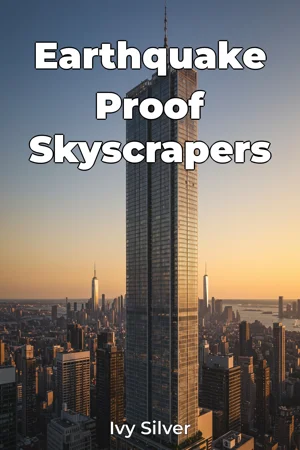
About This Book
How can we build cities that not only scrape the sky but also withstand the relentless forces of nature? "Earthquake Proof Skyscrapers" delves into the innovative engineering and architectural marvels that enable modern skyscrapers to stand tall in seismically active regions, ensuring the safety of their occupants. This book examines the critical intersection of technology and architectural design, offering insights into creating resilient urban environments. The book focuses on three central themes: seismic design principles, advanced materials and construction techniques, and real-world case studies of earthquake-resistant skyscrapers. Understanding seismic design principles is crucial for creating structures that can absorb and dissipate energy from earthquakes. Exploring specialized materials and construction methods is vital for enhancing a building's structural integrity and flexibility. Analyzing constructed skyscrapers demonstrates the practical application of theoretical concepts and reveals best practices in earthquake-resistant design. These topics offer a holistic perspective on how skyscrapers can be engineered to withstand seismic events. Historically, earthquake-resistant construction has evolved from rudimentary reinforcement methods to sophisticated, technology-driven solutions. Prior knowledge of basic structural engineering principles would be beneficial, though the book provides foundational explanations of key concepts. The central argument of "Earthquake Proof Skyscrapers" is that effective earthquake-resistant design requires a comprehensive integration of advanced engineering principles, innovative materials, and stringent construction practices. This approach is not merely about preventing collapse, but about ensuring the operational continuity of skyscrapers after a seismic event, minimizing economic losses and societal disruption. The book is structured to provide a clear and progressive understanding of earthquake-resistant skyscraper design. It begins with an introduction to fundamental concepts in seismology and structural dynamics. Following this, the book explores specific design strategies, such as base isolation, damping systems, and flexible structural frameworks. Subsequent sections present detailed analyses of various advanced materials, focusing on their performance characteristics under seismic loads. The book then uses several detailed case studies of skyscrapers in earthquake-prone regions, examining the design and performance of each building. Finally, the book looks at the future of earthquake-resistant skyscraper design, considering emerging technologies and research directions and the practical implications for urban planning and disaster resilience. The evidence presented in "Earthquake Proof Skyscrapers" is based on a combination of scientific research, engineering data, and case study analyses. Performance data from post-earthquake assessments, laboratory testing of materials, and computer simulations validate the effectiveness of the discussed design strategies. The book also draws from industry standards and best practices established by leading engineering organizations. This book connects to several interdisciplinary fields, including materials science, civil engineering, and urban planning. Materials science informs the development of high-performance construction materials. Civil engineering provides the structural analysis and design principles. Urban planning contextualizes the role of earthquake-resistant skyscrapers within broader city-wide resilience strategies. "Earthquake Proof Skyscrapers" takes a pragmatic approach, focusing on the practical application of engineering principles and real-world solutions. It emphasizes the importance of performance-based design, which prioritizes the ability of a building to meet specific performance objectives under seismic conditions. The target audience includes architects, structural engineers, construction professionals, and urban planners. Additionally, students and researchers in these fields will find this book a valuable resource. The book provides essential knowledge for anyone involved in the design, construction, or management of skyscrapers in seismically active areas. As a work of non-fiction in architecture and technology, this book adheres to the conventions of clear, factual reporting and rigorous analysis. It avoids speculative claims and grounds its arguments in empirical evidence. The book focuses primarily on the structural and engineering aspects of earthquake-resistant skyscraper design. While it acknowledges the importance of societal and economic factors, it does not delve deeply into these areas. The information presented in "Earthquake Proof Skyscrapers" can be applied directly to the design and construction of new skyscrapers, as well as the retrofitting of existing structures. It provides a framework for assessing seismic risk, selecting appropriate design strategies, and ensuring the safety and resilience of urban environments. The field of earthquake engineering involves ongoing debates about the optimal balance between cost, performance, and risk. This book addresses these debates by presenting a range of design options and evaluating their relative merits. It encourages a holistic approach to earthquake-resistant design that considers both technical and economic factors.
How can we build cities that not only scrape the sky but also withstand the relentless forces of nature? "Earthquake Proof Skyscrapers" delves into the innovative engineering and architectural marvels that enable modern skyscrapers to stand tall in seismically active regions, ensuring the safety of their occupants. This book examines the critical intersection of technology and architectural design, offering insights into creating resilient urban environments. The book focuses on three central themes: seismic design principles, advanced materials and construction techniques, and real-world case studies of earthquake-resistant skyscrapers. Understanding seismic design principles is crucial for creating structures that can absorb and dissipate energy from earthquakes. Exploring specialized materials and construction methods is vital for enhancing a building's structural integrity and flexibility. Analyzing constructed skyscrapers demonstrates the practical application of theoretical concepts and reveals best practices in earthquake-resistant design. These topics offer a holistic perspective on how skyscrapers can be engineered to withstand seismic events. Historically, earthquake-resistant construction has evolved from rudimentary reinforcement methods to sophisticated, technology-driven solutions. Prior knowledge of basic structural engineering principles would be beneficial, though the book provides foundational explanations of key concepts. The central argument of "Earthquake Proof Skyscrapers" is that effective earthquake-resistant design requires a comprehensive integration of advanced engineering principles, innovative materials, and stringent construction practices. This approach is not merely about preventing collapse, but about ensuring the operational continuity of skyscrapers after a seismic event, minimizing economic losses and societal disruption. The book is structured to provide a clear and progressive understanding of earthquake-resistant skyscraper design. It begins with an introduction to fundamental concepts in seismology and structural dynamics. Following this, the book explores specific design strategies, such as base isolation, damping systems, and flexible structural frameworks. Subsequent sections present detailed analyses of various advanced materials, focusing on their performance characteristics under seismic loads. The book then uses several detailed case studies of skyscrapers in earthquake-prone regions, examining the design and performance of each building. Finally, the book looks at the future of earthquake-resistant skyscraper design, considering emerging technologies and research directions and the practical implications for urban planning and disaster resilience. The evidence presented in "Earthquake Proof Skyscrapers" is based on a combination of scientific research, engineering data, and case study analyses. Performance data from post-earthquake assessments, laboratory testing of materials, and computer simulations validate the effectiveness of the discussed design strategies. The book also draws from industry standards and best practices established by leading engineering organizations. This book connects to several interdisciplinary fields, including materials science, civil engineering, and urban planning. Materials science informs the development of high-performance construction materials. Civil engineering provides the structural analysis and design principles. Urban planning contextualizes the role of earthquake-resistant skyscrapers within broader city-wide resilience strategies. "Earthquake Proof Skyscrapers" takes a pragmatic approach, focusing on the practical application of engineering principles and real-world solutions. It emphasizes the importance of performance-based design, which prioritizes the ability of a building to meet specific performance objectives under seismic conditions. The target audience includes architects, structural engineers, construction professionals, and urban planners. Additionally, students and researchers in these fields will find this book a valuable resource. The book provides essential knowledge for anyone involved in the design, construction, or management of skyscrapers in seismically active areas. As a work of non-fiction in architecture and technology, this book adheres to the conventions of clear, factual reporting and rigorous analysis. It avoids speculative claims and grounds its arguments in empirical evidence. The book focuses primarily on the structural and engineering aspects of earthquake-resistant skyscraper design. While it acknowledges the importance of societal and economic factors, it does not delve deeply into these areas. The information presented in "Earthquake Proof Skyscrapers" can be applied directly to the design and construction of new skyscrapers, as well as the retrofitting of existing structures. It provides a framework for assessing seismic risk, selecting appropriate design strategies, and ensuring the safety and resilience of urban environments. The field of earthquake engineering involves ongoing debates about the optimal balance between cost, performance, and risk. This book addresses these debates by presenting a range of design options and evaluating their relative merits. It encourages a holistic approach to earthquake-resistant design that considers both technical and economic factors.
"Earthquake Proof Skyscrapers" explores how innovative engineering and architectural design enable skyscrapers to withstand seismic activity, ensuring occupant safety and minimizing societal disruption. The book delves into seismic design principles, advanced materials, and real-world case studies to illustrate how these towering structures can be built to endure earthquakes. Historically, earthquake-resistant construction has advanced from basic methods to sophisticated, technology-driven solutions like base isolation and damping systems, highlighting the crucial role of structural engineering. The book emphasizes the integration of engineering principles, innovative materials, and stringent construction practices. It progresses from foundational concepts in seismology and structural dynamics to specific design strategies and analyses of advanced materials. Case studies of skyscrapers in earthquake-prone regions demonstrate real-world applications, showcasing how performance data from post-earthquake assessments and computer simulations validate design effectiveness. This book offers essential knowledge for architects, engineers, and urban planners involved in designing or managing skyscrapers in seismically active areas. By presenting a pragmatic approach focused on practical applications and performance-based design, "Earthquake Proof Skyscrapers" provides a valuable resource for creating resilient urban environments.
Book Details
ISBN
9788233975470
Publisher
Publifye AS
Your Licenses
You don't own any licenses for this book
Purchase a license below to unlock this book and download the EPUB.
Purchase License
Select a tier to unlock this book
Need bulk licensing?
Contact us for enterprise agreements.