
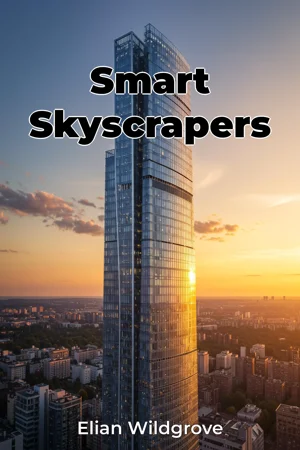
About This Book
Can skyscrapers become truly intelligent entities, responsive to the ever-changing needs of their occupants and the environment? "Smart Skyscrapers" explores the convergence of artificial intelligence, automation, and sustainable design principles in the creation of next-generation urban habitats. This book examines how these technologies are being integrated to optimize energy consumption, enhance building management, improve occupant comfort, and ultimately redefine urban living. These topics hold significant importance as cities worldwide grapple with increasing populations, resource constraints, and the urgent need to mitigate climate change and improve the lives of the citizens. To fully appreciate the potential of smart skyscrapers, it’s important to understand the evolution of skyscraper design, from early steel-framed structures to the contemporary focus on sustainability and human-centric design. The book assumes a basic understanding of architectural principles and urban planning, with brief accessible explanations of core AI and automation concepts provided where necessary. The central argument of "Smart Skyscrapers" posits that the successful integration of AI and automation is not merely a technological upgrade to existing buildings but a fundamental shift in how we design, construct, and interact with urban spaces. It further argues that this integration is crucial for creating truly sustainable and resilient cities capable of meeting the challenges of the 21st century. The book unfolds in several stages. First, it introduces the core concepts of smart building technology, including AI-driven building management systems, automated environmental controls, and intelligent security systems. It then examines the practical applications of these technologies in optimizing energy efficiency, reducing waste, and promoting sustainability. Major sections include case studies of pioneering smart skyscraper projects around the world, demonstrating both successes and challenges encountered during implementation. Next, the book delves into the human element, exploring how smart building technologies impact occupant experience, productivity, and well-being. Finally, the book concludes with a discussion of the future of smart skyscrapers, exploring emerging trends and potential challenges related to data security, privacy, and ethical considerations. The analysis presented relies on diverse sources, including architectural plans, energy consumption data, building performance simulations, and occupant surveys. It also draws from primary research conducted through interviews with architects, engineers, and building managers involved in smart skyscraper projects. "Smart Skyscrapers" connects to several disciplines, including computer science (AI algorithms, data analytics), environmental science (sustainable design, energy efficiency), and sociology (the impact of built environments on human behavior). These interdisciplinary connections enrich the analysis by providing a multidimensional perspective on the complexities of smart skyscraper design and operation. This book offers a unique perspective by emphasizing the holistic integration of technology, sustainability, and human-centric design. It moves beyond simply showcasing technological advancements to explore the broader implications of smart skyscrapers for urban environments and human society. Presented in a clear and accessible style suitable for both academic and professional readers, "Smart Skyscrapers" is targeted at architects, engineers, urban planners, building managers, and anyone interested in the future of urban development. It will be valuable to those seeking a comprehensive overview of smart building technologies and their potential to transform urban living. As a work of non-fiction, this book emphasizes factual accuracy, evidence-based arguments, and clear communication of complex concepts. The book's scope is limited to the integration of AI and automation in high-rise buildings, it does not delve into the broader aspects of smart cities or urban infrastructure beyond the building scale. The information presented has direct real-world applications for architects and engineers designing sustainable buildings, building managers seeking to optimize performance, and policymakers seeking to promote smart city initiatives. The design and implementation of smart building technologies raise important ethical questions. For example, the book addresses debates surrounding data privacy, algorithmic bias, and the potential for increased surveillance in smart environments. It also considers the potential impact of automation on the workforce and the need for proactive measures to mitigate job displacement.
Can skyscrapers become truly intelligent entities, responsive to the ever-changing needs of their occupants and the environment? "Smart Skyscrapers" explores the convergence of artificial intelligence, automation, and sustainable design principles in the creation of next-generation urban habitats. This book examines how these technologies are being integrated to optimize energy consumption, enhance building management, improve occupant comfort, and ultimately redefine urban living. These topics hold significant importance as cities worldwide grapple with increasing populations, resource constraints, and the urgent need to mitigate climate change and improve the lives of the citizens. To fully appreciate the potential of smart skyscrapers, it’s important to understand the evolution of skyscraper design, from early steel-framed structures to the contemporary focus on sustainability and human-centric design. The book assumes a basic understanding of architectural principles and urban planning, with brief accessible explanations of core AI and automation concepts provided where necessary. The central argument of "Smart Skyscrapers" posits that the successful integration of AI and automation is not merely a technological upgrade to existing buildings but a fundamental shift in how we design, construct, and interact with urban spaces. It further argues that this integration is crucial for creating truly sustainable and resilient cities capable of meeting the challenges of the 21st century. The book unfolds in several stages. First, it introduces the core concepts of smart building technology, including AI-driven building management systems, automated environmental controls, and intelligent security systems. It then examines the practical applications of these technologies in optimizing energy efficiency, reducing waste, and promoting sustainability. Major sections include case studies of pioneering smart skyscraper projects around the world, demonstrating both successes and challenges encountered during implementation. Next, the book delves into the human element, exploring how smart building technologies impact occupant experience, productivity, and well-being. Finally, the book concludes with a discussion of the future of smart skyscrapers, exploring emerging trends and potential challenges related to data security, privacy, and ethical considerations. The analysis presented relies on diverse sources, including architectural plans, energy consumption data, building performance simulations, and occupant surveys. It also draws from primary research conducted through interviews with architects, engineers, and building managers involved in smart skyscraper projects. "Smart Skyscrapers" connects to several disciplines, including computer science (AI algorithms, data analytics), environmental science (sustainable design, energy efficiency), and sociology (the impact of built environments on human behavior). These interdisciplinary connections enrich the analysis by providing a multidimensional perspective on the complexities of smart skyscraper design and operation. This book offers a unique perspective by emphasizing the holistic integration of technology, sustainability, and human-centric design. It moves beyond simply showcasing technological advancements to explore the broader implications of smart skyscrapers for urban environments and human society. Presented in a clear and accessible style suitable for both academic and professional readers, "Smart Skyscrapers" is targeted at architects, engineers, urban planners, building managers, and anyone interested in the future of urban development. It will be valuable to those seeking a comprehensive overview of smart building technologies and their potential to transform urban living. As a work of non-fiction, this book emphasizes factual accuracy, evidence-based arguments, and clear communication of complex concepts. The book's scope is limited to the integration of AI and automation in high-rise buildings, it does not delve into the broader aspects of smart cities or urban infrastructure beyond the building scale. The information presented has direct real-world applications for architects and engineers designing sustainable buildings, building managers seeking to optimize performance, and policymakers seeking to promote smart city initiatives. The design and implementation of smart building technologies raise important ethical questions. For example, the book addresses debates surrounding data privacy, algorithmic bias, and the potential for increased surveillance in smart environments. It also considers the potential impact of automation on the workforce and the need for proactive measures to mitigate job displacement.
"Smart Skyscrapers" investigates the integration of AI, automation, and sustainable design in modern architecture, focusing on how these technologies optimize energy use and enhance urban living. The book explores how smart building technology is being used to create more efficient and responsive urban habitats. For example, AI-driven building management systems can automatically adjust environmental controls based on occupancy and weather conditions, leading to significant energy savings. The book also examines architectural plans and building simulations to highlight the benefits of human-centric design. The book progresses by first introducing core concepts of smart building technology, then examining their application in optimizing energy efficiency and promoting sustainability. Case studies from around the world demonstrate both the successes and the challenges of implementing smart skyscraper projects. It uniquely emphasizes the holistic integration of technology, sustainability, and human-centric design, making it valuable for architects, engineers, and urban planners interested in the future of urban development.
Book Details
ISBN
9788233975449
Publisher
Publifye AS
Your Licenses
You don't own any licenses for this book
Purchase a license below to unlock this book and download the EPUB.
Purchase License
Select a tier to unlock this book
Need bulk licensing?
Contact us for enterprise agreements.