
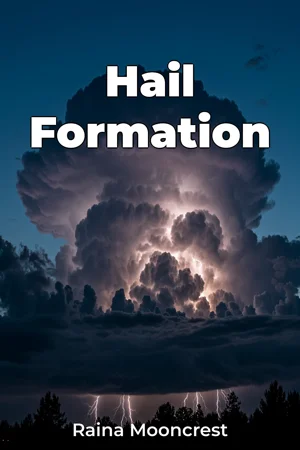
About This Book
Have you ever stopped to consider the incredible journey of a hailstone, from its icy beginnings high in the atmosphere to its eventual descent upon the earth? This book, *Hail Formation*, delves into the fascinating science behind these frozen projectiles, exploring how they develop inside thunderstorms and why some grow to surprisingly large sizes. Understanding these processes is not only a matter of scientific curiosity but also crucial for mitigating the impacts of severe weather events on agriculture, infrastructure, and public safety. *Hail Formation* addresses three key topics: the atmospheric conditions necessary for hail formation, the microphysical processes governing hailstone growth, and the factors contributing to variations in hailstone size and structure. The book's central argument posits that hail formation is a complex interplay of thermodynamics, cloud dynamics, and microphysics, with subtle variations in atmospheric conditions leading to significant differences in hailstone characteristics. To understand hail formation, some basic knowledge of meteorology is helpful. Topics include atmospheric stability, cloud formation processes, and thunderstorm dynamics. We begin by outlining the fundamental principles of atmospheric science before focusing specifically on the unique conditions that give rise to hailstorms. The book unfolds in a logical structure, starting with an introduction to the atmospheric environment conducive to hail development. This includes a discussion of supercooled water droplets, strong updrafts, and the role of atmospheric instability. It moves on to examine the microphysical processes within hailstorms, detailing how ice crystals form, collect supercooled water, and grow through accretion. It explores the complexities of wet and dry growth regimes and their influence on hailstone layering and density. Finally, we analyze the factors that govern hailstone size, including the strength and duration of updrafts, the availability of supercooled water, and the interactions between hailstones within the storm. *Hail Formation* supports its arguments with a wealth of data and research, drawing from radar observations, numerical weather models, laboratory experiments, and field studies of hailstorms. The unique approach involves integrating these diverse data sources to provide a comprehensive understanding of hail formation from both macroscopic and microscopic perspectives. This book connects to related fields such as climate science, atmospheric physics, and risk assessment. Understanding hail formation is essential for projecting future changes in hailstorm frequency and severity under different climate scenarios. The insights can be applied to improve weather forecasting models and develop more effective hail suppression techniques. *Hail Formation* adopts a fact-based, analytical tone, presenting information in a clear and accessible manner, avoiding jargon. The narrative is balanced, acknowledging areas of consensus and ongoing research. The target audience includes students and researchers in atmospheric science, meteorology, and related fields, as well as weather enthusiasts, insurance professionals, and anyone interested in learning more about severe weather phenomena. It offers valuable insights into the complex processes that shape our atmospheric environment and the hazards they can pose. As a work of non-fiction within the Earth Sciences and Geography genres, *Hail Formation* aims to provide a comprehensive, scientifically accurate, and up-to-date overview of the subject. It offers a detailed explanation of the processes involved while acknowledging the inherent uncertainties and complexities of atmospheric phenomena. The scope of the book is limited to the formation and growth of hailstones within thunderstorms; it does not delve into the social, economic, or political aspects of hailstorm impacts. The goal is to provide a focused and in-depth analysis of the meteorological processes involved. The insights from *Hail Formation* can be applied practically by readers in various ways. For meteorologists, it informs the development of better hail forecasting algorithms. For farmers and insurers, it provides a deeper understanding of hail risk. For weather enthusiasts, it offers a fascinating glimpse into the inner workings of thunderstorms. While much is known about hail formation, ongoing debates persist regarding the relative importance of different growth mechanisms, the role of ice nuclei, and the effectiveness of hail suppression efforts. *Hail Formation* addresses these controversies, presenting different perspectives and highlighting areas where further research is needed.
Have you ever stopped to consider the incredible journey of a hailstone, from its icy beginnings high in the atmosphere to its eventual descent upon the earth? This book, *Hail Formation*, delves into the fascinating science behind these frozen projectiles, exploring how they develop inside thunderstorms and why some grow to surprisingly large sizes. Understanding these processes is not only a matter of scientific curiosity but also crucial for mitigating the impacts of severe weather events on agriculture, infrastructure, and public safety. *Hail Formation* addresses three key topics: the atmospheric conditions necessary for hail formation, the microphysical processes governing hailstone growth, and the factors contributing to variations in hailstone size and structure. The book's central argument posits that hail formation is a complex interplay of thermodynamics, cloud dynamics, and microphysics, with subtle variations in atmospheric conditions leading to significant differences in hailstone characteristics. To understand hail formation, some basic knowledge of meteorology is helpful. Topics include atmospheric stability, cloud formation processes, and thunderstorm dynamics. We begin by outlining the fundamental principles of atmospheric science before focusing specifically on the unique conditions that give rise to hailstorms. The book unfolds in a logical structure, starting with an introduction to the atmospheric environment conducive to hail development. This includes a discussion of supercooled water droplets, strong updrafts, and the role of atmospheric instability. It moves on to examine the microphysical processes within hailstorms, detailing how ice crystals form, collect supercooled water, and grow through accretion. It explores the complexities of wet and dry growth regimes and their influence on hailstone layering and density. Finally, we analyze the factors that govern hailstone size, including the strength and duration of updrafts, the availability of supercooled water, and the interactions between hailstones within the storm. *Hail Formation* supports its arguments with a wealth of data and research, drawing from radar observations, numerical weather models, laboratory experiments, and field studies of hailstorms. The unique approach involves integrating these diverse data sources to provide a comprehensive understanding of hail formation from both macroscopic and microscopic perspectives. This book connects to related fields such as climate science, atmospheric physics, and risk assessment. Understanding hail formation is essential for projecting future changes in hailstorm frequency and severity under different climate scenarios. The insights can be applied to improve weather forecasting models and develop more effective hail suppression techniques. *Hail Formation* adopts a fact-based, analytical tone, presenting information in a clear and accessible manner, avoiding jargon. The narrative is balanced, acknowledging areas of consensus and ongoing research. The target audience includes students and researchers in atmospheric science, meteorology, and related fields, as well as weather enthusiasts, insurance professionals, and anyone interested in learning more about severe weather phenomena. It offers valuable insights into the complex processes that shape our atmospheric environment and the hazards they can pose. As a work of non-fiction within the Earth Sciences and Geography genres, *Hail Formation* aims to provide a comprehensive, scientifically accurate, and up-to-date overview of the subject. It offers a detailed explanation of the processes involved while acknowledging the inherent uncertainties and complexities of atmospheric phenomena. The scope of the book is limited to the formation and growth of hailstones within thunderstorms; it does not delve into the social, economic, or political aspects of hailstorm impacts. The goal is to provide a focused and in-depth analysis of the meteorological processes involved. The insights from *Hail Formation* can be applied practically by readers in various ways. For meteorologists, it informs the development of better hail forecasting algorithms. For farmers and insurers, it provides a deeper understanding of hail risk. For weather enthusiasts, it offers a fascinating glimpse into the inner workings of thunderstorms. While much is known about hail formation, ongoing debates persist regarding the relative importance of different growth mechanisms, the role of ice nuclei, and the effectiveness of hail suppression efforts. *Hail Formation* addresses these controversies, presenting different perspectives and highlighting areas where further research is needed.
"Hail Formation" delves into the atmospheric science behind these icy projectiles, explaining how hailstones develop within thunderstorms. It highlights the fact that hail formation is a complex interplay of thermodynamics, cloud dynamics, and microphysics. Subtle variations in atmospheric conditions can lead to significant differences in hailstone characteristics. The book emphasizes the importance of understanding these processes for mitigating the impacts of severe weather events. The book explores the atmospheric conditions necessary for hail formation, the microphysical processes governing hailstone growth, and the factors contributing to variations in hailstone size and structure. For example, supercooled water droplets and strong updrafts are critical. The book integrates radar observations, numerical weather models, laboratory experiments, and field studies providing a comprehensive understanding of hail formation from both macroscopic and microscopic perspectives. The book begins with the atmospheric environment conducive to hail development, progresses to examine the microphysical processes within hailstorms, and concludes by analyzing the factors that govern hailstone size. This Earth Sciences and Geography book adopts a fact-based, analytical tone, presenting information in a clear and accessible manner for weather enthusiasts, students, and researchers alike.
Book Details
ISBN
9788233975340
Publisher
Publifye AS
Your Licenses
You don't own any licenses for this book
Purchase a license below to unlock this book and download the EPUB.
Purchase License
Select a tier to unlock this book
Need bulk licensing?
Contact us for enterprise agreements.