
About This Book
Have you ever wondered how a seemingly clear sky can transform into a vortex of destruction in mere minutes? "Tornado Winds" delves into the heart of these powerful weather phenomena, exploring their formation, devastating impact, and the scientific methods used to classify and understand them. This exploration is critical because tornadoes pose a significant threat to life and property across the globe, making knowledge of their behavior essential for preparedness and safety. This book addresses several key areas. First, it examines the atmospheric conditions and processes that lead to tornado formation, scrutinizing the roles of supercell thunderstorms, wind shear, and temperature gradients. Second, it meticulously documents the destructive power of tornadoes, detailing the forces they exert and the types of damage they inflict on buildings, infrastructure, and natural environments. Third, it provides a comprehensive overview of the Enhanced Fujita (EF) Scale, explaining how scientists assess tornado intensity based on observed damage. Understanding tornadoes requires appreciating both their meteorological origins and their impact on society. Therefore, "Tornado Winds" provides a historical context of tornado research, tracing the evolution of scientific understanding from early observations to modern forecasting techniques. The key argument is that a deeper understanding of tornado dynamics and classification is crucial for improving forecasting accuracy, enhancing warning systems, and ultimately mitigating the risks associated with these violent storms. The book is structured in four distinct parts. It begins with an introduction to the basic principles of meteorology relevant to tornado formation, followed by a detailed examination of the conditions necessary for supercell thunderstorms to develop. The second section focuses on the mechanics of tornado formation within supercells, exploring the roles of mesocyclones, wall clouds, and the development of the tornado vortex. The third section provides a comprehensive overview of the EF Scale, detailing the damage indicators used to assess tornado intensity and the limitations of this classification system. Finally, the book addresses the implications of tornado research for forecasting, warning systems, and building codes, emphasizing the importance of community preparedness. The analysis presented relies on a synthesis of peer-reviewed scientific literature, government reports from agencies such as the National Weather Service (NWS) and the National Oceanic and Atmospheric Administration (NOAA), and case studies of significant tornado events. The book also incorporates data from field research, including damage surveys and meteorological observations collected during and after tornado outbreaks. "Tornado Winds" also touches on related disciplines such as engineering (examining the structural impact of high winds), sociology (exploring community responses to tornado threats), and climatology (investigating potential links between climate change and tornado frequency or intensity). This integrated approach enriches the understanding of tornadoes beyond their purely meteorological aspects. The book distinguishes itself by providing a blend of scientific rigor and accessibility, presenting complex meteorological concepts in a clear and engaging manner. The tone is informative and objective, avoiding sensationalism while conveying the seriousness of the topic. The aim is to empower readers with a comprehensive understanding of tornadoes, equipping them with the knowledge to interpret tornado warnings, assess risks, and take appropriate safety precautions. The target audience includes weather enthusiasts, students of meteorology and geography, emergency management professionals, and anyone living in tornado-prone regions. Knowledge seekers will find value in this book. As a work in the Nature, Earth Sciences, and Geography genres, "Tornado Winds" adheres to the conventions of factual accuracy, scientific rigor, and clear presentation of evidence. While it covers a broad range of topics related to tornado science, the book focuses primarily on the meteorological aspects of tornado formation, classification, and impact. It does not delve into the social or psychological impacts of tornadoes on individuals or communities in great depth, because that is beyond the book's intended scope. The information contained within "Tornado Winds" has real-world applications for homeowners, businesses, and communities. Understanding tornado risks can inform decisions about building design, emergency preparedness planning, and public education campaigns. While the scientific understanding of tornadoes has advanced significantly in recent years, there are still ongoing debates about the factors that influence tornado intensity, the predictability of tornado outbreaks, and the potential impacts of climate change on tornado activity. "Tornado Winds" acknowledges these uncertainties and highlights areas where further research is needed.
Have you ever wondered how a seemingly clear sky can transform into a vortex of destruction in mere minutes? "Tornado Winds" delves into the heart of these powerful weather phenomena, exploring their formation, devastating impact, and the scientific methods used to classify and understand them. This exploration is critical because tornadoes pose a significant threat to life and property across the globe, making knowledge of their behavior essential for preparedness and safety. This book addresses several key areas. First, it examines the atmospheric conditions and processes that lead to tornado formation, scrutinizing the roles of supercell thunderstorms, wind shear, and temperature gradients. Second, it meticulously documents the destructive power of tornadoes, detailing the forces they exert and the types of damage they inflict on buildings, infrastructure, and natural environments. Third, it provides a comprehensive overview of the Enhanced Fujita (EF) Scale, explaining how scientists assess tornado intensity based on observed damage. Understanding tornadoes requires appreciating both their meteorological origins and their impact on society. Therefore, "Tornado Winds" provides a historical context of tornado research, tracing the evolution of scientific understanding from early observations to modern forecasting techniques. The key argument is that a deeper understanding of tornado dynamics and classification is crucial for improving forecasting accuracy, enhancing warning systems, and ultimately mitigating the risks associated with these violent storms. The book is structured in four distinct parts. It begins with an introduction to the basic principles of meteorology relevant to tornado formation, followed by a detailed examination of the conditions necessary for supercell thunderstorms to develop. The second section focuses on the mechanics of tornado formation within supercells, exploring the roles of mesocyclones, wall clouds, and the development of the tornado vortex. The third section provides a comprehensive overview of the EF Scale, detailing the damage indicators used to assess tornado intensity and the limitations of this classification system. Finally, the book addresses the implications of tornado research for forecasting, warning systems, and building codes, emphasizing the importance of community preparedness. The analysis presented relies on a synthesis of peer-reviewed scientific literature, government reports from agencies such as the National Weather Service (NWS) and the National Oceanic and Atmospheric Administration (NOAA), and case studies of significant tornado events. The book also incorporates data from field research, including damage surveys and meteorological observations collected during and after tornado outbreaks. "Tornado Winds" also touches on related disciplines such as engineering (examining the structural impact of high winds), sociology (exploring community responses to tornado threats), and climatology (investigating potential links between climate change and tornado frequency or intensity). This integrated approach enriches the understanding of tornadoes beyond their purely meteorological aspects. The book distinguishes itself by providing a blend of scientific rigor and accessibility, presenting complex meteorological concepts in a clear and engaging manner. The tone is informative and objective, avoiding sensationalism while conveying the seriousness of the topic. The aim is to empower readers with a comprehensive understanding of tornadoes, equipping them with the knowledge to interpret tornado warnings, assess risks, and take appropriate safety precautions. The target audience includes weather enthusiasts, students of meteorology and geography, emergency management professionals, and anyone living in tornado-prone regions. Knowledge seekers will find value in this book. As a work in the Nature, Earth Sciences, and Geography genres, "Tornado Winds" adheres to the conventions of factual accuracy, scientific rigor, and clear presentation of evidence. While it covers a broad range of topics related to tornado science, the book focuses primarily on the meteorological aspects of tornado formation, classification, and impact. It does not delve into the social or psychological impacts of tornadoes on individuals or communities in great depth, because that is beyond the book's intended scope. The information contained within "Tornado Winds" has real-world applications for homeowners, businesses, and communities. Understanding tornado risks can inform decisions about building design, emergency preparedness planning, and public education campaigns. While the scientific understanding of tornadoes has advanced significantly in recent years, there are still ongoing debates about the factors that influence tornado intensity, the predictability of tornado outbreaks, and the potential impacts of climate change on tornado activity. "Tornado Winds" acknowledges these uncertainties and highlights areas where further research is needed.
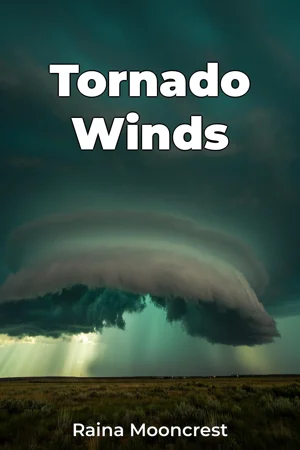
"Tornado Winds" offers an in-depth exploration of these destructive weather phenomena, detailing their formation, power, and classification. It explains how supercell thunderstorms and wind shear create the atmospheric conditions necessary for tornadoes. The book further examines the Enhanced Fujita (EF) Scale, the system scientists use to rate tornado intensity based on the damage they inflict. The book explains complex meteorological concepts in an accessible way, tracing the evolution of tornado research from early observations to modern forecasting. It emphasizes the importance of understanding tornado dynamics for improving forecasting accuracy and warning systems. Did you know that tornadoes can generate wind speeds exceeding 300 miles per hour, capable of causing catastrophic damage? Or that the EF Scale uses damage indicators to estimate wind speeds, even when direct measurements are unavailable? Structured in four parts, "Tornado Winds" begins with meteorological basics, moves into tornado formation within supercells, provides a comprehensive overview of the EF Scale, and concludes with implications for forecasting and preparedness. It synthesizes scientific literature, government reports, and case studies to provide a comprehensive understanding of these powerful forces of nature.
Book Details
ISBN
9788233975302
Publisher
Publifye AS
Your Licenses
You don't own any licenses for this book
Purchase a license below to unlock this book and download the EPUB.
Purchase License
Select a tier to unlock this book
Need bulk licensing?
Contact us for enterprise agreements.