
About This Book
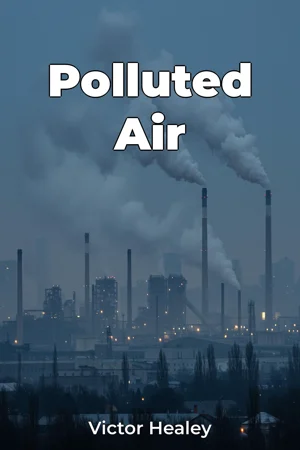
Are we unwittingly poisoning ourselves with every breath? This book, *Polluted Air*, delves into the pervasive issue of air pollution, exploring its origins, its far-reaching health consequences, and, crucially, offering concrete strategies for mitigation. It’s a critical examination, not just for environmental scientists, but for anyone concerned about their well-being and the future health of our planet. The central argument of *Polluted Air* asserts that air pollution, stemming from a complex interplay of industrial practices, transportation systems, and even individual behaviors, poses a significant and underappreciated threat to public health globally. Despite increased awareness, effective strategies for reducing pollution exposure at both individual community levels remain underdeveloped and underutilized. Understanding these sources and health impacts is the first step in formulating effective solutions. This book begins by establishing the historical and scientific context of air pollution. We trace its evolution from localized industrial incidents to a global crisis exacerbated by urbanization and climate change. We’ll examine the composition of polluted air, differentiating between primary pollutants emitted directly from sources and secondary pollutants formed through atmospheric reactions. A foundational understanding of atmospheric chemistry and particulate matter characteristics is presented, avoiding complex jargon to ensure accessibility. *Polluted Air* is structured into three major sections. The first section dissects the causes of air pollution, examining industrial emissions, vehicular exhaust, agricultural practices, and indoor air pollutants. Real-world case studies will illustrate how these sources manifest in different geographical locations, highlighting the disparities in air quality across the globe. The second section focuses on the health effects of air pollution, thoroughly investigating its impact on respiratory, cardiovascular, and neurological systems. Epidemiological studies and toxicological data will provide the evidence for these connections. This section will also address the particular vulnerability of children, the elderly, and individuals with pre-existing conditions. The final section explores strategies for reducing air pollution, encompassing technological solutions (e.g., emissions control technologies, renewable energy), policy interventions (e.g., air quality regulations, carbon pricing), and individual actions (e.g., reducing personal vehicle use, adopting cleaner energy sources). The evidence presented in this book draws upon a wide array of sources, including peer-reviewed scientific literature, government reports from organizations like the EPA and WHO, and data from air quality monitoring networks worldwide. Statistical analyses of air pollution trends and health outcomes will support the book’s claims, providing a rigorous and evidence-based assessment. Air pollution is not confined to a single discipline; it intersects with numerous fields. This book explores these connections, highlighting the economic implications of air pollution (e.g., healthcare costs, lost productivity), the social justice aspects (e.g., disproportionate exposure in low-income communities), the political and policy considerations (e.g., international agreements, regulatory frameworks), and impact on climate change. A core element of *Polluted Air* is providing practical guidance. Each chapter concludes with actionable steps that readers can take to reduce their exposure to air pollution and contribute to broader mitigation efforts. It avoids promoting radical or unrealistic lifestyle changes, concentrating on practical changes across various societal levels. *Polluted Air* is written in a clear and accessible style, making it suitable for a broad audience, including students, policymakers, environmental advocates, and concerned citizens. While addressing major global issues, the book maintains a manageable scope, focusing on key pollutants and their primary sources. The book acknowledges that debates persist regarding the precise contribution of different sources to overall air pollution levels and the effectiveness of certain mitigation strategies. These controversies are addressed fairly, presenting different perspectives and critically evaluating the available evidence. It is designed to inform readers about the complexities of air pollution, allowing them to form their own educated opinions. By illuminating the causes, consequences, and potential solutions, *Polluted Air* aims to empower readers to become informed advocates for cleaner air and healthier communities.
Are we unwittingly poisoning ourselves with every breath? This book, *Polluted Air*, delves into the pervasive issue of air pollution, exploring its origins, its far-reaching health consequences, and, crucially, offering concrete strategies for mitigation. It’s a critical examination, not just for environmental scientists, but for anyone concerned about their well-being and the future health of our planet. The central argument of *Polluted Air* asserts that air pollution, stemming from a complex interplay of industrial practices, transportation systems, and even individual behaviors, poses a significant and underappreciated threat to public health globally. Despite increased awareness, effective strategies for reducing pollution exposure at both individual community levels remain underdeveloped and underutilized. Understanding these sources and health impacts is the first step in formulating effective solutions. This book begins by establishing the historical and scientific context of air pollution. We trace its evolution from localized industrial incidents to a global crisis exacerbated by urbanization and climate change. We’ll examine the composition of polluted air, differentiating between primary pollutants emitted directly from sources and secondary pollutants formed through atmospheric reactions. A foundational understanding of atmospheric chemistry and particulate matter characteristics is presented, avoiding complex jargon to ensure accessibility. *Polluted Air* is structured into three major sections. The first section dissects the causes of air pollution, examining industrial emissions, vehicular exhaust, agricultural practices, and indoor air pollutants. Real-world case studies will illustrate how these sources manifest in different geographical locations, highlighting the disparities in air quality across the globe. The second section focuses on the health effects of air pollution, thoroughly investigating its impact on respiratory, cardiovascular, and neurological systems. Epidemiological studies and toxicological data will provide the evidence for these connections. This section will also address the particular vulnerability of children, the elderly, and individuals with pre-existing conditions. The final section explores strategies for reducing air pollution, encompassing technological solutions (e.g., emissions control technologies, renewable energy), policy interventions (e.g., air quality regulations, carbon pricing), and individual actions (e.g., reducing personal vehicle use, adopting cleaner energy sources). The evidence presented in this book draws upon a wide array of sources, including peer-reviewed scientific literature, government reports from organizations like the EPA and WHO, and data from air quality monitoring networks worldwide. Statistical analyses of air pollution trends and health outcomes will support the book’s claims, providing a rigorous and evidence-based assessment. Air pollution is not confined to a single discipline; it intersects with numerous fields. This book explores these connections, highlighting the economic implications of air pollution (e.g., healthcare costs, lost productivity), the social justice aspects (e.g., disproportionate exposure in low-income communities), the political and policy considerations (e.g., international agreements, regulatory frameworks), and impact on climate change. A core element of *Polluted Air* is providing practical guidance. Each chapter concludes with actionable steps that readers can take to reduce their exposure to air pollution and contribute to broader mitigation efforts. It avoids promoting radical or unrealistic lifestyle changes, concentrating on practical changes across various societal levels. *Polluted Air* is written in a clear and accessible style, making it suitable for a broad audience, including students, policymakers, environmental advocates, and concerned citizens. While addressing major global issues, the book maintains a manageable scope, focusing on key pollutants and their primary sources. The book acknowledges that debates persist regarding the precise contribution of different sources to overall air pollution levels and the effectiveness of certain mitigation strategies. These controversies are addressed fairly, presenting different perspectives and critically evaluating the available evidence. It is designed to inform readers about the complexities of air pollution, allowing them to form their own educated opinions. By illuminating the causes, consequences, and potential solutions, *Polluted Air* aims to empower readers to become informed advocates for cleaner air and healthier communities.
"Polluted Air" examines the pervasive issue of air pollution, asserting that it poses a significant threat to public health globally, stemming from industrial practices, transportation, and individual behaviors. Despite increased awareness, effective strategies for reducing exposure remain underdeveloped. For instance, did you know that air pollution disproportionately affects low-income communities, raising critical social justice issues? Or that pollutants are categorized as primary (emitted directly) and secondary (formed through atmospheric reactions)? The book explores the historical and scientific context of air pollution, tracing its evolution from localized incidents to a global crisis. It's structured into three sections, dissecting the causes (industrial emissions, vehicular exhaust), investigating health effects (respiratory, cardiovascular), and exploring mitigation strategies (emissions control technologies, policy interventions). The evidence is drawn from scientific literature and government reports. Each chapter concludes with actionable steps. Written in an accessible style, "Polluted Air" is suitable for a broad audience, including students, policymakers, and concerned citizens. The book fairly addresses debates regarding the contribution of different sources and the effectiveness of mitigation strategies. It empowers readers to become informed advocates for cleaner air and healthier communities.
Book Details
ISBN
9788233975203
Publisher
Publifye AS
Your Licenses
You don't own any licenses for this book
Purchase a license below to unlock this book and download the EPUB.
Purchase License
Select a tier to unlock this book
Need bulk licensing?
Contact us for enterprise agreements.