
About This Book
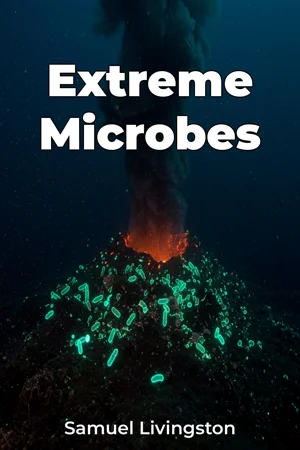
Have you ever wondered what life exists beyond the realm of what we consider habitable? "Extreme Microbes" plunges into the captivating world of microorganisms thriving in Earth’s most inhospitable environments, from the scalding depths of volcanic vents to the crushing pressures of deep-sea trenches. This exploration delves into their unique adaptations, ecological roles, and potential for revolutionizing our understanding of life itself and its possibilities elsewhere in the cosmos. The book will primarily focus on the biology and the earth sciences/geography of these microbes. The book addresses two key topics: the physiology and genetics of extremophiles and the geological and chemical context of their habitats. The importance of studying these microbes lies in their potential to unlock secrets about the origins of life, the limits of biological adaptation, and novel biotechnological applications. Understanding these microorganisms provides crucial insights into the conditions under which life can emerge and persist, both on our planet and potentially on others. To fully appreciate the capabilities of these organisms, the book provides necessary background in microbiology, genetics, and geochemistry. Readers will gain fundamental knowledge about cellular structure, DNA replication and repair mechanisms, and the chemical composition of extreme environments like hydrothermal vents and hypersaline lakes. The book's central argument is that extremophiles are not merely biological curiosities but essential components of our planet's ecosystems and valuable resources for scientific and technological innovation. By understanding their unique survival strategies, we can gain profound insights into the nature of life and its potential to adapt to a wide range of conditions. "Extreme Microbes" is structured to progressively build understanding of these unique life forms. It begins with an introduction to the concept of extremophiles and the definition of extreme environments. It then progresses to explore the major types of extremophiles, categorized by the environmental stressors they tolerate — thermophiles (heat-loving), halophiles (salt-loving), acidophiles (acid-loving), and piezophiles (pressure-loving). Each chapter will delve into the specific adaptations that allow these microbes to thrive, examining their unique enzymes, cell membrane structures, and DNA repair mechanisms. The book culminates in a discussion of the potential applications of extremophiles in biotechnology, including their use in industrial processes, bioremediation, and the search for extraterrestrial life. The information will draw upon extensive research from microbiology, genetics, and geochemistry, presenting data from field studies, laboratory experiments, and genomic analyses. Unique data sources, such as microbial samples collected from deep-sea submersibles and high-altitude volcanic lakes, will provide compelling evidence for the remarkable diversity and resilience of extremophiles. Methodologies discussed will include advanced DNA sequencing techniques, metabolic analyses, and microscopic imaging. This book also connects to astrobiology, exploring the possibility of life on other planets with extreme conditions. The book will connect to the disciplines of environmental science and biotechnology, where understanding microbial processes can help solve pressing environmental problems and drive innovation in various industries. These connections enhance the main arguments and encourage a more holistic understanding of the implications of extremophile research. "Extreme Microbes" offers a distinct perspective by integrating biological, chemical, and geological insights to provide a comprehensive understanding of extremophiles. This multidisciplinary approach sets it apart from other books that focus solely on the biological aspects of these organisms. The book adopts a professional yet accessible writing style, balancing scientific rigor with clear explanations and engaging examples. The intended audience includes students and researchers in microbiology, environmental science, astrobiology, and anyone curious about the limits of life on Earth. The book’s value lies in its ability to provide a comprehensive and up-to-date overview of a rapidly evolving and scientifically critical field. As a work of non-fiction, "Extreme Microbes" adheres to the highest standards of accuracy and objectivity, presenting information in a clear, factual manner and acknowledging any uncertainties or limitations in the current state of knowledge. The scope of the book is broad, encompassing a wide range of extremophiles and their environments, but it is intentionally limited to focusing on Earth-based examples. The real-world applications of this knowledge span multiple fields, from developing new biofuels and pharmaceuticals to understanding the potential for life on other planets. While the book presents the current scientific consensus, it also acknowledges ongoing debates about the precise role of extremophiles in shaping Earth's early environment and the nature of life beyond our planet.
Have you ever wondered what life exists beyond the realm of what we consider habitable? "Extreme Microbes" plunges into the captivating world of microorganisms thriving in Earth’s most inhospitable environments, from the scalding depths of volcanic vents to the crushing pressures of deep-sea trenches. This exploration delves into their unique adaptations, ecological roles, and potential for revolutionizing our understanding of life itself and its possibilities elsewhere in the cosmos. The book will primarily focus on the biology and the earth sciences/geography of these microbes. The book addresses two key topics: the physiology and genetics of extremophiles and the geological and chemical context of their habitats. The importance of studying these microbes lies in their potential to unlock secrets about the origins of life, the limits of biological adaptation, and novel biotechnological applications. Understanding these microorganisms provides crucial insights into the conditions under which life can emerge and persist, both on our planet and potentially on others. To fully appreciate the capabilities of these organisms, the book provides necessary background in microbiology, genetics, and geochemistry. Readers will gain fundamental knowledge about cellular structure, DNA replication and repair mechanisms, and the chemical composition of extreme environments like hydrothermal vents and hypersaline lakes. The book's central argument is that extremophiles are not merely biological curiosities but essential components of our planet's ecosystems and valuable resources for scientific and technological innovation. By understanding their unique survival strategies, we can gain profound insights into the nature of life and its potential to adapt to a wide range of conditions. "Extreme Microbes" is structured to progressively build understanding of these unique life forms. It begins with an introduction to the concept of extremophiles and the definition of extreme environments. It then progresses to explore the major types of extremophiles, categorized by the environmental stressors they tolerate — thermophiles (heat-loving), halophiles (salt-loving), acidophiles (acid-loving), and piezophiles (pressure-loving). Each chapter will delve into the specific adaptations that allow these microbes to thrive, examining their unique enzymes, cell membrane structures, and DNA repair mechanisms. The book culminates in a discussion of the potential applications of extremophiles in biotechnology, including their use in industrial processes, bioremediation, and the search for extraterrestrial life. The information will draw upon extensive research from microbiology, genetics, and geochemistry, presenting data from field studies, laboratory experiments, and genomic analyses. Unique data sources, such as microbial samples collected from deep-sea submersibles and high-altitude volcanic lakes, will provide compelling evidence for the remarkable diversity and resilience of extremophiles. Methodologies discussed will include advanced DNA sequencing techniques, metabolic analyses, and microscopic imaging. This book also connects to astrobiology, exploring the possibility of life on other planets with extreme conditions. The book will connect to the disciplines of environmental science and biotechnology, where understanding microbial processes can help solve pressing environmental problems and drive innovation in various industries. These connections enhance the main arguments and encourage a more holistic understanding of the implications of extremophile research. "Extreme Microbes" offers a distinct perspective by integrating biological, chemical, and geological insights to provide a comprehensive understanding of extremophiles. This multidisciplinary approach sets it apart from other books that focus solely on the biological aspects of these organisms. The book adopts a professional yet accessible writing style, balancing scientific rigor with clear explanations and engaging examples. The intended audience includes students and researchers in microbiology, environmental science, astrobiology, and anyone curious about the limits of life on Earth. The book’s value lies in its ability to provide a comprehensive and up-to-date overview of a rapidly evolving and scientifically critical field. As a work of non-fiction, "Extreme Microbes" adheres to the highest standards of accuracy and objectivity, presenting information in a clear, factual manner and acknowledging any uncertainties or limitations in the current state of knowledge. The scope of the book is broad, encompassing a wide range of extremophiles and their environments, but it is intentionally limited to focusing on Earth-based examples. The real-world applications of this knowledge span multiple fields, from developing new biofuels and pharmaceuticals to understanding the potential for life on other planets. While the book presents the current scientific consensus, it also acknowledges ongoing debates about the precise role of extremophiles in shaping Earth's early environment and the nature of life beyond our planet.
"Extreme Microbes" explores the fascinating realm of extremophiles, microorganisms that thrive in Earth's most hostile environments. These resilient life forms, found in places like scorching volcanic vents and highly saline lakes, challenge our understanding of habitability. Studying them offers insights into the origins of life and potential for extraterrestrial existence. Extremophiles possess unique adaptations, such as specialized enzymes and DNA repair mechanisms, enabling survival under extreme heat, pressure, salinity, or acidity. The book integrates biology, geochemistry, and Earth sciences to provide a complete picture of these microbes and their habitats. Progressing from an introduction to extremophiles, it categorizes them by the stressors they tolerate: thermophiles (heat-loving), halophiles (salt-loving), acidophiles (acid-loving), and piezophiles (pressure-loving). The book connects these microbial adaptations to astrobiology, biotechnology, and environmental science, highlighting their role in various industrial applications and bioremediation. It emphasizes their importance as valuable resources for scientific and technological innovation, offering a unique perspective by integrating biological, chemical, and geological insights.
Book Details
ISBN
9788233975111
Publisher
Publifye AS
Your Licenses
You don't own any licenses for this book
Purchase a license below to unlock this book and download the EPUB.
Purchase License
Select a tier to unlock this book
Need bulk licensing?
Contact us for enterprise agreements.