
About This Book
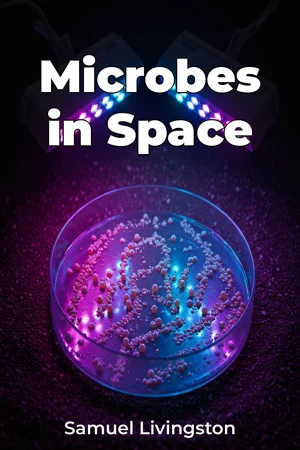
Could the key to future space exploration, and even the colonization of Mars, lie in understanding the microscopic world? "Microbes in Space" delves into the fascinating and often overlooked realm of microorganisms and their surprising role in space travel, astronaut health, and the potential for life beyond Earth. This book addresses the crucial need to understand how microbes adapt and survive in the extreme environments of space, and what implications this has for both human spaceflight and the search for extraterrestrial life. The book explores three core themes. First, it examines the remarkable resilience of microbes, detailing how they withstand the harsh radiation, vacuum, and microgravity conditions of space. Second, it investigates the complex interactions between microbes and astronauts, focusing on how spaceflight affects the human microbiome and, in turn, astronaut health, immunity, and psychological well-being. Finally, it considers the potential role of microbes in future Martian settlements, from terraforming to resource production. To fully appreciate the scope of this topic, a basic understanding of microbiology, genetics, and astrobiology is helpful, though the text is written to be accessible to a broad audience. The central argument of "Microbes in Space" is that microbes are not merely passive passengers in space exploration, but rather active participants that can significantly impact the success and sustainability of long-duration missions. Understanding and harnessing the power of these microscopic organisms is paramount to our future in space. The book begins by introducing the fundamental concepts of microbial life and the challenges posed by the space environment. It then progresses through several key areas: (1) an in-depth look at the mechanisms microbes use to survive in space, drawing on experiments conducted on the International Space Station and other spaceflight platforms; (2) an analysis of the effects of space travel on the human microbiome, including the implications for astronaut health and strategies for mitigating negative impacts; (3) an exploration of the potential for using microbes in bioregenerative life support systems, in-situ resource utilization on Mars, and even the terraforming of other planets. The book culminates by discussing the ethical considerations of introducing terrestrial life to other planets and outlining future research directions. The arguments presented in "Microbes in Space" are supported by a wealth of scientific evidence, including data from NASA, ESA, and other space agencies. The book draws on peer-reviewed research articles, experimental data from spaceflight missions, and genomic analyses of microbial communities. Unique data sources, such as long-term studies of astronaut microbiomes and experiments using simulated Martian environments, provide compelling evidence for the book's central claims. "Microbes in Space" is inherently interdisciplinary, connecting microbiology with space science, medicine, and environmental engineering. It highlights the links between microbial ecology and planetary science, demonstrating how the study of extremophiles on Earth can inform our understanding of potential life on other planets. It also considers the medical aspects of space travel, linking microbial changes to astronaut health outcomes. Furthermore, it touches on the ethical implications of planetary protection, thereby connecting science to philosophical considerations. This book offers a unique perspective by focusing specifically on the active role of microbes in shaping the space environment and influencing the success of space missions. It moves beyond viewing microbes as mere contaminants to recognizing their potential as valuable tools for space exploration and settlement. Written in a fact-based style, the book strives to maintain scientific accuracy while remaining accessible to a broad audience. It aims to inform, educate, and inspire readers to consider the profound implications of microbial life in space. The target audience includes students, researchers, space enthusiasts, and anyone interested in the intersection of biology and space exploration. "Microbes in Space" will be valuable to those seeking a comprehensive overview of the role of microorganisms in space, offering insights into the latest research and future directions in this exciting field. As a work of non-fiction science, "Microbes in Space" adheres to the genre's conventions of accuracy, objectivity, and evidence-based reasoning. It provides thorough citations and references to support its claims and acknowledges any limitations in current knowledge. The scope of the book is intentionally broad, covering a wide range of topics related to microbes in space. However, it does not delve deeply into the technical details of specific experiments or engineering designs. Rather, it focuses on providing a comprehensive overview of the field and highlighting key concepts and challenges. The information presented in "Microbes in Space" has numerous real-world applications. It can inform the development of new strategies for maintaining astronaut health during long-duration space missions, guide the design of bioregenerative life support systems, and even influence the search for extraterrestrial life. While the field of microbial space research is generally grounded in empirical data, there are ongoing debates regarding the extent to which microbes can survive and thrive in the harshest environments of space, and the potential risks associated with introducing terrestrial microbes to other planets. "Microbes in Space" addresses these debates, presenting different perspectives and highlighting areas of ongoing research and uncertainty.
Could the key to future space exploration, and even the colonization of Mars, lie in understanding the microscopic world? "Microbes in Space" delves into the fascinating and often overlooked realm of microorganisms and their surprising role in space travel, astronaut health, and the potential for life beyond Earth. This book addresses the crucial need to understand how microbes adapt and survive in the extreme environments of space, and what implications this has for both human spaceflight and the search for extraterrestrial life. The book explores three core themes. First, it examines the remarkable resilience of microbes, detailing how they withstand the harsh radiation, vacuum, and microgravity conditions of space. Second, it investigates the complex interactions between microbes and astronauts, focusing on how spaceflight affects the human microbiome and, in turn, astronaut health, immunity, and psychological well-being. Finally, it considers the potential role of microbes in future Martian settlements, from terraforming to resource production. To fully appreciate the scope of this topic, a basic understanding of microbiology, genetics, and astrobiology is helpful, though the text is written to be accessible to a broad audience. The central argument of "Microbes in Space" is that microbes are not merely passive passengers in space exploration, but rather active participants that can significantly impact the success and sustainability of long-duration missions. Understanding and harnessing the power of these microscopic organisms is paramount to our future in space. The book begins by introducing the fundamental concepts of microbial life and the challenges posed by the space environment. It then progresses through several key areas: (1) an in-depth look at the mechanisms microbes use to survive in space, drawing on experiments conducted on the International Space Station and other spaceflight platforms; (2) an analysis of the effects of space travel on the human microbiome, including the implications for astronaut health and strategies for mitigating negative impacts; (3) an exploration of the potential for using microbes in bioregenerative life support systems, in-situ resource utilization on Mars, and even the terraforming of other planets. The book culminates by discussing the ethical considerations of introducing terrestrial life to other planets and outlining future research directions. The arguments presented in "Microbes in Space" are supported by a wealth of scientific evidence, including data from NASA, ESA, and other space agencies. The book draws on peer-reviewed research articles, experimental data from spaceflight missions, and genomic analyses of microbial communities. Unique data sources, such as long-term studies of astronaut microbiomes and experiments using simulated Martian environments, provide compelling evidence for the book's central claims. "Microbes in Space" is inherently interdisciplinary, connecting microbiology with space science, medicine, and environmental engineering. It highlights the links between microbial ecology and planetary science, demonstrating how the study of extremophiles on Earth can inform our understanding of potential life on other planets. It also considers the medical aspects of space travel, linking microbial changes to astronaut health outcomes. Furthermore, it touches on the ethical implications of planetary protection, thereby connecting science to philosophical considerations. This book offers a unique perspective by focusing specifically on the active role of microbes in shaping the space environment and influencing the success of space missions. It moves beyond viewing microbes as mere contaminants to recognizing their potential as valuable tools for space exploration and settlement. Written in a fact-based style, the book strives to maintain scientific accuracy while remaining accessible to a broad audience. It aims to inform, educate, and inspire readers to consider the profound implications of microbial life in space. The target audience includes students, researchers, space enthusiasts, and anyone interested in the intersection of biology and space exploration. "Microbes in Space" will be valuable to those seeking a comprehensive overview of the role of microorganisms in space, offering insights into the latest research and future directions in this exciting field. As a work of non-fiction science, "Microbes in Space" adheres to the genre's conventions of accuracy, objectivity, and evidence-based reasoning. It provides thorough citations and references to support its claims and acknowledges any limitations in current knowledge. The scope of the book is intentionally broad, covering a wide range of topics related to microbes in space. However, it does not delve deeply into the technical details of specific experiments or engineering designs. Rather, it focuses on providing a comprehensive overview of the field and highlighting key concepts and challenges. The information presented in "Microbes in Space" has numerous real-world applications. It can inform the development of new strategies for maintaining astronaut health during long-duration space missions, guide the design of bioregenerative life support systems, and even influence the search for extraterrestrial life. While the field of microbial space research is generally grounded in empirical data, there are ongoing debates regarding the extent to which microbes can survive and thrive in the harshest environments of space, and the potential risks associated with introducing terrestrial microbes to other planets. "Microbes in Space" addresses these debates, presenting different perspectives and highlighting areas of ongoing research and uncertainty.
"Microbes in Space" explores the vital role of microorganisms in space exploration, astronaut health, and the potential for extraterrestrial life. It highlights the resilience of microbes in extreme space environments, such as their ability to withstand intense radiation, which is crucial for long-duration missions. The book also examines how spaceflight impacts the human microbiome, affecting astronaut immunity and psychological well-being, illustrating how these microscopic organisms are active participants in space missions, not just passive entities. The book progresses from fundamental concepts of microbial life to in-depth analyses of microbial survival mechanisms, the effects on the human microbiome during space travel and potential applications for bioregenerative life support and terraforming. Furthermore, the book discusses the ethical issues associated with introducing life from Earth to other planets. By focusing on the active role of microbes, "Microbes in Space" offers a unique perspective, demonstrating their potential as valuable instruments for space exploration and settlement, and is supported by real-world data from space agencies and research.
Book Details
ISBN
9788233975005
Publisher
Publifye AS
Your Licenses
You don't own any licenses for this book
Purchase a license below to unlock this book and download the EPUB.
Purchase License
Select a tier to unlock this book
Need bulk licensing?
Contact us for enterprise agreements.