
About This Book
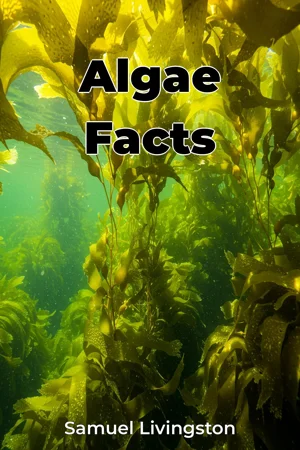
Did you know that the air you breathe is, in part, thanks to microscopic organisms living in the ocean? "Algae Facts" dives into the world of these often-overlooked life forms, revealing their crucial role in global ecosystems and their potential to revolutionize various industries. This book explores algae, focusing on their biology, ecological importance, and practical applications. This book addresses three key topics. First, it details the diverse biology of algae, from single-celled phytoplankton to massive kelp forests, explaining their unique photosynthetic processes and cellular structures. Second, it illuminates their ecological significance as primary producers in aquatic food webs and major contributors to global oxygen production. Third, it examines the growing field of algal biotechnology, investigating their potential in biofuel production, wastewater treatment, and even human nutrition. Understanding algae requires some basic familiarity with biology and ecology. The book provides essential background information on photosynthesis, nutrient cycles, and food web dynamics, ensuring the concepts are accessible to a broad audience. The central argument of "Algae Facts" is that algae are not simply primitive plants but rather highly diverse and adaptable organisms that are essential for maintaining planetary health and offer sustainable solutions for a growing global population. This argument challenges the common perception of algae as merely pond scum, instead, positioning them as vital players in both ecological balance and technological innovation. The book unfolds in a logical progression. It begins by introducing the basic biology and classification of algae, followed by an exploration of their ecological roles in various aquatic environments. Subsequently, the book delves into the potential of algae in biotechnology, examining specific applications and case studies. It culminates with a discussion of the challenges and opportunities associated with large-scale algal cultivation and utilization. To support its arguments, "Algae Facts" presents a wide array of evidence, including scientific studies, experimental data, and real-world examples. It draws upon research from fields such as marine biology, environmental science, and biotechnology, providing a comprehensive and interdisciplinary perspective. The book's content relates to several other fields, including climate science, environmental engineering, and public health. Understanding the role of algae in carbon sequestration is crucial for addressing climate change. Furthermore, algal-based wastewater treatment offers a sustainable approach to managing water resources. Finally, the potential of algae as a source of novel pharmaceuticals connects directly to advancements in public health. "Algae Facts" is a valuable resource for students, researchers, policymakers, and anyone interested in learning more about these remarkable organisms and their potential to shape a more sustainable future. It appeals to individuals seeking to understand the intersection of science, technology, and environmental stewardship. The writing style maintains a balance between scientific accuracy and accessibility, making complex concepts understandable to a broad audience. The book is grounded in the conventions of scientific writing to maintain the genre. The scope of "Algae Facts" is intentionally broad, covering a wide range of algal species and their applications. However, it does not delve into highly specialized areas such as algal genetics or advanced biochemical engineering, which would be beyond the scope of an introductory text. The information can be applied in policy decisions related to renewable energy, environmental conservation, and resource management. Readers can also gain insight into how they can support sustainable practices and contribute to a more environmentally conscious society. While the potential benefits of algae are widely recognized, there are ongoing debates regarding the economic viability and environmental sustainability of large-scale algal cultivation. "Algae Facts" addresses these controversies, presenting different perspectives and highlighting areas for further research and development.
Did you know that the air you breathe is, in part, thanks to microscopic organisms living in the ocean? "Algae Facts" dives into the world of these often-overlooked life forms, revealing their crucial role in global ecosystems and their potential to revolutionize various industries. This book explores algae, focusing on their biology, ecological importance, and practical applications. This book addresses three key topics. First, it details the diverse biology of algae, from single-celled phytoplankton to massive kelp forests, explaining their unique photosynthetic processes and cellular structures. Second, it illuminates their ecological significance as primary producers in aquatic food webs and major contributors to global oxygen production. Third, it examines the growing field of algal biotechnology, investigating their potential in biofuel production, wastewater treatment, and even human nutrition. Understanding algae requires some basic familiarity with biology and ecology. The book provides essential background information on photosynthesis, nutrient cycles, and food web dynamics, ensuring the concepts are accessible to a broad audience. The central argument of "Algae Facts" is that algae are not simply primitive plants but rather highly diverse and adaptable organisms that are essential for maintaining planetary health and offer sustainable solutions for a growing global population. This argument challenges the common perception of algae as merely pond scum, instead, positioning them as vital players in both ecological balance and technological innovation. The book unfolds in a logical progression. It begins by introducing the basic biology and classification of algae, followed by an exploration of their ecological roles in various aquatic environments. Subsequently, the book delves into the potential of algae in biotechnology, examining specific applications and case studies. It culminates with a discussion of the challenges and opportunities associated with large-scale algal cultivation and utilization. To support its arguments, "Algae Facts" presents a wide array of evidence, including scientific studies, experimental data, and real-world examples. It draws upon research from fields such as marine biology, environmental science, and biotechnology, providing a comprehensive and interdisciplinary perspective. The book's content relates to several other fields, including climate science, environmental engineering, and public health. Understanding the role of algae in carbon sequestration is crucial for addressing climate change. Furthermore, algal-based wastewater treatment offers a sustainable approach to managing water resources. Finally, the potential of algae as a source of novel pharmaceuticals connects directly to advancements in public health. "Algae Facts" is a valuable resource for students, researchers, policymakers, and anyone interested in learning more about these remarkable organisms and their potential to shape a more sustainable future. It appeals to individuals seeking to understand the intersection of science, technology, and environmental stewardship. The writing style maintains a balance between scientific accuracy and accessibility, making complex concepts understandable to a broad audience. The book is grounded in the conventions of scientific writing to maintain the genre. The scope of "Algae Facts" is intentionally broad, covering a wide range of algal species and their applications. However, it does not delve into highly specialized areas such as algal genetics or advanced biochemical engineering, which would be beyond the scope of an introductory text. The information can be applied in policy decisions related to renewable energy, environmental conservation, and resource management. Readers can also gain insight into how they can support sustainable practices and contribute to a more environmentally conscious society. While the potential benefits of algae are widely recognized, there are ongoing debates regarding the economic viability and environmental sustainability of large-scale algal cultivation. "Algae Facts" addresses these controversies, presenting different perspectives and highlighting areas for further research and development.
"Algae Facts" explores the fascinating world of algae, highlighting their critical roles in both ecological and biotechnological domains. These organisms, ranging from microscopic phytoplankton to massive kelp forests, are essential for aquatic ecosystems and global oxygen production. Their unique photosynthetic processes drive nutrient cycles and underpin complex food webs. The book delves into algal biotechnology, showcasing algae's potential in biofuel production and wastewater treatment, as well as their value in human nutrition. It emphasizes that algae are not merely pond scum but vital organisms offering sustainable solutions for a growing population. The book begins with the basic biology and classification of algae, progresses through their ecological roles, and culminates in an examination of their biotechnological applications, supported by scientific studies and real-world examples.
Book Details
ISBN
9788233974893
Publisher
Publifye AS
Your Licenses
You don't own any licenses for this book
Purchase a license below to unlock this book and download the EPUB.
Purchase License
Select a tier to unlock this book
Need bulk licensing?
Contact us for enterprise agreements.