
About This Book
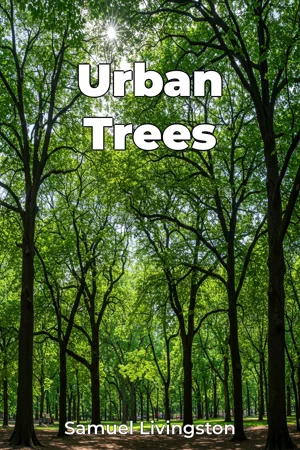
Have you ever considered the silent, green workforce operating within our cities, tirelessly contributing to our well-being? "Urban Trees" delves into the multifaceted role of trees in the urban environment, examining how they are not merely aesthetic additions but vital components of urban infrastructure. This book explores how trees improve air quality, mitigate pollution, and provide essential shade, contributing to healthier, more sustainable urban living. The central argument of "Urban Trees" is that integrating trees strategically into urban planning is crucial for building resilient and livable cities. This argument is supported by a synthesis of ecological science, urban planning principles, and public health research, demonstrating the tangible benefits of urban forestry. We assert that trees are an underutilized resource with the potential to address some of the most pressing challenges facing urban populations today, from climate change to public health crises. This book begins by establishing the ecological context, explaining how trees function biologically and interact with their environment. We review the fundamental biological processes of trees, such as photosynthesis and transpiration, and how these processes contribute to carbon sequestration and temperature regulation. Following the introduction, the book unfolds in three major sections. First, it explores the environmental benefits of urban trees. We present evidence on how trees filter air pollutants, reduce stormwater runoff, and cool urban heat islands. This section draws upon scientific studies and real-world examples to quantify these benefits and illustrate their impact on urban ecosystems. Second, the book examines the social and economic dimensions of urban forestry. We delve into how trees contribute to improved mental and physical health, enhance property values, and foster community cohesion. This section incorporates insights from sociology, economics, and public health, providing a holistic understanding of the value of urban trees. Third, the book addresses the practical aspects of urban tree management. We explore best practices for selecting, planting, and maintaining trees in urban environments, with a focus on maximizing their environmental and social benefits. This section includes case studies of successful urban forestry initiatives from around the world, offering practical guidance for urban planners, policymakers, and community organizations. Throughout the book, we present data from a variety of sources, including peer-reviewed scientific articles, government reports, and original research. We also draw upon case studies of cities that have successfully integrated trees into their urban planning strategies. Our methodologies include quantitative analysis of environmental data, qualitative analysis of social surveys, and comparative analysis of urban forestry policies. "Urban Trees" has strong interdisciplinary connections. It touches on environmental science by explaining pollution control, urban planning by examining urban design, and public health by exploring stress from urban environments. These connections highlight the far-reaching implications of urban forestry. A key element of this book involves its focus on evidence-based decision-making. We emphasize the importance of using scientific data to inform urban forestry policies and practices, ensuring that trees are used in the most effective and efficient ways possible. We aim to equip readers with the knowledge and tools they need to advocate for and implement sustainable urban forestry initiatives in their own communities. Written in an accessible and engaging style, "Urban Trees" is intended for a broad audience, including urban planners, policymakers, environmental advocates, landscape architects, and anyone interested in learning more about the role of trees in creating healthier, more sustainable cities. This book's scope is limited to the role of trees within urban areas, specifically excluding forests and rural environments. The information presented in "Urban Trees" has numerous real-world applications. For instance, city planners can use the data on air pollution reduction to design urban green spaces that mitigate the effects of traffic pollution. Landscape architects can use the information on tree selection to choose species that are well-suited to the local climate and soil conditions. Community organizations can use the insights on social and economic benefits to advocate for increased investment in urban forestry. One ongoing debate in the field of urban forestry is the relative importance of different tree species. Some argue that native species are always the best choice, while others contend that non-native species can provide valuable ecosystem services. "Urban Trees" addresses this debate by presenting a nuanced perspective, acknowledging the importance of both native and non-native species and emphasizing the need to select trees based on their specific characteristics and the unique conditions of the urban environment.
Have you ever considered the silent, green workforce operating within our cities, tirelessly contributing to our well-being? "Urban Trees" delves into the multifaceted role of trees in the urban environment, examining how they are not merely aesthetic additions but vital components of urban infrastructure. This book explores how trees improve air quality, mitigate pollution, and provide essential shade, contributing to healthier, more sustainable urban living. The central argument of "Urban Trees" is that integrating trees strategically into urban planning is crucial for building resilient and livable cities. This argument is supported by a synthesis of ecological science, urban planning principles, and public health research, demonstrating the tangible benefits of urban forestry. We assert that trees are an underutilized resource with the potential to address some of the most pressing challenges facing urban populations today, from climate change to public health crises. This book begins by establishing the ecological context, explaining how trees function biologically and interact with their environment. We review the fundamental biological processes of trees, such as photosynthesis and transpiration, and how these processes contribute to carbon sequestration and temperature regulation. Following the introduction, the book unfolds in three major sections. First, it explores the environmental benefits of urban trees. We present evidence on how trees filter air pollutants, reduce stormwater runoff, and cool urban heat islands. This section draws upon scientific studies and real-world examples to quantify these benefits and illustrate their impact on urban ecosystems. Second, the book examines the social and economic dimensions of urban forestry. We delve into how trees contribute to improved mental and physical health, enhance property values, and foster community cohesion. This section incorporates insights from sociology, economics, and public health, providing a holistic understanding of the value of urban trees. Third, the book addresses the practical aspects of urban tree management. We explore best practices for selecting, planting, and maintaining trees in urban environments, with a focus on maximizing their environmental and social benefits. This section includes case studies of successful urban forestry initiatives from around the world, offering practical guidance for urban planners, policymakers, and community organizations. Throughout the book, we present data from a variety of sources, including peer-reviewed scientific articles, government reports, and original research. We also draw upon case studies of cities that have successfully integrated trees into their urban planning strategies. Our methodologies include quantitative analysis of environmental data, qualitative analysis of social surveys, and comparative analysis of urban forestry policies. "Urban Trees" has strong interdisciplinary connections. It touches on environmental science by explaining pollution control, urban planning by examining urban design, and public health by exploring stress from urban environments. These connections highlight the far-reaching implications of urban forestry. A key element of this book involves its focus on evidence-based decision-making. We emphasize the importance of using scientific data to inform urban forestry policies and practices, ensuring that trees are used in the most effective and efficient ways possible. We aim to equip readers with the knowledge and tools they need to advocate for and implement sustainable urban forestry initiatives in their own communities. Written in an accessible and engaging style, "Urban Trees" is intended for a broad audience, including urban planners, policymakers, environmental advocates, landscape architects, and anyone interested in learning more about the role of trees in creating healthier, more sustainable cities. This book's scope is limited to the role of trees within urban areas, specifically excluding forests and rural environments. The information presented in "Urban Trees" has numerous real-world applications. For instance, city planners can use the data on air pollution reduction to design urban green spaces that mitigate the effects of traffic pollution. Landscape architects can use the information on tree selection to choose species that are well-suited to the local climate and soil conditions. Community organizations can use the insights on social and economic benefits to advocate for increased investment in urban forestry. One ongoing debate in the field of urban forestry is the relative importance of different tree species. Some argue that native species are always the best choice, while others contend that non-native species can provide valuable ecosystem services. "Urban Trees" addresses this debate by presenting a nuanced perspective, acknowledging the importance of both native and non-native species and emphasizing the need to select trees based on their specific characteristics and the unique conditions of the urban environment.
"Urban Trees" explores the vital role of trees in our cities, arguing they are essential infrastructure, not mere decorations. The book dives into how urban forestry contributes to healthier and more sustainable urban environments, emphasizing the importance of integrating trees strategically into urban planning. Trees, for instance, act as natural air filters, mitigating pollution and improving air quality, while their shade helps combat the urban heat island effect. The book progresses by first establishing the ecological context, detailing how trees function biologically and interact with their environment. It then examines the environmental, social, and economic dimensions of urban forestry, showcasing benefits like improved mental health and increased property values. Finally, it addresses practical aspects of tree management, offering best practices for selection, planting, and maintenance. By presenting evidence-based decision-making, "Urban Trees" aims to equip readers with the knowledge needed to advocate for sustainable urban forestry initiatives, making it a valuable resource for urban planners, policymakers, and environmental advocates.
Book Details
ISBN
9788233974824
Publisher
Publifye AS
Your Licenses
You don't own any licenses for this book
Purchase a license below to unlock this book and download the EPUB.
Purchase License
Select a tier to unlock this book
Need bulk licensing?
Contact us for enterprise agreements.