
About This Book
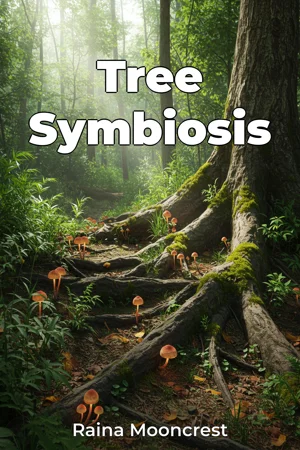
Did you know that trees, seemingly solitary giants, are actually deeply interconnected beings, relying on complex partnerships for their very survival? "Tree Symbiosis" unveils the hidden world of cooperation between trees, fungi, bacteria, and other plants, revealing how these intricate relationships shape forests and, ultimately, the planet. This book explores the vital roles of mycorrhizal networks, nitrogen-fixing bacteria, and inter-plant communication in ensuring the health and resilience of our world's forests. Understanding these symbioses is crucial because it sheds light on the fundamental processes that drive forest ecosystems, impacting everything from carbon sequestration to biodiversity. We'll delve into the historical context of our understanding of tree interactions, tracing the evolution of scientific thought from early observations of nutrient cycling to the groundbreaking discoveries of mycorrhizal networks. We'll examine the social context, including the current challenges facing forests due to deforestation, climate change, and unsustainable practices, and how an understanding of symbiosis can inform more effective conservation strategies. The central argument of "Tree Symbiosis" is that cooperative relationships are not merely beneficial side effects but are, in fact, essential drivers of forest health and stability. By understanding and promoting these symbioses, we can develop more effective strategies for forest conservation and restoration. The book is structured to provide a comprehensive overview of the subject. First, we introduce the key concepts of symbiosis, mutualism, commensalism, and parasitism, setting the stage for a deeper exploration of specific tree partnerships. Then, we focus on mycorrhizal networks, detailing how fungi connect individual trees and facilitate the exchange of nutrients and information. Next, we examine the role of nitrogen-fixing bacteria in providing trees with essential nitrogen, a limiting nutrient in many forest ecosystems. We will explore the evidence for inter-plant communication, examining how trees use chemical signals to warn each other of threats and coordinate their defense responses. Finally, we explore the practical implications of understanding tree symbiosis, discussing how this knowledge can be applied to sustainable forestry practices, reforestation efforts, and the conservation of endangered species. This book will culminate in a discussion of how a deeper appreciation for these relationships can influence our broader understanding of ecological systems. "Tree Symbiosis" draws upon a wealth of scientific evidence, including experimental studies, field observations, and genomic analyses. It integrates data from diverse sources, such as soil analysis, plant physiology studies, and ecological modeling. This book connects to several other fields, including soil science, microbial ecology, and climate science. By integrating perspectives from these disciplines, "Tree Symbiosis" provides a more holistic understanding of forest ecosystems. The study of tree symbiosis is inherently linked to fields such as evolutionary biology and conservation biology, highlighting the evolutionary advantages of cooperation and providing strategies for preserving biodiversity in the face of environmental change. This book offers a unique perspective by emphasizing the importance of cooperation in a world often focused on competition. It challenges the traditional view of forests as collections of individual trees, presenting them instead as interconnected communities. Written in a clear and accessible style, "Tree Symbiosis" is intended for a broad audience, including students, researchers, policymakers, and anyone interested in learning more about the natural world. It will appeal to readers who enjoy nature writing, popular science books, and environmental topics. The book adheres to the conventions of the science genre, emphasizing factual accuracy, clear explanations, and evidence-based arguments. The scope of the book is limited to the symbiotic relationships of trees, focusing primarily on interactions within forest ecosystems. While it touches on the broader implications of these interactions for the global environment, it does not delve into other ecosystems in detail. The information in "Tree Symbiosis" can be applied in various ways, from informing sustainable forestry practices to promoting citizen science initiatives. Readers will gain a deeper appreciation for the complexity and interconnectedness of forests, which can inspire them to take action to protect these vital ecosystems. While the importance of tree symbiosis is increasingly recognized, there are still some ongoing debates within the scientific community. For example, the extent to which trees actively "choose" their fungal partners remains a topic of discussion. "Tree Symbiosis" addresses these controversies and presents different perspectives, allowing readers to form their own informed opinions.
Did you know that trees, seemingly solitary giants, are actually deeply interconnected beings, relying on complex partnerships for their very survival? "Tree Symbiosis" unveils the hidden world of cooperation between trees, fungi, bacteria, and other plants, revealing how these intricate relationships shape forests and, ultimately, the planet. This book explores the vital roles of mycorrhizal networks, nitrogen-fixing bacteria, and inter-plant communication in ensuring the health and resilience of our world's forests. Understanding these symbioses is crucial because it sheds light on the fundamental processes that drive forest ecosystems, impacting everything from carbon sequestration to biodiversity. We'll delve into the historical context of our understanding of tree interactions, tracing the evolution of scientific thought from early observations of nutrient cycling to the groundbreaking discoveries of mycorrhizal networks. We'll examine the social context, including the current challenges facing forests due to deforestation, climate change, and unsustainable practices, and how an understanding of symbiosis can inform more effective conservation strategies. The central argument of "Tree Symbiosis" is that cooperative relationships are not merely beneficial side effects but are, in fact, essential drivers of forest health and stability. By understanding and promoting these symbioses, we can develop more effective strategies for forest conservation and restoration. The book is structured to provide a comprehensive overview of the subject. First, we introduce the key concepts of symbiosis, mutualism, commensalism, and parasitism, setting the stage for a deeper exploration of specific tree partnerships. Then, we focus on mycorrhizal networks, detailing how fungi connect individual trees and facilitate the exchange of nutrients and information. Next, we examine the role of nitrogen-fixing bacteria in providing trees with essential nitrogen, a limiting nutrient in many forest ecosystems. We will explore the evidence for inter-plant communication, examining how trees use chemical signals to warn each other of threats and coordinate their defense responses. Finally, we explore the practical implications of understanding tree symbiosis, discussing how this knowledge can be applied to sustainable forestry practices, reforestation efforts, and the conservation of endangered species. This book will culminate in a discussion of how a deeper appreciation for these relationships can influence our broader understanding of ecological systems. "Tree Symbiosis" draws upon a wealth of scientific evidence, including experimental studies, field observations, and genomic analyses. It integrates data from diverse sources, such as soil analysis, plant physiology studies, and ecological modeling. This book connects to several other fields, including soil science, microbial ecology, and climate science. By integrating perspectives from these disciplines, "Tree Symbiosis" provides a more holistic understanding of forest ecosystems. The study of tree symbiosis is inherently linked to fields such as evolutionary biology and conservation biology, highlighting the evolutionary advantages of cooperation and providing strategies for preserving biodiversity in the face of environmental change. This book offers a unique perspective by emphasizing the importance of cooperation in a world often focused on competition. It challenges the traditional view of forests as collections of individual trees, presenting them instead as interconnected communities. Written in a clear and accessible style, "Tree Symbiosis" is intended for a broad audience, including students, researchers, policymakers, and anyone interested in learning more about the natural world. It will appeal to readers who enjoy nature writing, popular science books, and environmental topics. The book adheres to the conventions of the science genre, emphasizing factual accuracy, clear explanations, and evidence-based arguments. The scope of the book is limited to the symbiotic relationships of trees, focusing primarily on interactions within forest ecosystems. While it touches on the broader implications of these interactions for the global environment, it does not delve into other ecosystems in detail. The information in "Tree Symbiosis" can be applied in various ways, from informing sustainable forestry practices to promoting citizen science initiatives. Readers will gain a deeper appreciation for the complexity and interconnectedness of forests, which can inspire them to take action to protect these vital ecosystems. While the importance of tree symbiosis is increasingly recognized, there are still some ongoing debates within the scientific community. For example, the extent to which trees actively "choose" their fungal partners remains a topic of discussion. "Tree Symbiosis" addresses these controversies and presents different perspectives, allowing readers to form their own informed opinions.
"Tree Symbiosis" reveals the hidden cooperative networks that underpin forest ecosystems. It explores how trees engage in vital partnerships with fungi through mycorrhizal networks, facilitating nutrient exchange and even inter-plant communication. These relationships, also involving nitrogen-fixing bacteria, are crucial for forest health and resilience, impacting carbon sequestration and biodiversity. The book highlights that these symbiotic relationships are essential drivers of forest stability, not just beneficial side effects. The book progresses from introducing key symbiotic concepts to detailing the roles of mycorrhizal networks and nitrogen-fixing bacteria. It examines evidence of inter-plant communication, such as trees using chemical signals to warn each other of threats. By understanding these intricate tree interactions, we can develop more effective strategies for forest conservation and sustainable forestry practices. This book offers a unique perspective, challenging traditional views by presenting forests as interconnected communities rather than collections of individuals.
Book Details
ISBN
9788233974800
Publisher
Publifye AS
Your Licenses
You don't own any licenses for this book
Purchase a license below to unlock this book and download the EPUB.
Purchase License
Select a tier to unlock this book
Need bulk licensing?
Contact us for enterprise agreements.