
About This Book
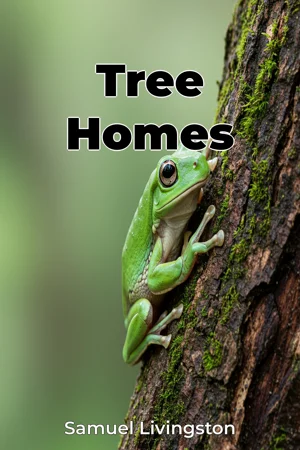
Have you ever considered the bustling metropolis hidden within the seemingly still bark of a tree? "Tree Homes" delves into this intricate world, revealing the vital role trees play as providers of shelter for a vast array of creatures. We explore the concept of trees not just as individual plants, but as ecosystems unto themselves, focusing on the reciprocal relationships between trees and the animals that call them home. This book is significant because it illuminates the essential role of trees in supporting biodiversity and maintaining ecological balance, urging readers to consider the importance of forest conservation. "Tree Homes" examines several key areas. First, we detail the diverse range of animals, from insects and birds to mammals, that rely on trees for shelter. We categorize these creatures by their specific roles, highlighting builders like woodpeckers and squirrels, and dwellers like owls and tree frogs. Second, the book explores the varied types of shelters trees provide: nests, dens, cavities, and even the tree's surface itself. Each shelter type is examined in terms of its construction, maintenance, and suitability for particular species. Third, we investigate how external factors such as climate, tree species, and forest management practices influence the availability and quality of tree-based shelters. Our central argument is that the health of a forest ecosystem is directly linked to the availability of adequate and diverse tree-based shelters. The book provides evidence of this argument through detailed observations of species interactions within specific forests, and by referencing a range of scientific studies that quantify the relationship between habitat availability and species abundance. The book is structured logically, beginning with an overview of the concept of trees as habitats before progressing to explore the specific animals that utilize these habitats and the types of shelters they create. We illustrate the processes of nest building by birds, the carving of dens by mammals, and the colonization of tree surfaces by insects and other invertebrates. Each chapter builds upon the previous one, culminating in a discussion of the broader implications of tree-based shelter dynamics for forest conservation and management. The evidence presented consists of data gathered from field studies, scientific literature, and detailed photographic documentation of various tree-dwelling species and their habitats. We avoid relying solely on anecdotal evidence, opting instead for a data-driven approach that emphasizes empirical findings and rigorous scientific analysis. This book also connects to other disciplines, including ecology, conservation biology, and forestry. By examining the interdependencies between species and their environment, "Tree Homes" underscores the importance of a holistic approach to forest management. Our unique perspective is to focus specifically on tree-based shelters as a critical element of forest biodiversity, an often-overlooked aspect of forest ecology. The writing style is accessible and engaging, aiming for a broad audience while maintaining scientific accuracy. The narrative blends observational detail with scientific explanation. "Tree Homes" is intended for nature enthusiasts, students of biology and ecology, conservation professionals, and anyone interested in learning more about the intricate web of life within our forests. The book offers valuable insights into the ecological significance of trees and the importance of protecting these vital habitats. As a work of nature writing and life sciences, "Tree Homes" provides a comprehensive overview of a specific ecological niche, while avoiding overly technical jargon. The scope of the book is limited to temperate and boreal forests, allowing for a more detailed examination of the species and ecological processes within these ecosystems. While the book does not delve into the complexities of tropical rainforests, it lays a foundation for understanding the universal importance of trees as habitats. Readers can use the knowledge gained from "Tree Homes" to inform their own conservation efforts, whether through supporting responsible forestry practices, participating in citizen science initiatives, or simply appreciating the natural world around them. While our book does not focus heavily on controversies, we acknowledge there are debates surrounding forest management practices, such as logging and prescribed burning, and their potential impacts on the availability of tree-based shelters. We address these debates by presenting balanced perspectives and highlighting the importance of considering the needs of tree-dwelling species in all forest management decisions.
Have you ever considered the bustling metropolis hidden within the seemingly still bark of a tree? "Tree Homes" delves into this intricate world, revealing the vital role trees play as providers of shelter for a vast array of creatures. We explore the concept of trees not just as individual plants, but as ecosystems unto themselves, focusing on the reciprocal relationships between trees and the animals that call them home. This book is significant because it illuminates the essential role of trees in supporting biodiversity and maintaining ecological balance, urging readers to consider the importance of forest conservation. "Tree Homes" examines several key areas. First, we detail the diverse range of animals, from insects and birds to mammals, that rely on trees for shelter. We categorize these creatures by their specific roles, highlighting builders like woodpeckers and squirrels, and dwellers like owls and tree frogs. Second, the book explores the varied types of shelters trees provide: nests, dens, cavities, and even the tree's surface itself. Each shelter type is examined in terms of its construction, maintenance, and suitability for particular species. Third, we investigate how external factors such as climate, tree species, and forest management practices influence the availability and quality of tree-based shelters. Our central argument is that the health of a forest ecosystem is directly linked to the availability of adequate and diverse tree-based shelters. The book provides evidence of this argument through detailed observations of species interactions within specific forests, and by referencing a range of scientific studies that quantify the relationship between habitat availability and species abundance. The book is structured logically, beginning with an overview of the concept of trees as habitats before progressing to explore the specific animals that utilize these habitats and the types of shelters they create. We illustrate the processes of nest building by birds, the carving of dens by mammals, and the colonization of tree surfaces by insects and other invertebrates. Each chapter builds upon the previous one, culminating in a discussion of the broader implications of tree-based shelter dynamics for forest conservation and management. The evidence presented consists of data gathered from field studies, scientific literature, and detailed photographic documentation of various tree-dwelling species and their habitats. We avoid relying solely on anecdotal evidence, opting instead for a data-driven approach that emphasizes empirical findings and rigorous scientific analysis. This book also connects to other disciplines, including ecology, conservation biology, and forestry. By examining the interdependencies between species and their environment, "Tree Homes" underscores the importance of a holistic approach to forest management. Our unique perspective is to focus specifically on tree-based shelters as a critical element of forest biodiversity, an often-overlooked aspect of forest ecology. The writing style is accessible and engaging, aiming for a broad audience while maintaining scientific accuracy. The narrative blends observational detail with scientific explanation. "Tree Homes" is intended for nature enthusiasts, students of biology and ecology, conservation professionals, and anyone interested in learning more about the intricate web of life within our forests. The book offers valuable insights into the ecological significance of trees and the importance of protecting these vital habitats. As a work of nature writing and life sciences, "Tree Homes" provides a comprehensive overview of a specific ecological niche, while avoiding overly technical jargon. The scope of the book is limited to temperate and boreal forests, allowing for a more detailed examination of the species and ecological processes within these ecosystems. While the book does not delve into the complexities of tropical rainforests, it lays a foundation for understanding the universal importance of trees as habitats. Readers can use the knowledge gained from "Tree Homes" to inform their own conservation efforts, whether through supporting responsible forestry practices, participating in citizen science initiatives, or simply appreciating the natural world around them. While our book does not focus heavily on controversies, we acknowledge there are debates surrounding forest management practices, such as logging and prescribed burning, and their potential impacts on the availability of tree-based shelters. We address these debates by presenting balanced perspectives and highlighting the importance of considering the needs of tree-dwelling species in all forest management decisions.
"Tree Homes" unveils the hidden world within trees, showcasing their vital role as ecosystems providing shelter to diverse animals. The book highlights how various creatures, from insects to mammals, depend on trees for survival, with some acting as builders, like woodpeckers creating cavities, and others as dwellers, such as owls finding refuge. Trees offer varied shelters—nests, dens, and even the bark itself—each crucial for specific species, underscoring the importance of forest conservation for maintaining biodiversity. This exploration of forest ecology details how factors like climate and forest management influence the availability and quality of these tree-based shelters. The book progresses logically, beginning with an overview of trees as habitats and then exploring the specific animals and shelters they provide. It emphasizes a data-driven approach, using field studies and scientific literature to demonstrate the link between forest health and the availability of diverse tree homes. The unique value of "Tree Homes" lies in its focus on tree-based shelters as a critical, often overlooked aspect of forest biodiversity. By blending observational detail with scientific explanation in an accessible style, the book provides valuable insights for nature enthusiasts and professionals alike, revealing the intricate web of life within our forests and the importance of protecting these vital wildlife habitats.
Book Details
ISBN
9788233974770
Publisher
Publifye AS
Your Licenses
You don't own any licenses for this book
Purchase a license below to unlock this book and download the EPUB.
Purchase License
Select a tier to unlock this book
Need bulk licensing?
Contact us for enterprise agreements.