
About This Book
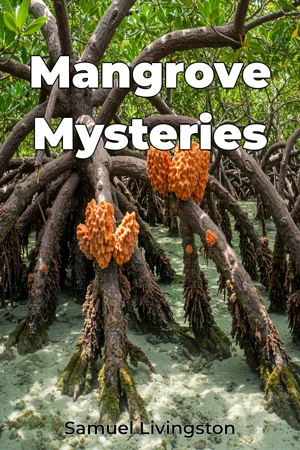
Have you ever wondered how trees not only survive but thrive in saltwater environments where most other vegetation would perish? "Mangrove Mysteries" delves into the fascinating world of mangrove trees, uncovering the unique adaptations that enable them to flourish in these harsh coastal ecosystems. This book explores the biological intricacies that make mangrove forests vital components of our planet, bridging scientific understanding with real-world implications for conservation. This book centers around three core themes: the physiological adaptations of mangroves to saline conditions, the ecological roles they play in coastal environments, and the threats they face in an era of increasing environmental change. Understanding these topics is crucial because mangrove forests provide essential ecosystem services such as coastline protection, nursery grounds for numerous marine species, and carbon sequestration, all of which are vital for human well-being and biodiversity. We will explore the historical context of mangrove research, tracing the evolution of scientific understanding from early botanical observations to modern genomic studies. While a foundational knowledge of basic biology will be helpful, the book is crafted to be accessible to a broad audience, including students, conservationists, and anyone with an interest in the natural world. The central argument of "Mangrove Mysteries" is that the survival strategies of mangroves represent a remarkable example of evolutionary adaptation, highlighting the critical role of these ecosystems in maintaining coastal stability and biodiversity. By understanding the complex interplay between mangrove physiology, ecology, and the environmental challenges they face, we can better inform conservation efforts and policies to protect these valuable habitats. The book unfolds in a structured manner. First, we introduce the fundamental characteristics of mangrove trees and the challenges of living in saline environments. Next, we delve into the specific adaptations, such as salt exclusion mechanisms in their roots, salt secretion through their leaves, and specialized root structures called pneumatophores that allow them to breathe in oxygen-poor soils. The book then examines the ecological roles of mangroves, detailing their importance as nurseries for fish and invertebrates, their function in protecting coastlines from erosion and storm surges, and their capacity to sequester significant amounts of carbon. Finally, we address the threats facing mangrove forests today, including deforestation, pollution, and climate change, and explore potential conservation and restoration strategies. This book relies on a diverse range of evidence, drawing from peer-reviewed scientific literature, field studies conducted in mangrove ecosystems around the world, and analysis of satellite imagery to track changes in mangrove cover over time. We also incorporate data from genomic studies that shed light on the genetic basis of mangrove adaptations. "Mangrove Mysteries" connects to several interdisciplinary fields, including climate science, marine biology, and environmental policy. The role of mangroves in carbon sequestration is a key element in understanding global climate change. Their function as nurseries and habitat connects directly to marine biology and fisheries management. Finally, the book touches on environmental policy, highlighting the need for effective conservation strategies. A unique feature of this book is its integrative approach, combining physiological, ecological, and conservation perspectives to provide a holistic understanding of mangrove ecosystems. It bridges the gap between scientific research and practical applications, offering insights relevant to both researchers and conservation practitioners. The tone is informative yet engaging, aiming to present complex scientific concepts in a clear and accessible manner. While grounded in scientific rigor, the writing style is designed to be accessible to a broad audience, avoiding excessive jargon and incorporating real-world examples. The target audience includes students in biology, ecology, and environmental science, as well as conservationists, policymakers, and anyone interested in learning more about coastal ecosystems. The book's value lies in its comprehensive overview of mangrove biology and ecology, its emphasis on conservation strategies, and its accessibility to a wide range of readers. As a work of non-fiction in the life sciences genre, "Mangrove Mysteries" adheres to accuracy, objectivity, and evidence-based reasoning. It presents information in a clear, organized manner, with appropriate citations and references to support its claims. The scope of the book is focused on the biology and ecology of mangrove trees and their role in coastal ecosystems. While it touches on the social and economic aspects of mangrove forests, its primary focus remains on the scientific understanding of these unique environments. The information contained within this book can be applied to practical efforts such as mangrove restoration projects, sustainable coastal development, and the development of climate change mitigation strategies. Understanding the specific adaptations of mangroves can inform the selection of appropriate species for restoration efforts and the design of coastal protection measures. The book also addresses some ongoing debates in the field, such as the relative importance of different mangrove species in carbon sequestration and the effectiveness of various mangrove restoration techniques. By presenting different perspectives and providing evidence-based assessments, "Mangrove Mysteries" encourages critical thinking and informed decision-making.
Have you ever wondered how trees not only survive but thrive in saltwater environments where most other vegetation would perish? "Mangrove Mysteries" delves into the fascinating world of mangrove trees, uncovering the unique adaptations that enable them to flourish in these harsh coastal ecosystems. This book explores the biological intricacies that make mangrove forests vital components of our planet, bridging scientific understanding with real-world implications for conservation. This book centers around three core themes: the physiological adaptations of mangroves to saline conditions, the ecological roles they play in coastal environments, and the threats they face in an era of increasing environmental change. Understanding these topics is crucial because mangrove forests provide essential ecosystem services such as coastline protection, nursery grounds for numerous marine species, and carbon sequestration, all of which are vital for human well-being and biodiversity. We will explore the historical context of mangrove research, tracing the evolution of scientific understanding from early botanical observations to modern genomic studies. While a foundational knowledge of basic biology will be helpful, the book is crafted to be accessible to a broad audience, including students, conservationists, and anyone with an interest in the natural world. The central argument of "Mangrove Mysteries" is that the survival strategies of mangroves represent a remarkable example of evolutionary adaptation, highlighting the critical role of these ecosystems in maintaining coastal stability and biodiversity. By understanding the complex interplay between mangrove physiology, ecology, and the environmental challenges they face, we can better inform conservation efforts and policies to protect these valuable habitats. The book unfolds in a structured manner. First, we introduce the fundamental characteristics of mangrove trees and the challenges of living in saline environments. Next, we delve into the specific adaptations, such as salt exclusion mechanisms in their roots, salt secretion through their leaves, and specialized root structures called pneumatophores that allow them to breathe in oxygen-poor soils. The book then examines the ecological roles of mangroves, detailing their importance as nurseries for fish and invertebrates, their function in protecting coastlines from erosion and storm surges, and their capacity to sequester significant amounts of carbon. Finally, we address the threats facing mangrove forests today, including deforestation, pollution, and climate change, and explore potential conservation and restoration strategies. This book relies on a diverse range of evidence, drawing from peer-reviewed scientific literature, field studies conducted in mangrove ecosystems around the world, and analysis of satellite imagery to track changes in mangrove cover over time. We also incorporate data from genomic studies that shed light on the genetic basis of mangrove adaptations. "Mangrove Mysteries" connects to several interdisciplinary fields, including climate science, marine biology, and environmental policy. The role of mangroves in carbon sequestration is a key element in understanding global climate change. Their function as nurseries and habitat connects directly to marine biology and fisheries management. Finally, the book touches on environmental policy, highlighting the need for effective conservation strategies. A unique feature of this book is its integrative approach, combining physiological, ecological, and conservation perspectives to provide a holistic understanding of mangrove ecosystems. It bridges the gap between scientific research and practical applications, offering insights relevant to both researchers and conservation practitioners. The tone is informative yet engaging, aiming to present complex scientific concepts in a clear and accessible manner. While grounded in scientific rigor, the writing style is designed to be accessible to a broad audience, avoiding excessive jargon and incorporating real-world examples. The target audience includes students in biology, ecology, and environmental science, as well as conservationists, policymakers, and anyone interested in learning more about coastal ecosystems. The book's value lies in its comprehensive overview of mangrove biology and ecology, its emphasis on conservation strategies, and its accessibility to a wide range of readers. As a work of non-fiction in the life sciences genre, "Mangrove Mysteries" adheres to accuracy, objectivity, and evidence-based reasoning. It presents information in a clear, organized manner, with appropriate citations and references to support its claims. The scope of the book is focused on the biology and ecology of mangrove trees and their role in coastal ecosystems. While it touches on the social and economic aspects of mangrove forests, its primary focus remains on the scientific understanding of these unique environments. The information contained within this book can be applied to practical efforts such as mangrove restoration projects, sustainable coastal development, and the development of climate change mitigation strategies. Understanding the specific adaptations of mangroves can inform the selection of appropriate species for restoration efforts and the design of coastal protection measures. The book also addresses some ongoing debates in the field, such as the relative importance of different mangrove species in carbon sequestration and the effectiveness of various mangrove restoration techniques. By presenting different perspectives and providing evidence-based assessments, "Mangrove Mysteries" encourages critical thinking and informed decision-making.
"Mangrove Mysteries" explores the remarkable world of mangrove forests, detailing how these saltwater trees thrive in harsh coastal ecosystems. These unique trees have developed fascinating adaptations, such as salt exclusion mechanisms in their roots and specialized root structures that allow them to breathe in oxygen-poor soils. The book uncovers how mangrove forests play critical ecological roles, serving as nurseries for marine life and providing vital coastal protection against erosion. The book progresses systematically, first introducing mangrove characteristics and then delving into their physiological adaptations and ecological importance, including carbon sequestration. It highlights the threats these ecosystems face, such as deforestation and climate change, and explores conservation strategies. By combining physiological, ecological, and conservation perspectives, the book offers a holistic understanding of mangrove ecosystems. This exploration bridges scientific understanding with real-world implications, making it valuable for students, conservationists, and anyone interested in nature and biology. The book’s integrative approach makes it a unique contribution to understanding and protecting these vital habitats which are essential for both biodiversity and human well-being.
Book Details
ISBN
9788233974756
Publisher
Publifye AS
Your Licenses
You don't own any licenses for this book
Purchase a license below to unlock this book and download the EPUB.
Purchase License
Select a tier to unlock this book
Need bulk licensing?
Contact us for enterprise agreements.